Flat Roof Maintenance in Elizabeth: What to Check and When
A low-slope roof is inspected on a schedule, not when it leaks — after storm season, and after the summer heat. These are the checks.

The short version
Problem: a low-slope roof leaks quietly — a seam opens a little, water gets under the membrane, and the field looks sound while the layers beneath are wet.
Solution: walk the field on a schedule, test the seams and the drains, and check every penetration.
When to call: after storm season and after the summer heat — and whenever water stands on the roof days after a rain.
A flat roof — a low-slope roof, to use the proper name — is not flat, and it needs regular care. The membrane seals the field, the seams hold the seal, the drains move the water off, and every rooftop unit, vent and pipe cuts the membrane and needs its own flashing. When any one of those fails, the roof leaks — and the field can look sound while the layers beneath are wet.
This guide sets out the maintenance rhythm for an Elizabeth low-slope roof: what is checked, when it is checked, and what the checks find.
The maintenance rhythm follows the storm calendar, and it is the same every year: March, before storm season, and November, after it, plus after every heavy rain. March catches winter damage before the storms; November catches storm-season damage before the cooler months. After a big storm, the check is the drains first — leaves, silt, and debris block the only exits water has, and a blocked drain turns a normal New Jersey rainstorm into a pond on the roof.
Walk the field on a schedule
A low-slope roof is inspected on a schedule, not when it leaks. The rhythm follows the storm calendar: after storm season, and after the summer heat. The inspector walks the whole field in a grid so no area is missed, looking for blisters that mark trapped moisture, cracks in the surface, and seams that have opened at the edge.
Each finding is marked on the roof plan, so the repair crew goes to the right place. A field walked in a grid is a field fully seen; a field looked at from the edge is a field half-seen.
A low-slope roof is inspected on a schedule, not when it leaks, and the schedule follows the storm calendar: March, before storm season, and November, after it, plus after every heavy rain. The walk covers the field first — the membrane itself, looked at for blisters, bubbles, and worn seams — and then the details: the drains, the penetrations, the edges, and the parapets, where low-slope roofs actually leak.
Test the seams
The seams are where a membrane roof fails first. A welded seam is checked by pulling at it — a sound seam holds, an open seam gives. A built-up roof is checked by looking for blisters and cracks in the surface. The test is done with the membrane dry and clean, because a seam patched in the rain or over dirt will open again at the next storm.
An open seam lets water under the membrane, where it soaks the insulation and the deck. The field above can look sound while the layers beneath are wet — which is why the seams are tested, not just looked at.
Clear and test the drains
Drains and scuppers are the roof's drainage, and a low-slope roof lives or dies by them. The drains are cleared of leaves and debris, and tested with water, not just looked at — a drain that looks clear can still run slowly if the pipe below is blocked, and slow drainage is ponding water by another name.
Ponding water is the quiet problem on low-slope roofs. Water that stands for days after a rain means the slope has settled or a drain is blocked, and standing water works at the seams and the membrane every hour it sits there. The inspection notes where water stands and how long it stays.
Check every penetration
Every rooftop unit, vent pipe and skylight cuts the membrane, and each cut is sealed with flashing and sealant that age in New Jersey summer heat. The inspection checks every penetration, because a roof with a sound field and ten tired penetrations is a roof that leaks in ten places.
The flashing and sealant around each penetration are renewed where heat has cracked them. Each penetration is sealed to the membrane it cuts, and the curb the unit sits on is checked as part of the same look.
Watch the edges and parapets
Wind lifts the membrane at the edges and parapets, and the edge details are checked as part of every inspection. A membrane that has lifted at the edge lets wind under it, and the wind peels it further with every storm. The edge is where the roof meets the wall, and the joint there is as important as any seam in the field.
The parapet cap is checked too — a cap that has moved lets water behind the membrane at the top of the wall, and the water runs down inside the wall where it cannot be seen until the stain shows.
The rhythm that keeps the roof dry
The maintenance rhythm is simple: checked after storm season, checked after the summer heat, and checked whenever water stands on the roof days after a rain. The visit notes set the rhythm for your roof, and the checks are small — a seam, a drain, a penetration — while the leaks they prevent are not.
A low-slope roof that is inspected on that rhythm stays dry year after year. A low-slope roof that is inspected only when it leaks is a roof that has already been wet for a while.
The rhythm is simple: checked after storm season, checked after the summer heat, and checked after every heavy rain — and the drains cleared on every visit. A roof kept to that rhythm is a roof whose seams are caught before they open, whose drains are caught before they block, and whose ponding is caught before it becomes a defect. The maintenance record is kept with the photographs, so the roof's history is written down and the next inspection starts from the last one.
The 48-hour ponding rule
Water that is still standing on a flat roof 48 hours after the rain stopped is a defect, not a puddle. That is the rule that decides whether standing water is a problem or just a roof drying out, and it is the first thing the inspection applies after a rain. A flat roof is built with a shallow slope — at least a quarter inch per foot — so water should reach the drains and leave. Water that stays has nowhere to go, and the longer it stays, the more it weighs on the structure beneath it.
Standing water ages the membrane from above and below at once. It holds heat against the surface through a New Jersey summer, softens the membrane, and feeds the growth that takes hold on a damp surface. It also adds load the structure was not drawn to carry for days at a time, and the deck beneath it stays wet long after the rain has stopped. Most membrane paperwork treats ponding as a maintenance and drainage issue rather than a defect in the material, which is worth knowing before anyone argues about whose fault the pond is.
The causes are checked in order: blocked or undersized drains, a low spot where the deck has settled, a scupper choked with leaves, or a slope that was never quite enough for the roof area it drains. Tapered insulation can rebuild the fall toward the drains, and a drain can be added where the water collects. A membrane laid over a pond that has not been drained will pond again at the first heavy rain, in the same place.
The fix for ponding is drainage, not a new membrane on the same low spots. The drains are cleared first — leaves, silt, and debris are the most common cause of ponding, and the simplest problem to prevent. The slope is read next: a low spot is marked, and the fall toward the drains is rebuilt with tapered insulation. A drain is added where the water collects, and the roof is checked again after the next heavy rain, to see whether the water has somewhere to go.
The written history is the part of the rhythm that pays off over the years. Each visit's findings — the seams that were checked, the drains that were cleared, the ponding that was found and the fix that followed — are noted with the date, so the next visit starts from the last one instead of from scratch. A roof whose history is written down is a roof whose problems are caught while they are still small.
What to do, step by step
Call and describe the roof
Say what the building is, the roof size and age, and what you are seeing — ponding water, a leak inside, or a roof that has not been looked at in years.
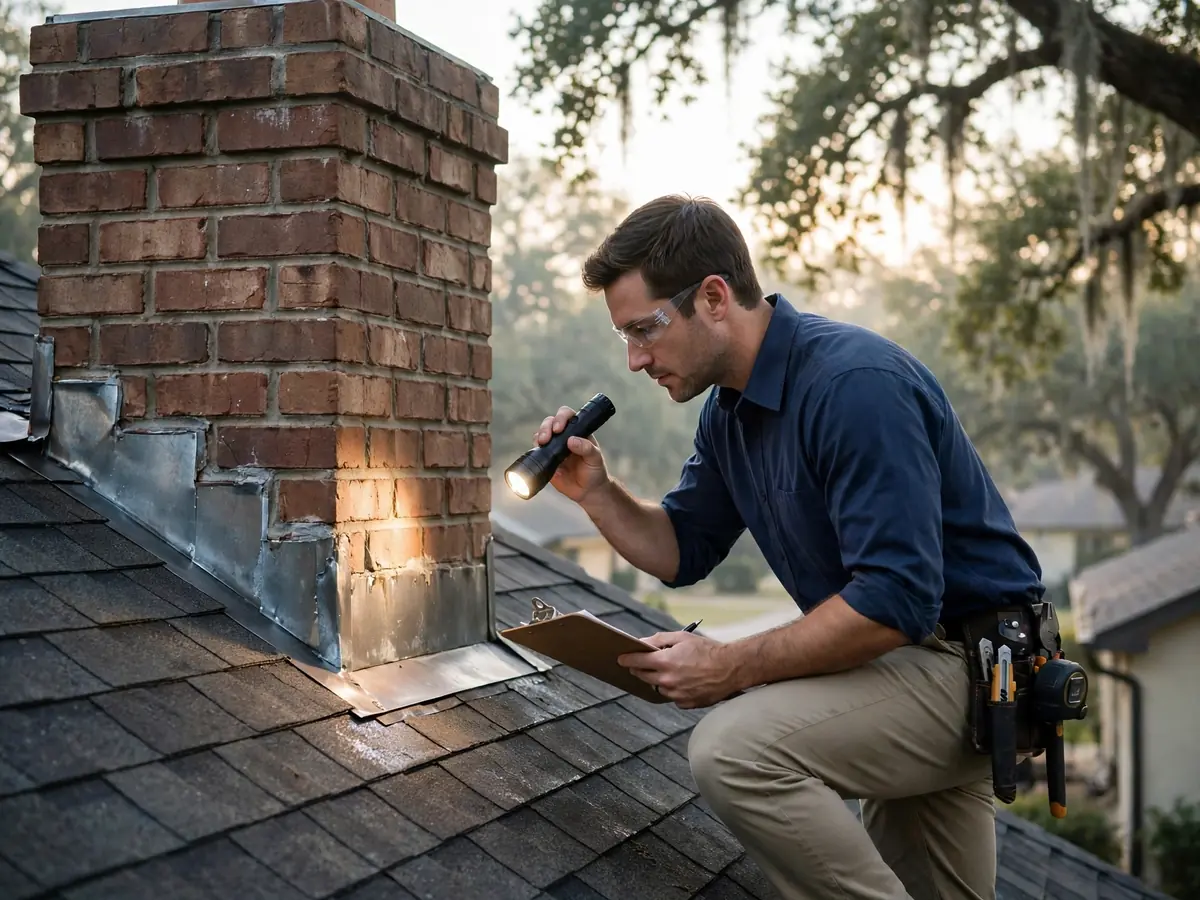
Full-field inspection
A local professional walks the whole field, checks seams, penetrations, drains and edges, and notes where water stands after rain.

Repair and maintenance plan
The plan names the membrane work, the drain work and the penetration work, and sets the inspection rhythm for the roof.
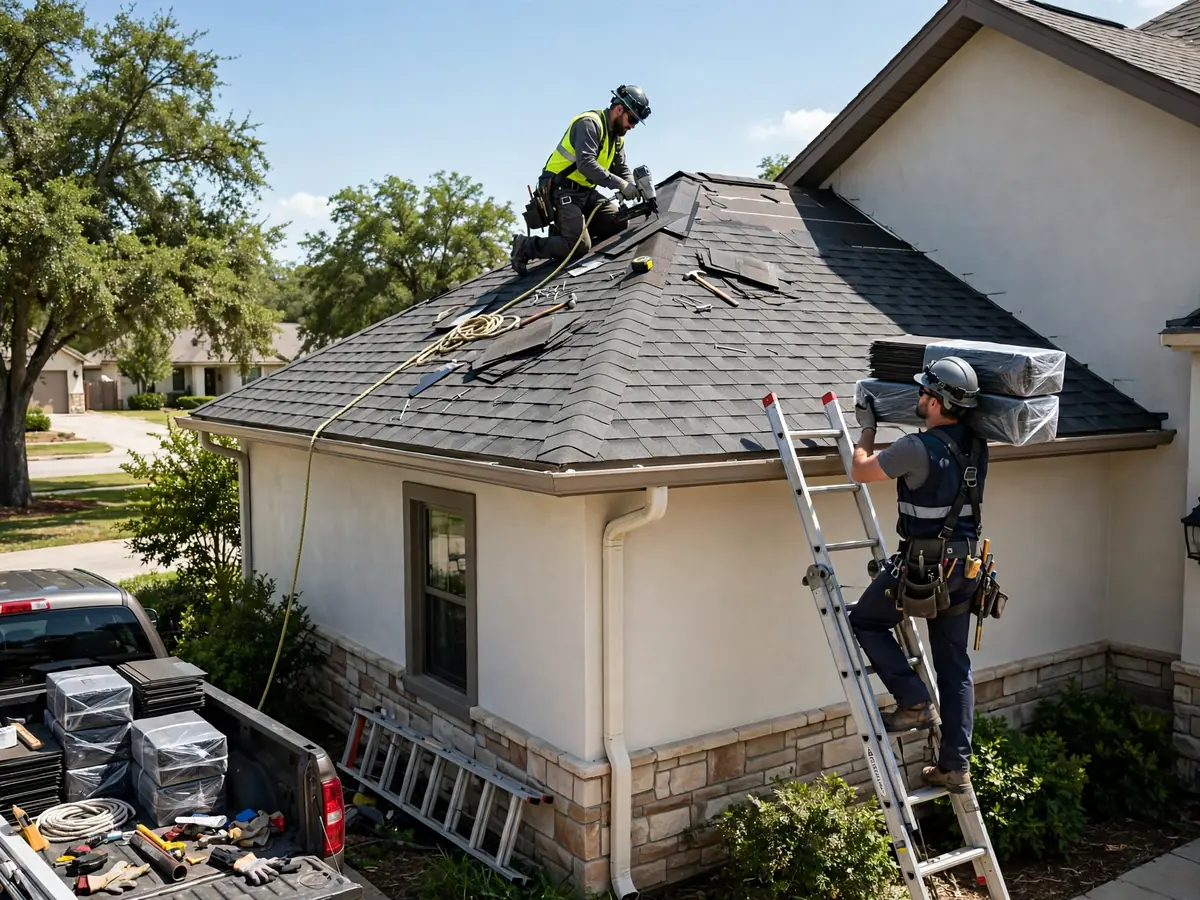
Membrane and drain work
Seams are repaired, drains are cleared and tested, and penetration flashing is renewed as the plan sets out.
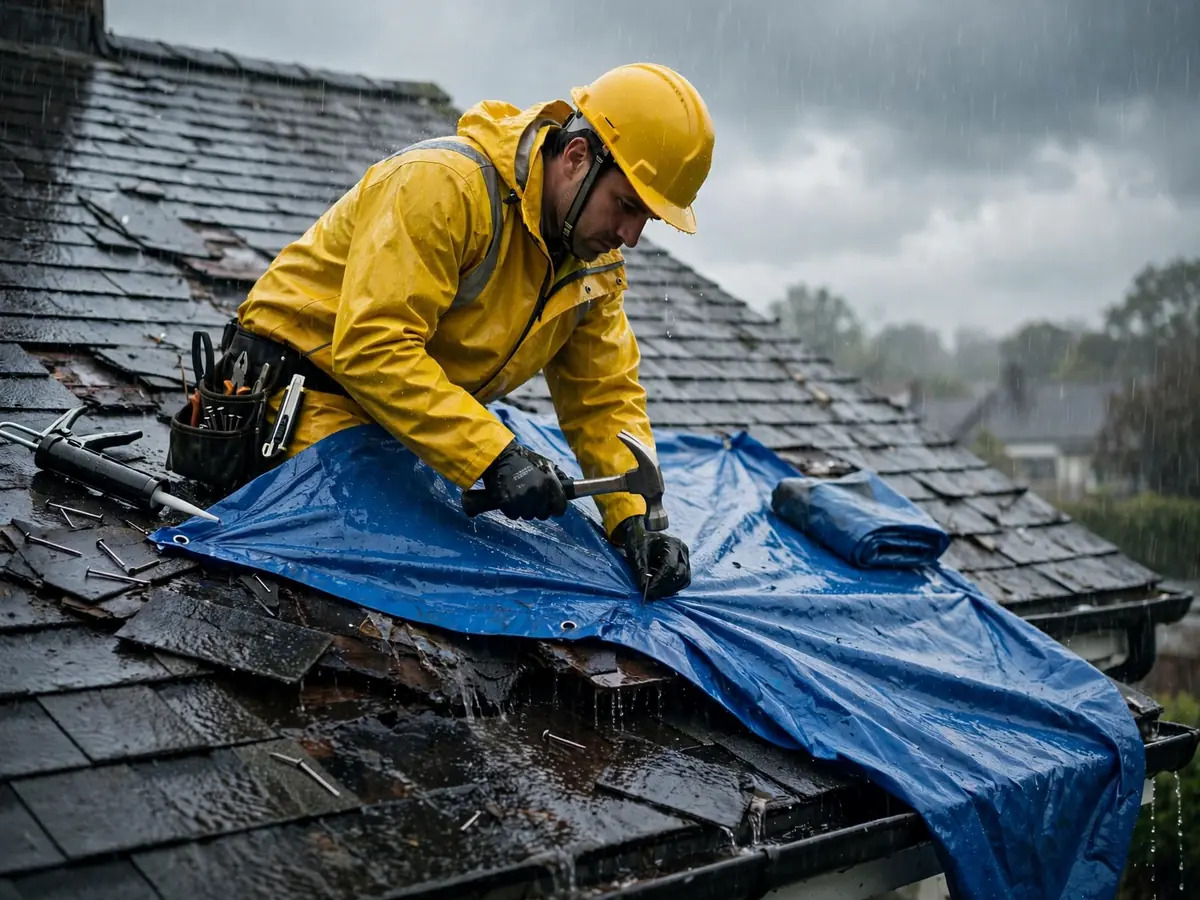
Scheduled check
The roof is checked on the schedule agreed — after storm season and after the summer heat — so small problems are caught before they leak.
Frequently asked questions
Straight answers to the questions Elizabeth area homeowners ask most about this guide.
On a schedule — after storm season and after the summer heat — not only when it leaks. The visit notes set the rhythm for your roof.
A settled slope, a blocked drain, or a low spot in the field. The inspection traces the cause, because the fix depends on it.
A welded seam is checked by pulling at it; a sound seam holds and an open seam gives. A built-up roof is checked for blisters and cracks in the surface.
The flashing and sealant where the unit cuts the membrane, the curb the unit sits on, and the drain path around it.
Water that is still standing 48 hours after the rain stopped is a defect, not a puddle. It adds load, ages the membrane, and points to a drainage problem — blocked drains, a low spot, or a slope that was never quite enough.
Blocked or undersized drains, a low spot where the deck has settled, a scupper choked with leaves, or a slope that was never quite enough for the roof area it drains. The fix is drainage first — clear the drains, rebuild the fall, add a drain where the water collects.
Roof question in the Elizabeth area?
Call now — we will connect you with an independent local roofing professional for an inspection and a clear plan.
Call NowTalk to a local roofing professional
One call connects you with a local professional for Elizabeth, Newark and the metro around them. Describe your roof — what you are seeing, where the problem shows, and when it started — and the visit is arranged from there.
Mon–Fri 7:00 AM–10:00 PM ET · Sat 8:00 AM–10:00 PM ET · Sun 7:00 AM–9:00 PM ET
Service area
Elizabeth · Newark · Linden · Rahway · Union · Hillside · Roselle · Roselle Park · Bayonne · Jersey City
Elizabeth Roofing Pros is a referral service connecting customers with local roofing professionals; it is not itself the service company.