Storm & Hail Damage Repair in Elizabeth, NJ
Elizabeth roofs meet hail in the summer and nor'easter wind and rain from autumn through spring. Hail bruises shingles, knocks granules off the surface, dents vents and gutters, and cracks skylights. Wind lifts shingle edges, peels back courses, and drives rain under flashing. Much of it is invisible from the ground — which is why a storm inspection walks the roof instead of looking up at it.
Talk to a local roofing professional
One call connects you with a local professional for the Elizabeth area. Describe your roof — what you are seeing, and where — and the visit is arranged from there.
Mon–Fri 7:00 AM–10:00 PM ET · Sat 8:00 AM–10:00 PM ET · Sun 7:00 AM–9:00 PM ET
How storm & hail damage repair works in Elizabeth area homes
Hail damage is a bruise, not always a hole. A hailstone strikes the shingle, cracks the mat beneath the granules, and knocks the granules loose. The shingle still looks whole from the driveway, but the mat is broken and the granule layer that shields it from sun is gone. Months later, the bruised spot cracks open and leaks. That delayed failure is why a hail inspection looks for bruises by touch, not just by sight.
Wind damage is easier to see and harder to judge. Lifted shingles, creased tabs, and courses peeled back at the ridge all show clearly. The harder question is whether the seal on the surrounding courses still holds — a shingle that lifted and settled back down may look sound and still let water in at the next storm. The inspection tests the seal across the slope, not just the shingles that moved.
Documentation is the third part of storm work, and it is the part that decides the insurance-claims process. Each damaged area is photographed with its location on the roof noted, the storm date is recorded, and the pre-storm condition of the roof is described from what the inspection finds. A clear record makes the claim a matter of evidence rather than argument.
- Every slope walked and checked by touch for hail bruises, not just by sight
- Vents, gutters, skylights and flashing checked for dents and cracks
- Wind-lifted shingles tested for seal across the slope, not just the moved ones
- Damage photographed slope by slope with the storm date recorded
- Insurance-claims process explained step by step, with the documentation listed
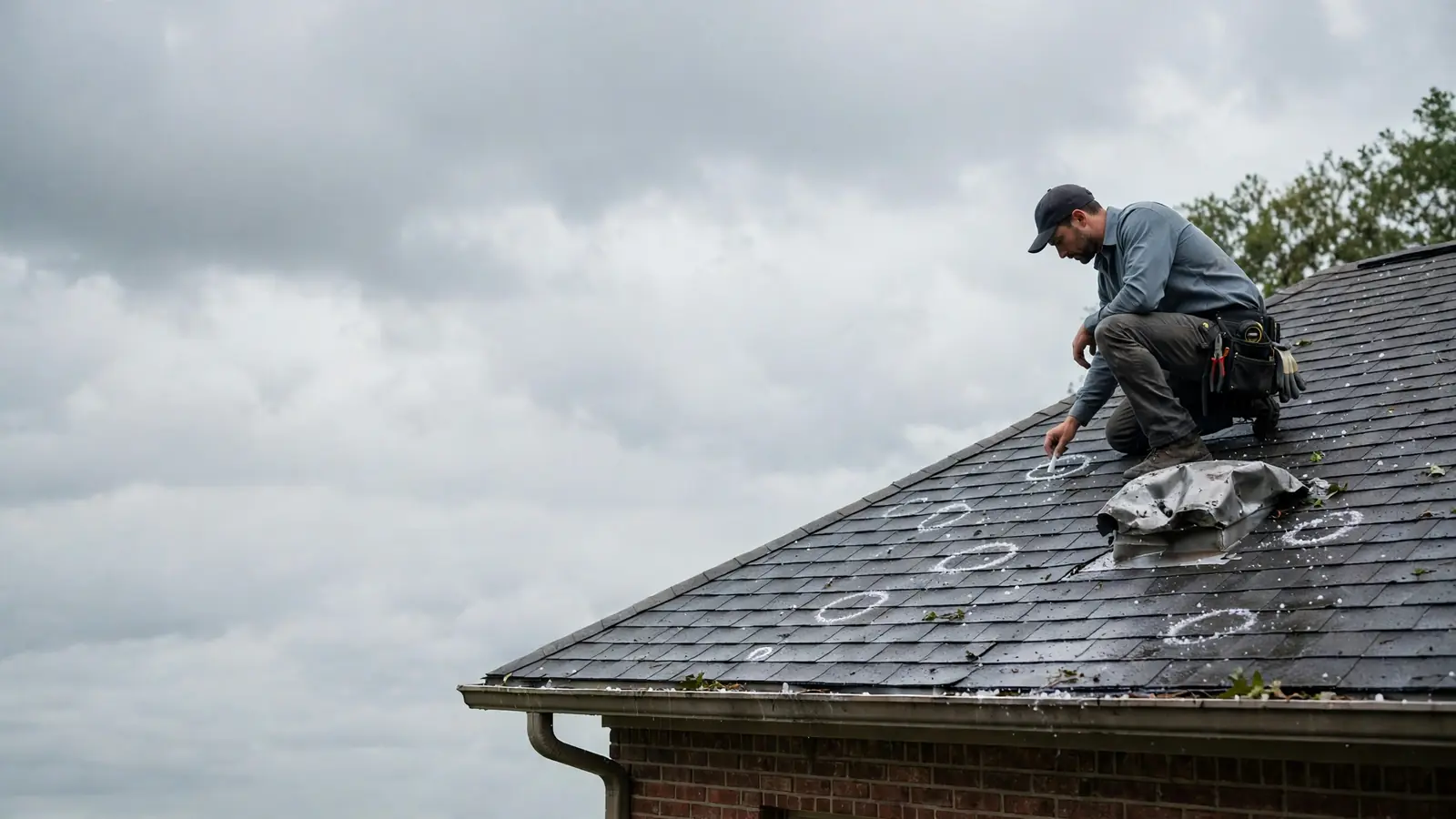
What storm & hail damage repair includes
Hail inspection
Each slope is walked and checked by touch for bruised shingles — soft spots where the mat has cracked under the granules — and for granule loss that leaves the mat open to sun.
Wind damage check
Lifted and creased shingles are noted, and the seal on the surrounding courses is tested, because a shingle that lifted and settled can still let water in.
Vents and gutters
Dented vents, cracked skylights and dented gutters are recorded. They are part of the storm record and part of the repair plan.
Flashing and valleys
Storm wind works flashing loose at chimneys and walls, and hail wears valleys. Both are checked as part of the storm inspection.
Documentation pack
Photos of each damaged area with its slope noted, the storm date, and a written note of what the inspection found — the record the claims process needs.
Insurance-claims guidance
The steps of a claim are explained: documentation, the adjuster visit, and what happens after the adjuster has seen the roof. The process is explained; no outcome is promised.
Storm & Hail Damage Repair — on the job



The visit, step by step
Call after the storm
Say when the storm hit, what it was — hail, wind, heavy rain — and what you have seen: missing shingles, dents, water inside.
Storm inspection
A local professional walks every slope, checks vents, gutters, flashing and skylights, and photographs the damage slope by slope.

Documentation
The photos, the storm date and the written notes are put together as the record for the repair and the claims process.

Temporary cover if needed
Open areas are covered so the next rain does not add damage while the repair is planned.

Repair plan and claim steps
The repair plan is explained, and the steps of the insurance-claims process are laid out — documentation, adjuster visit, and what follows.

How the work is done
A hail inspection is done by hand. The inspector presses the shingle surface and feels for the soft bruise where the mat has cracked, then lifts the tab to see the granule loss beneath. Ten or twelve bruises on a slope tell a different story from one or two, and the count is recorded slope by slope.
Wind damage is mapped the same way. The inspector walks each slope and marks the lifted tabs, then tests the seal on the tabs around them. A slope where the seal has failed across a wide area needs a different plan from a slope with a few lifted tabs.
After the storm, the roof is covered first and argued about later. If the inspection finds openings, a temporary cover goes on so the next rain does not add water damage to the storm damage while the repair and the claim are arranged.

Before the visit
Note the roof material, its rough age, and what you are seeing — where the problem shows inside, and when it started. The inspection follows your evidence, so the notes help more than a climb ever will.
Signs you need storm & hail damage repair
After hail, look for granules collecting in the gutters and at the downspouts, dents on vents and gutters, and cracked skylights. On the shingles themselves, bruises are hard to see from the ground — they show as dark spots where granules have gone, and as soft places you can feel by hand. After wind, look for shingles on the ground, lifted tabs at the ridge, and flashing pulled away from a chimney or wall.
The signs that matter most appear weeks after the storm. A bruised shingle that looked whole in May can crack open in August heat and leak in the next rain. That is why a storm inspection is worth doing even when the roof looks sound from the driveway — the damage that leaks later is the damage you cannot see now.
Ridge caps are the shingles to look at first after hail. They sit at the peak, where the wind catches them and hail strikes them hardest, and the Insurance Institute for Business and Home Safety names them as especially vulnerable. A ridge cap that is cracked or split is the storm's mark on the most exposed part of the roof. The ground-level clues help too: dents on the air-conditioning condenser fins, on window screens, and on the mailbox tell you the hail was large enough to mark the roof above them.
Storm & Hail Damage Repair and the Elizabeth climate
Elizabeth's storm calendar is the reason this service exists. Hail season runs through the summer, roughly May to August, and nor'easter season runs from autumn through spring, with heavy rain and wind through both. A roof here is not inspected once and forgotten — it is checked after each storm season, because each season leaves its own marks. The storm page and the nor'easter prep guide on this site follow that calendar.
Coastal exposure adds a further layer. Elizabeth sits near the water, and wind-driven rain in a nor'easter finds every weak flashing detail. The permit page explains the New Jersey permit rule and what it means for roof work after a storm.
Hail returns most summers to the Elizabeth area, and the season runs roughly May to August, when warm, moist air off the Atlantic meets cold air from the north and the storms that follow drop hail across the neighbourhoods. A roof that has already taken two or three hail seasons carries bruises across every slope, and each new season adds to the count. That is why the storm inspection is done after every hail season, not once in the life of the roof — the count decides the plan, and the count changes every spring.
Functional damage or cosmetic damage — the line that decides the plan
Not all hail damage is the same, and the line between the two kinds decides the plan. Functional damage makes the roof worse at shedding water or shortens its life: a cracked mat, a bruise that opens into a leak, granule loss that leaves the asphalt open to the sun. Cosmetic damage marks the surface without changing how the roof works: a dented vent, a small granule loss you have to crouch to see. The inspection reads each mark against that line, slope by slope.
The inspector tells them apart by touch and by pattern. A bruise is pressed gently — a soft, spongy spot means the mat has cracked beneath the granules, and that is functional. A chalk rub across a suspected mark outlines the depression where the granules have been displaced, and a coin placed beside it gives the photograph its scale. Hail marks are random across the slope; normal wear is uniform, spread evenly as the covering ages, and it does not appear overnight after a storm.
What the line means for the plan is simple. Functional damage in one or two places on a sound roof is a repair. Functional damage across many slopes, or a roof already near the end of its covering life, is a replacement conversation. Cosmetic damage is noted in the record and watched — a dented vent still vents, and a small granule loss on an otherwise sound slope is not a reason to replace a roof. The record names which marks are which, so the plan follows the roof and not the storm.
Problem → solution
Problem
An Elizabeth home after a spring hailstorm: granules in the gutters, dents on the vents, and shingles that looked whole from the driveway — but the attic showed damp spots after the next rain.
Solution
The storm inspection found bruised shingles across two slopes and a dented vent. The damage was photographed slope by slope with the storm date, a temporary cover went on the worst area, and the repair plan and claim steps were laid out from the record.
Problems storm & hail damage repair solves in the Elizabeth area
Hail bruises
Bruised shingles lose granules and crack months later. The inspection finds the bruises by touch before they open.
Wind lift
Wind lifts tabs and breaks seals across a slope. Testing the seal shows how wide the damage runs.
Dented vents
Hail dents vents and gutters and cracks skylights. They are recorded as part of the storm damage.
Water after storms
Rain that follows a storm finds the openings the storm made. A temporary cover stops the second round of damage.
Other roofing services in Elizabeth
A replacement visit starts with an inspection, not a sales talk. The roof is walked, the attic is checked for daylight and damp, and the deck is looked at where…
The stain is rarely above the leak. Water travels along the deck and rafters before it shows inside, so the source can sit several feet uphill from the damp pat…
Call Now and say where the water shows inside — ceiling, wall or attic — and what happened. The first visit covers the opening and stops the water; the inspecti…
A metal roof is a system like any other: panels, underlayment, flashing, ridge and ventilation, each fitted to the house. The inspection looks at the slope, the…
Commercial roofs add their own details: rooftop units, vents and pipes that pierce the membrane, foot traffic from maintenance, and ponding water where the slop…
An inspection is worth doing after a storm, before buying a home, when a roof reaches the age its material is known for, or when a stain appears and the cause i…
The choice between them is a matter of the roof, the house and the weather it will meet. Architectural shingles are heavier and hold their seal better in wind; …
The inspection looks at the whole run: the gutter, the downspouts, the fascia behind it, and the ground where the water lands. Call Now and say what you are see…
Tile roofing covers clay and concrete tile — new tile roofs, broken-tile replacement, underlayment renewal under sound tile, and flashing at the hips, valleys a…
Skylight installation and repair covers new skylight fitting, leak tracing at the curb and flashing, cracked glazing after hail, and the flashing and underlayme…
Roof maintenance covers scheduled inspection visits, preventive repairs, gutter and drain clearing, and a written record of what was found on each visit. The rh…
Roof insurance claims help covers the steps in order: inspect before you file, document the damage, understand the two-stage payment, meet the adjuster with the…
Frequently asked questions
Straight answers to the questions Elizabeth area homeowners ask most.
It starts with documentation — photos of the damage, the storm date, and a written note of what the inspection found. Then an adjuster visits the roof, and the claim moves from there. The storm damage page lays out each step.
Yes, if the storm brought hail or strong wind. Much hail damage is invisible from the ground, and a bruised shingle can leak months after the storm that bruised it.
A roof can look sound from the driveway and still carry bruised shingles, lifted seals and dented vents. The inspection walks the roof and checks by touch, which the ground view cannot do.
Note the storm date, photograph any damage you can see safely from the ground, keep the area under any leak clear, and call. If the inspection finds openings, a temporary cover goes on first.
No. Damage in one or two places on a sound roof is a repair. Damage across many slopes, or a roof already near the end of its covering life, is a replacement conversation. The inspection gives the read for your roof.
The National Weather Service treats hail of 1 inch — quarter size — or larger as severe, and that is where shingle damage becomes common. Smaller hail can still mark older roofs, especially with strong wind behind it. Size, wind, and the age of the roof decide together.
Hail damage is random and sudden: scattered impact marks across a slope that appeared after one storm. Normal wear is uniform and gradual — granule loss and curling spread evenly across whole slopes over many years. The pattern and the timing tell them apart.
The date anchors the whole record. The inspection photos, the bruise count, and the claim all refer back to it. Damage documented weeks after the storm is harder to tie to that storm, and the record is weaker for it. Write the date down the day the storm hits.
Storm & Hail Damage Repair problem in Elizabeth?
Call now — we will connect you with an independent local roofing professional for an inspection and a clear plan for storm & hail damage repair.
Call NowTalk to a local roofing professional
One call connects you with a local professional for Elizabeth, Newark and the metro around them. Describe your roof — what you are seeing, where the problem shows, and when it started — and the visit is arranged from there.
Mon–Fri 7:00 AM–10:00 PM ET · Sat 8:00 AM–10:00 PM ET · Sun 7:00 AM–9:00 PM ET
Service area
Elizabeth · Newark · Linden · Rahway · Union · Hillside · Roselle · Roselle Park · Bayonne · Jersey City
Elizabeth Roofing Pros is a referral service connecting customers with local roofing professionals; it is not itself the service company.