Roof Replacement in Elizabeth, NJ
When a roof has reached the end of its covering life, patching one area after another stops making sense. A roof replacement takes the old covering off, checks the deck underneath, and puts a new system on — covering, underlayment, flashing and ventilation working together. In Elizabeth and across the Elizabeth area, that decision usually follows years of hail seasons, summer heat and one storm too many.
Talk to a local roofing professional
One call connects you with a local professional for the Elizabeth area. Describe your roof — what you are seeing, and where — and the visit is arranged from there.
Mon–Fri 7:00 AM–10:00 PM ET · Sat 8:00 AM–10:00 PM ET · Sun 7:00 AM–9:00 PM ET
How roof replacement works in Elizabeth area homes
A roof is a system, not a single layer. Shingles or metal panels are the part you see, but the underlayment beneath them, the flashing around chimneys, vents and valleys, and the ventilation moving air through the attic all decide how long the new roof lasts. A replacement that only swaps the visible layer leaves the weak parts in place, and the next hail season finds them again. That is why the inspection covers every layer before the plan is written.
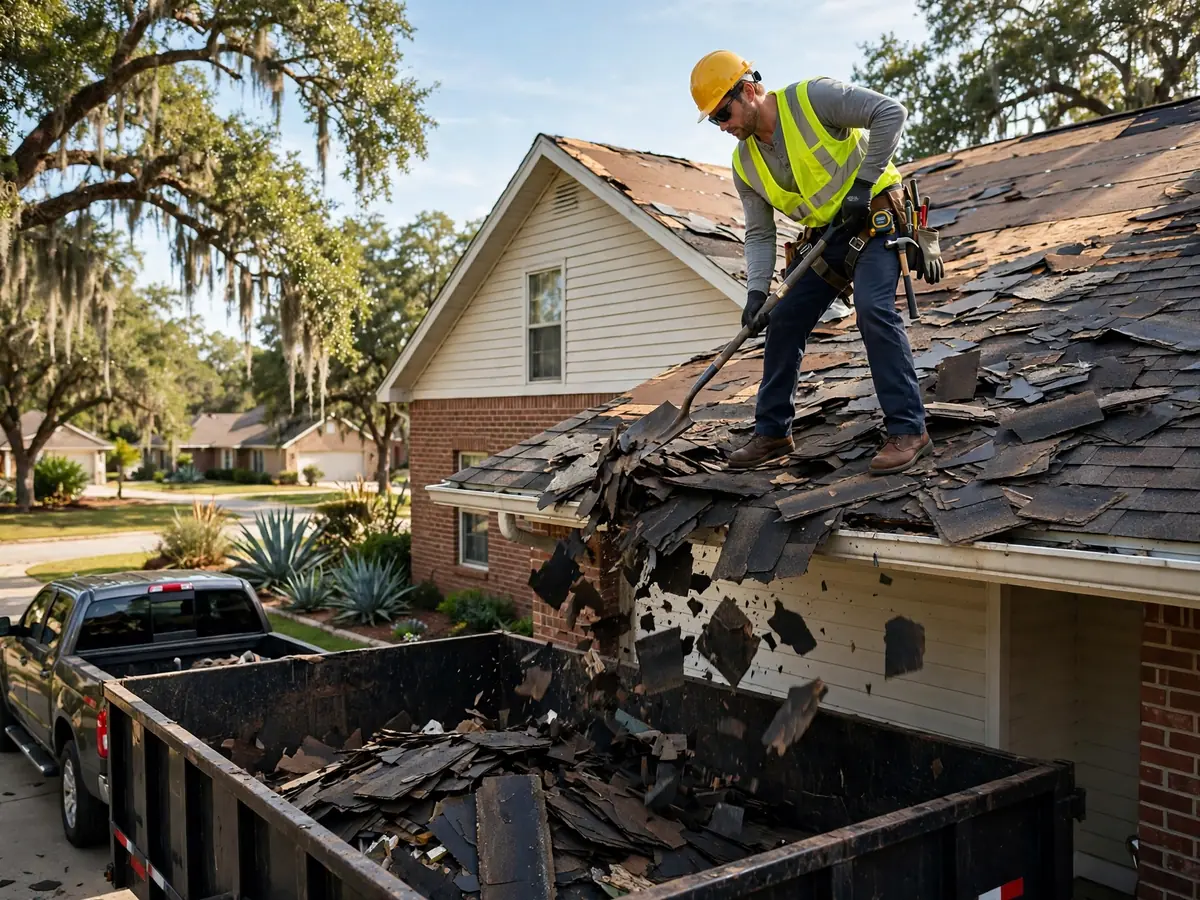
Tear-off comes first. The old covering is removed down to the deck so soft or rotted boards can be found and swapped. Skipping tear-off and layering over old shingles hides the deck, adds weight, and makes the next inspection harder. In New Jersey summer heat, trapped moisture under layered coverings also ages the new material faster. A full tear-off takes longer, but it is the only way the deck gets a proper look.
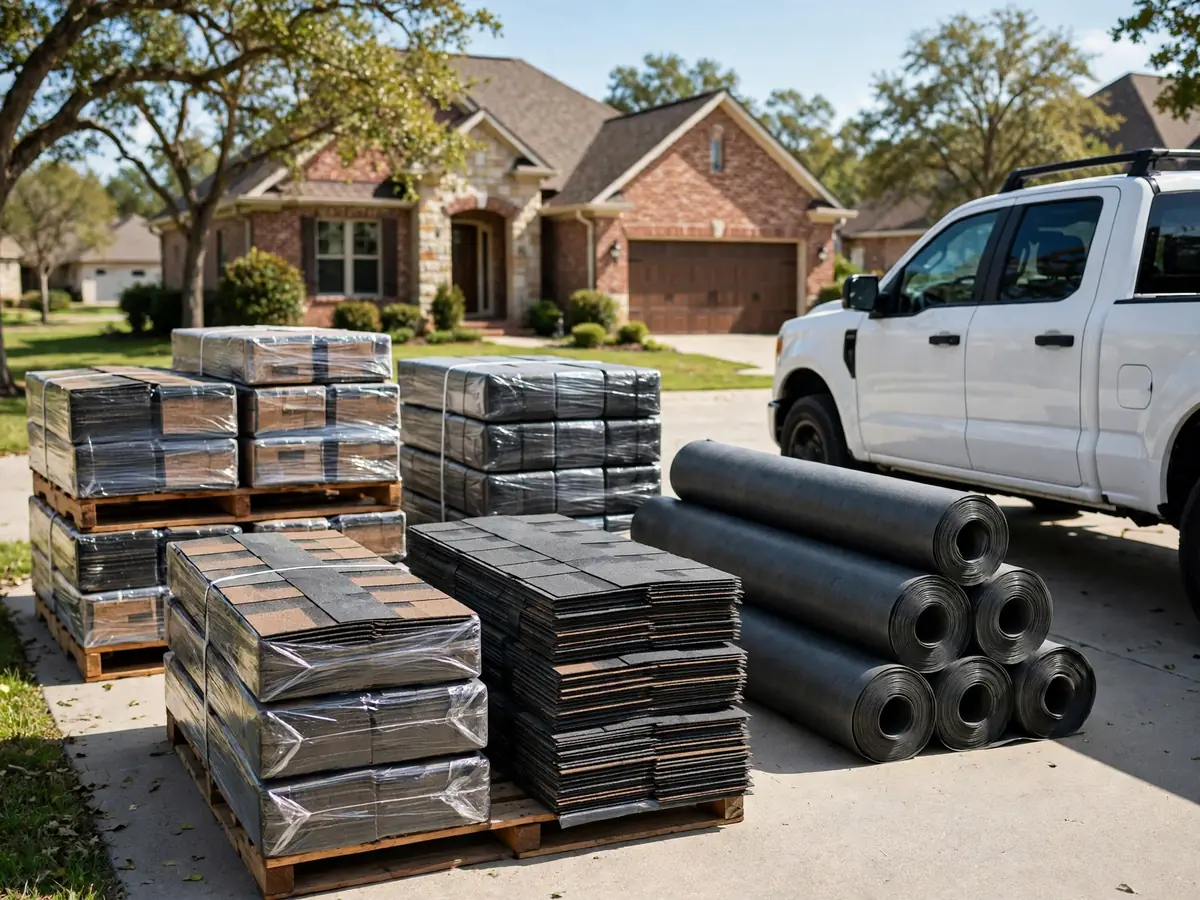
Material choice is an Elizabeth decision. Asphalt shingles are the common covering across Elizabeth subdivisions; metal suits steep slopes and sheds water in heavy rain; tile suits some homes but adds weight the structure must carry. Each material handles hail, wind and heat differently, and each needs its own underlayment and flashing details. The inspection and the shape of the roof narrow the choice before anything is ordered.
- Full tear-off to the deck, so soft or damaged boards are found and replaced
- Underlayment, flashing, valleys and vents checked and renewed as one system
- Ventilation checked in the attic — intake and exhaust working together
- Material matched to the roof slope, the house structure and New Jersey weather
- Permit handled for the re-roof, as the City of Elizabeth requires for every re-roof
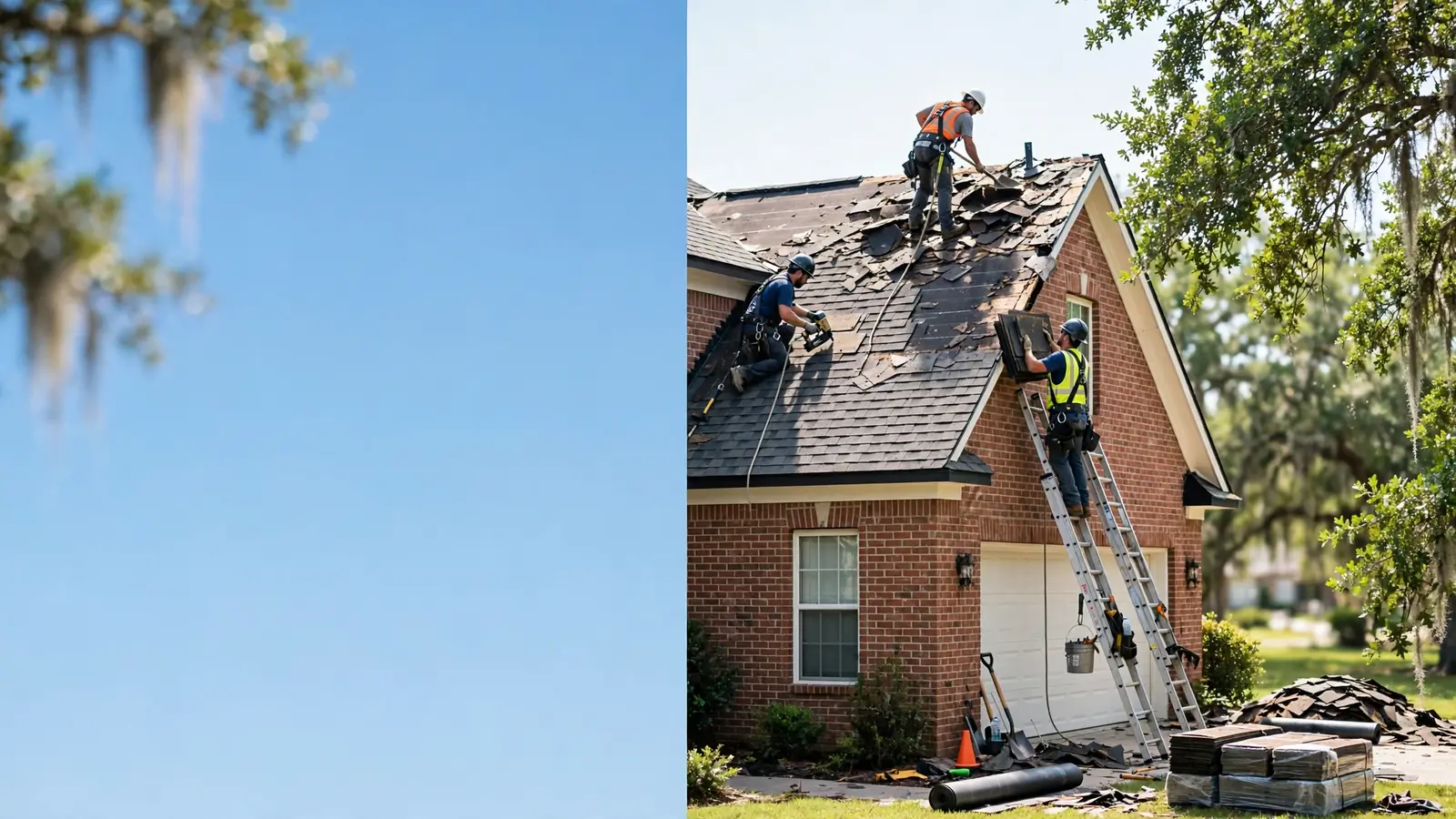
What roof replacement includes
Deck inspection
Once the old covering is off, every board of the deck is checked for soft spots, rot and gaps. Damaged boards are replaced before the new covering goes on, because a new roof over a weak deck will sag and leak at the same places.
Underlayment
A new underlayment layer goes over the deck before the covering. It is the second line of defence when wind drives rain under the covering edge, and it matters most in valleys and at the eaves.
Flashing renewal
Flashing around chimneys, skylights, vents and wall joints is renewed with the replacement. Old flashing is the most common leak source on an otherwise new roof, so it is never carried over without a look.
Ventilation check
Attic intake and exhaust vents are checked together. Poor ventilation traps New Jersey summer heat in the attic, ages shingles from below, and feeds moisture that rots the deck.
Ridge and cap work
Ridge caps and hip details are finished to match the covering, with the venting the ridge provides kept open. A ridge done well sheds water and lets the attic breathe.
Site clean-up
The yard, driveway and gutters are cleared of old material at the end of the job. Nails are swept with a magnet, because a missed nail in a driveway is the part of a replacement people remember longest.
Roof Replacement — on the job
The visit, step by step
Call and describe the roof
Tell us the roof material, its rough age, and what you are seeing — leaks, missing shingles, granules in the gutter, or a roof that has simply run its years.
Inspection of roof and attic
A local professional walks the roof and checks the attic for daylight, damp and ventilation, then explains what the covering and the deck look like.
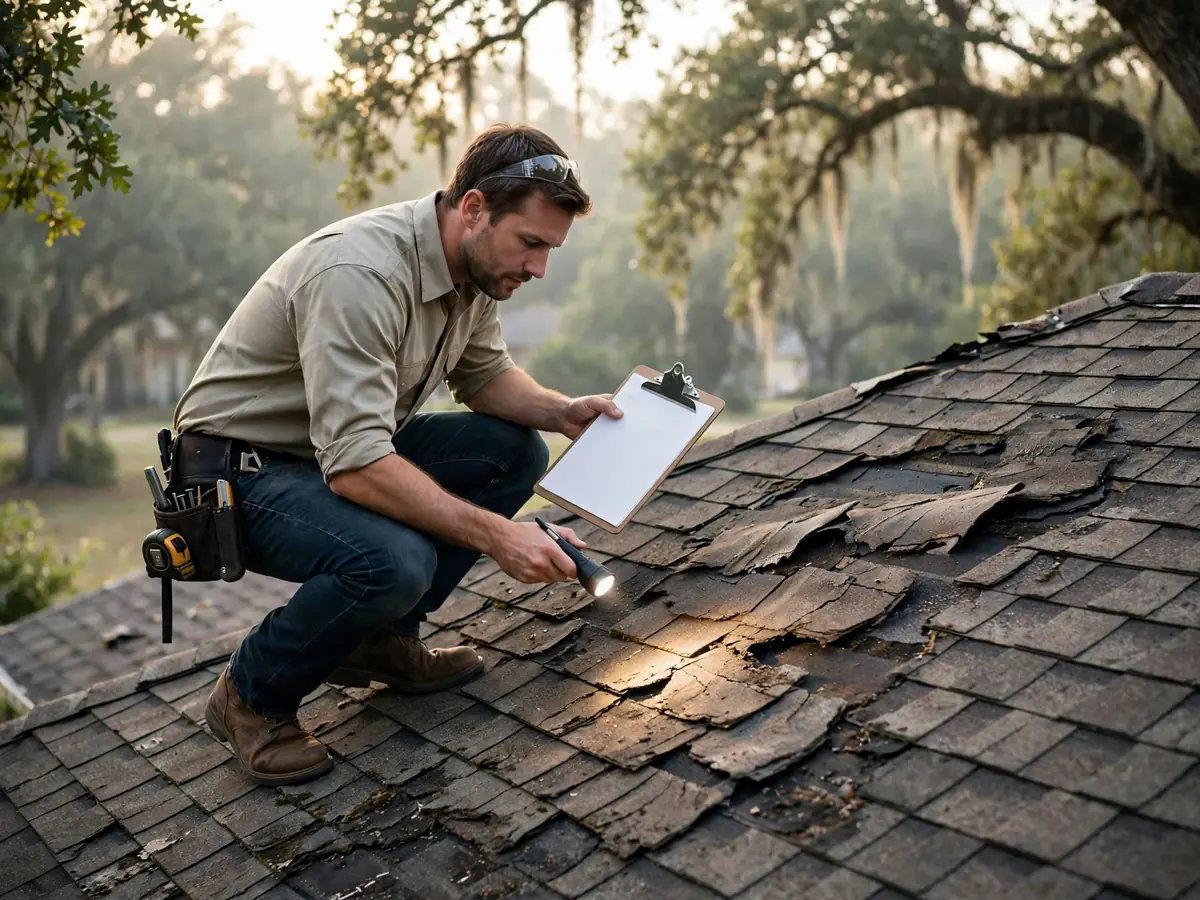
Plan and material choice
The plan covers tear-off, deck repairs, underlayment, flashing and the covering material — matched to the roof slope and the house.

Tear-off and deck repair
The old covering comes off slope by slope, the deck is checked and repaired, and underlayment goes on the same day.
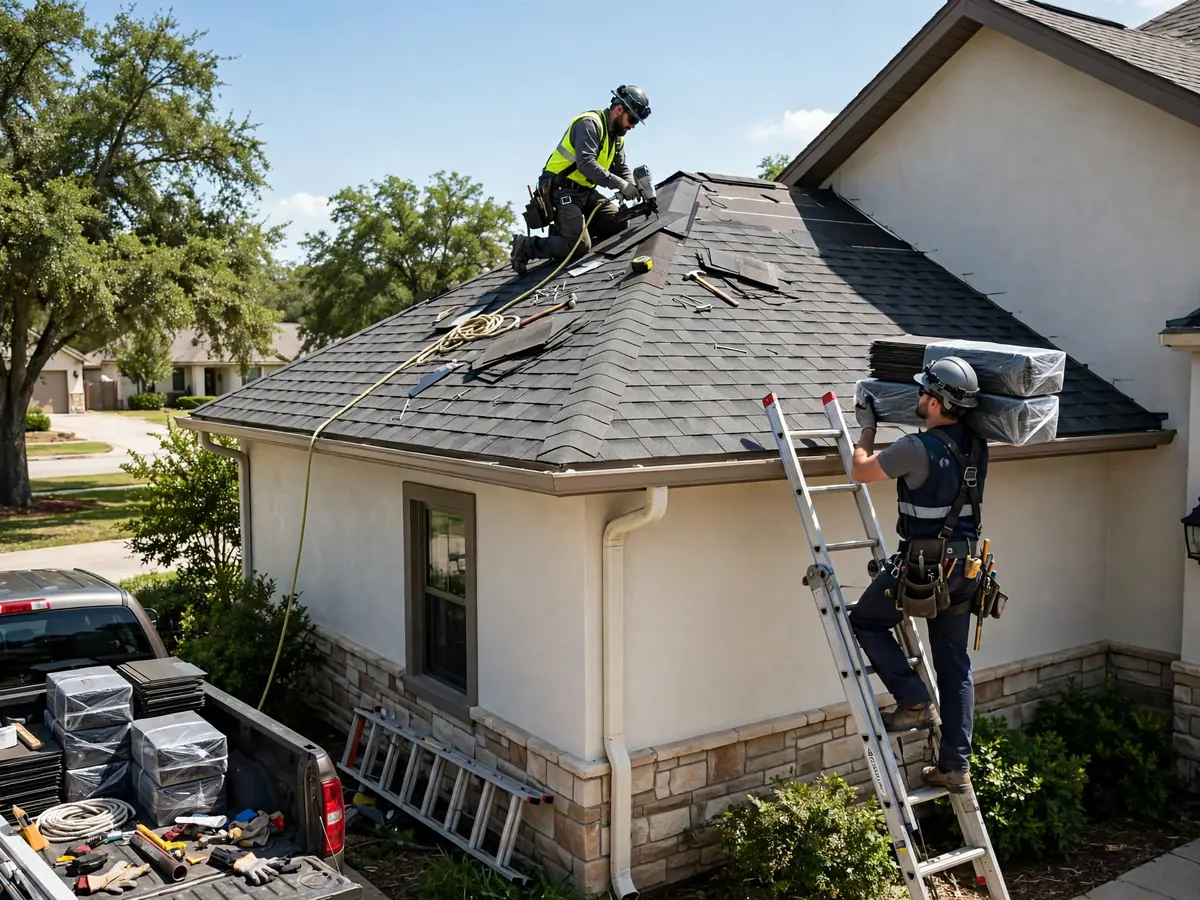
New covering and finishing
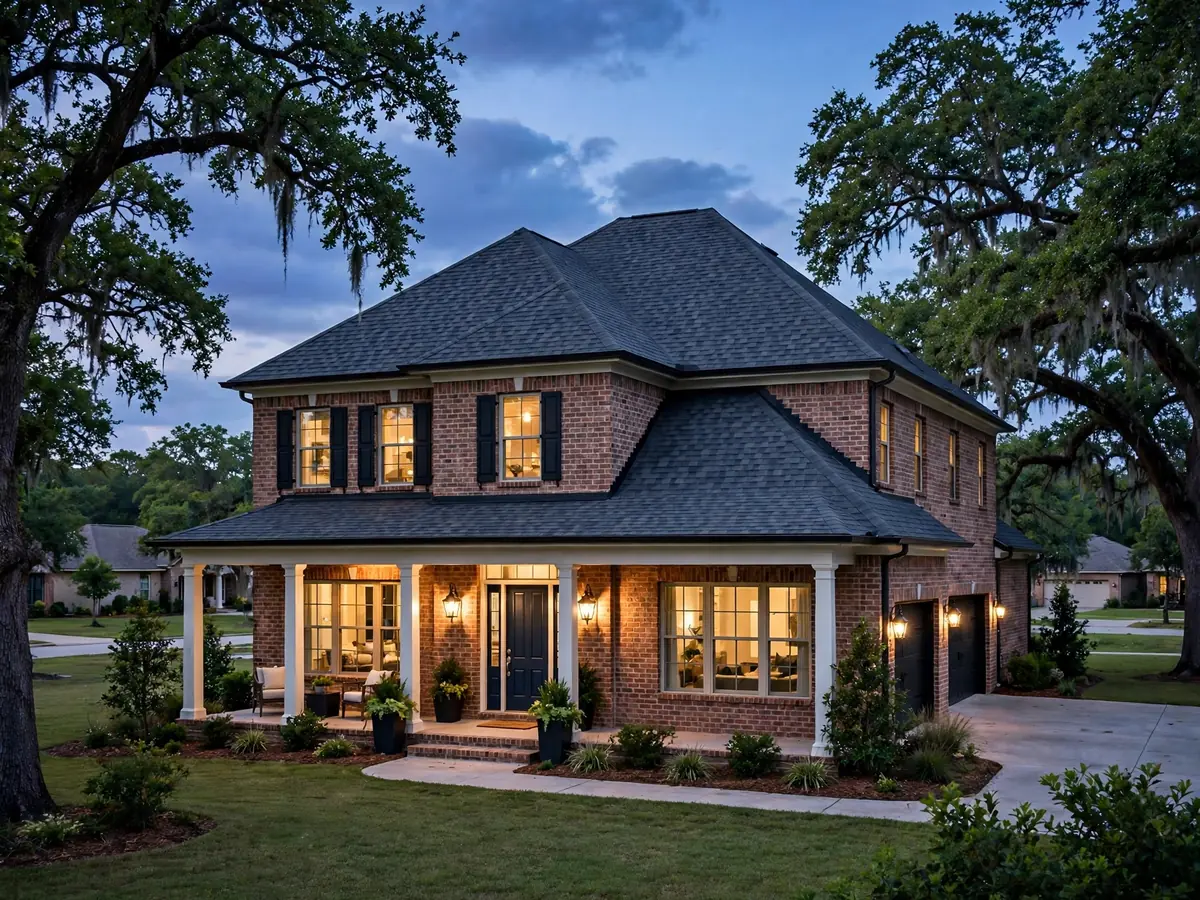
The new covering, flashing, ridge and vents are fitted, the site is cleaned, and the finished roof is walked once more.
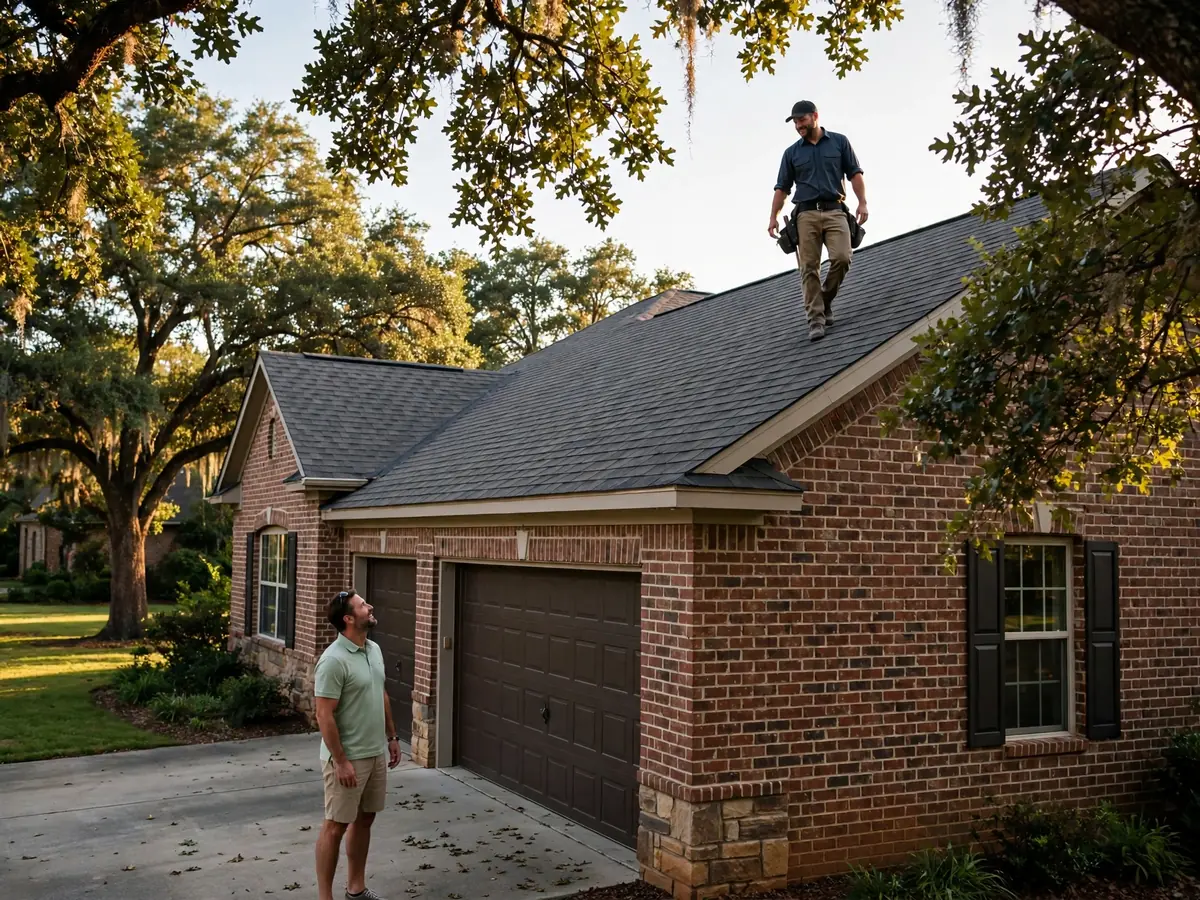
How the work is done
Work starts at the top and moves down. Tear-off crews strip one slope at a time so the deck is never left open to a sudden Elizabeth downpour. Underlayment follows the tear-off on the same slope, so the roof is covered again before the crew moves on. That sequence matters in a metro where a clear morning can turn into an afternoon storm.
Flashing is cut and fitted on site, not guessed from the ground. Valley metal, step flashing at walls, and pipe boots are shaped to the roof as it is, because no two chimneys or skylights sit exactly alike. The fit is checked by eye and by hand before the covering closes over it.
Ventilation is balanced, not just added. Intake vents at the eaves and exhaust at the ridge are sized to the attic so air moves through instead of sitting still. An attic that breathes keeps the deck dry and the covering cooler through the New Jersey summer.

Before the visit
Note the roof material, its rough age, and what you are seeing — where the problem shows inside, and when it started. The inspection follows your evidence, so the notes help more than a climb ever will.
Signs you need roof replacement
Granules washing into the gutters, shingles curling at the edges, and daylight showing through the attic boards all point to a covering near the end of its life. So do repeated leaks in different places — one leak is a repair, leaks that keep moving are a system telling you it is done. A roof that has been patched in three or four places is usually further along than a roof patched once.
Age is the other signal. Asphalt shingle roofs in New Jersey summer heat and hail commonly reach the end of their covering life well before the calendar suggests, and a roof that has already survived two or three hail seasons has taken more hits than its age shows. The inspection, not the calendar, gives the honest read — the covering, the deck and the attic together.
A roof that already carries two layers of shingles is another sign the next covering needs a full tear-off. The 2021 International Residential Code allows one overlay — one new layer over one existing layer — and two layers means the old covering must come off so the deck can be seen. An overlay hides the deck, so soft boards stay hidden and the next inspection cannot read them. The edge of the roof shows how many layers are there: look at the drip edge and count the covering edges, or ask the inspection to read it from the attic.
Roof Replacement and the Elizabeth climate
Elizabeth roofs work harder than roofs in most of the country. Spring hail bruises shingles and dents vents; summer heat bakes the covering from above while the attic bakes it from below; nor'easter season brings wind-driven rain that finds every weak flashing detail. A replacement planned with that cycle in mind — proper underlayment, solid flashing, balanced ventilation — is built for the weather the roof will actually meet.
That is also why timing matters. Summer brings the hailstorms and the busiest time for roof work across the area; nor'easter season runs from autumn through spring. A replacement started before the storm season is inspected and finished before the worst weather arrives, and the roof meets the season as a complete system rather than a patchwork.
A replacement finished before the storm season is inspected and finished before the worst weather arrives, and the roof meets the season as a complete system rather than a patchwork. After the new covering is on, the roof is looked at again after the first heavy rain — the attic is checked for damp, the flashing is checked at the chimney and the valleys, and the gutters are checked for granules. A new roof that stays dry through its first heavy rain has passed its first real test.
What the plan names before work starts
The plan for a replacement names every layer, not just the covering. It names the tear-off, the deck repairs the tear-off may show, the underlayment, the flashing at every joint, the covering material, and the ventilation. A plan that names only the shingle leaves the rest to chance, and the rest is where Elizabeth roofs fail — the flashing at the chimney, the valley that wears first, the attic that cannot breathe.
Underlayment is the layer that decides whether a wind-driven rain stays out when the covering is lifted at the edge. A leak barrier goes at the eaves and in the valleys, where water collects and where ice and wind drive it under the covering. Step flashing at the walls, pipe boots at the vents, and valley metal are fitted to the roof as it is, because no two chimneys or skylights sit exactly alike, and a flashing detail copied from another house is a leak waiting for the next storm.
Ventilation is balanced in the plan, not added as an afterthought. Intake vents at the eaves and exhaust at the ridge are sized to the attic so air moves through instead of sitting still, and the soffits are checked to make sure insulation has not been pushed over them. An attic that breathes keeps the deck dry and the covering cooler through the New Jersey summer, and the covering lasts longer for it.
Problem → solution
Problem
An Elizabeth home with a shingle roof from the 1990s: granules in the gutters, curled shingle edges, and a leak that moved from the hallway ceiling to the bedroom ceiling over two storm seasons.
Solution
A full tear-off showed two soft deck boards and tired flashing at the chimney. The deck was repaired, new underlayment and flashing went in, and a new shingle system with balanced ventilation finished the roof as one system.
Problems roof replacement solves in the Elizabeth area
Ageing covering
Shingles that curl, crack or shed granules have lost the layer that keeps water out. Replacement renews the whole covering at once.
Repeated leaks
Leaks that appear in a new place after every storm point to a system at the end of its life, not a single weak spot.
Deck damage
Soft or rotted deck boards found at tear-off are replaced, so the new roof sits on solid wood.
Storm-worn roof
A roof that has taken several hail seasons carries bruises across every slope. Replacement starts the count again.
Other roofing services in Elizabeth
The stain is rarely above the leak. Water travels along the deck and rafters before it shows inside, so the source can sit several feet uphill from the damp pat…
The inspection after a storm has two jobs: find the damage, and document it. Photos of each slope, notes on the bruised and lifted areas, the date of the storm,…
Call Now and say where the water shows inside — ceiling, wall or attic — and what happened. The first visit covers the opening and stops the water; the inspecti…
A metal roof is a system like any other: panels, underlayment, flashing, ridge and ventilation, each fitted to the house. The inspection looks at the slope, the…
Commercial roofs add their own details: rooftop units, vents and pipes that pierce the membrane, foot traffic from maintenance, and ponding water where the slop…
An inspection is worth doing after a storm, before buying a home, when a roof reaches the age its material is known for, or when a stain appears and the cause i…
The choice between them is a matter of the roof, the house and the weather it will meet. Architectural shingles are heavier and hold their seal better in wind; …
The inspection looks at the whole run: the gutter, the downspouts, the fascia behind it, and the ground where the water lands. Call Now and say what you are see…
Tile roofing covers clay and concrete tile — new tile roofs, broken-tile replacement, underlayment renewal under sound tile, and flashing at the hips, valleys a…
Skylight installation and repair covers new skylight fitting, leak tracing at the curb and flashing, cracked glazing after hail, and the flashing and underlayme…
Roof maintenance covers scheduled inspection visits, preventive repairs, gutter and drain clearing, and a written record of what was found on each visit. The rh…
Roof insurance claims help covers the steps in order: inspect before you file, document the damage, understand the two-stage payment, meet the adjuster with the…
Frequently asked questions
Straight answers to the questions Elizabeth area homeowners ask most.
Repair suits local damage on a roof with life left. Replacement suits a roof whose covering is worn across many slopes, that leaks in different places after storms, or that has deck damage found at tear-off. The inspection gives the read for your roof.
The old covering is torn off slope by slope and removed from the property. The yard, driveway and gutters are cleared at the end of the job, and nails are swept with a magnet.
For a detached one- or two-family home, no — replacing the roof covering is ordinary maintenance under the state Uniform Construction Code and needs no permit. Commercial buildings, multi-family buildings and structural work do need one, and the permit page on this site explains where the line sits.
Most homes take a few working days, depending on the roof size, slope and the deck repairs found at tear-off. The plan agreed after the inspection sets the schedule for your roof.
Daylight through the boards, damp or stained wood, and ventilation — whether intake and exhaust vents are moving air through the attic. The attic often shows roof trouble before the ceiling does.
One overlay is allowed under the 2021 International Residential Code — one new layer over one existing layer. Two layers means the old covering must come off. An overlay also hides the deck, so soft or rotted boards stay hidden and the next inspection cannot read them.
The finished roof is walked once more, the attic is checked for daylight and damp, and the yard, driveway and gutters are cleared. The roof is looked at again after the first heavy rain, when the attic and the flashing show whether the new system is dry.
Damaged boards are replaced before the new covering goes on, because a new roof over a weak deck will sag and leak at the same places. The plan is adjusted from what the tear-off shows, and the deck repair is part of the replacement, not a surprise at the end.
Roof Replacement problem in Elizabeth?
Call now — we will connect you with an independent local roofing professional for an inspection and a clear plan for roof replacement.
Call NowTalk to a local roofing professional
One call connects you with a local professional for Elizabeth, Newark and the metro around them. Describe your roof — what you are seeing, where the problem shows, and when it started — and the visit is arranged from there.
Mon–Fri 7:00 AM–10:00 PM ET · Sat 8:00 AM–10:00 PM ET · Sun 7:00 AM–9:00 PM ET
Service area
Elizabeth · Newark · Linden · Rahway · Union · Hillside · Roselle · Roselle Park · Bayonne · Jersey City
Elizabeth Roofing Pros is a referral service connecting customers with local roofing professionals; it is not itself the service company.