Emergency Roof Repair in Elizabeth, NJ
An emergency roof repair starts with one question: is water getting in right now. A tree limb through the roof, shingles peeled back by wind, a skylight cracked by hail — any opening that lets rain into the house needs a cover before anything else. The permanent repair comes after the roof is dry and the damage is properly looked at.
Talk to a local roofing professional
One call connects you with a local professional for the Elizabeth area. Describe your roof — what you are seeing, and where — and the visit is arranged from there.
Mon–Fri 7:00 AM–10:00 PM ET · Sat 8:00 AM–10:00 PM ET · Sun 7:00 AM–9:00 PM ET
How emergency roof repair works in Elizabeth area homes
Emergency roof work has two stages, and the order matters. Stage one is the cover: a tarp or temporary covering over the opening, secured so wind cannot lift it, so the next rain stays outside. Stage two is the repair: the inspection of the damage, the plan, and the permanent fix. A crew that skips stage one and goes straight to the repair leaves the house open to the next downpour while the work is arranged.
The most common emergency calls in the Elizabeth area follow the same pattern. Wind peels back a course of shingles at the ridge or the edge. A limb falls and punches through the covering and the deck. Hail cracks a skylight. A valley that was already worn gives way under a heavy rain. Each one leaves an opening, and each opening is covered the same way — from the outside, with the covering secured over sound material around the hole.
Water inside the house does its own damage while the roof waits. It soaks insulation, stains ceilings, swells drywall and feeds damp in the attic that rots the deck from below. That is why the cover comes first and fast, and why the call should come as soon as the water shows — the roof can wait for a dry day, but the water inside cannot.
- Opening covered first, so the next rain stays outside while the repair is planned
- Water path inside noted — ceiling, wall or attic — to trace the entry
- Deck and structure checked where the opening was made
- Temporary cover secured against wind, not just laid over the hole
- Permanent repair planned from the inspection, once the roof is dry
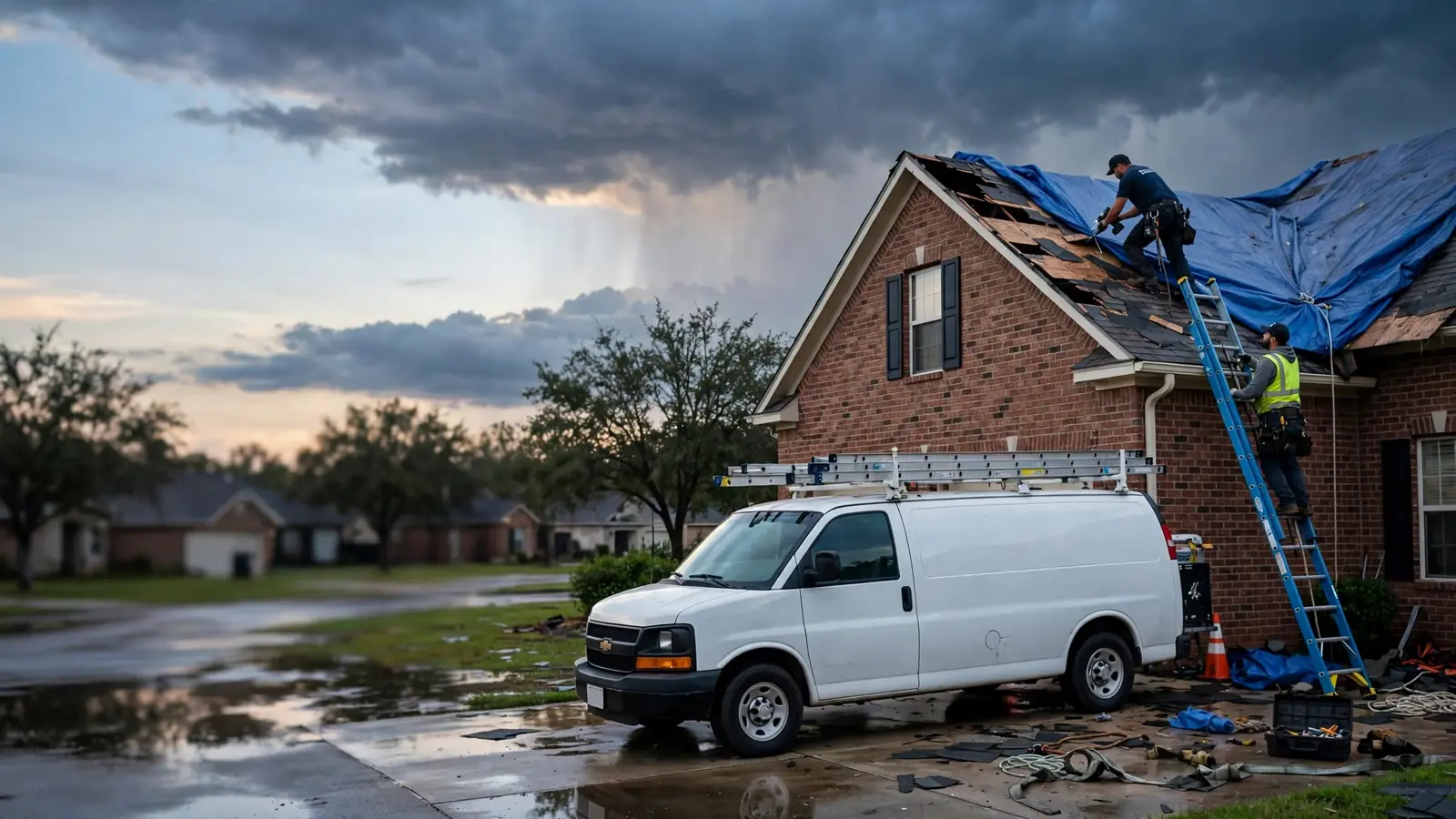
What emergency roof repair includes
Temporary cover
A tarp or temporary covering is fitted over the opening and secured to sound material around it, so wind cannot lift it and rain cannot get under it.
Leak tracing
The water path inside is followed back to the entry — the opening, the lifted course, or the cracked skylight — so the repair fixes the source.
Damage inspection
The roof around the opening is walked and the deck beneath is checked, because storm damage rarely stops at the hole you can see.
Debris clearing
Limbs, broken shingles and debris are cleared from the roof and the gutters so water can run off instead of pooling at the damage.
Permanent repair plan
Once the roof is dry, the inspection sets the permanent repair — shingles, flashing, deck boards or skylight — and the plan is explained before the work is agreed.
Follow-up check
After the permanent repair, the attic is checked for damp and the repair is looked at after the next rain, so a slow leak is caught early.
Emergency Roof Repair — on the job

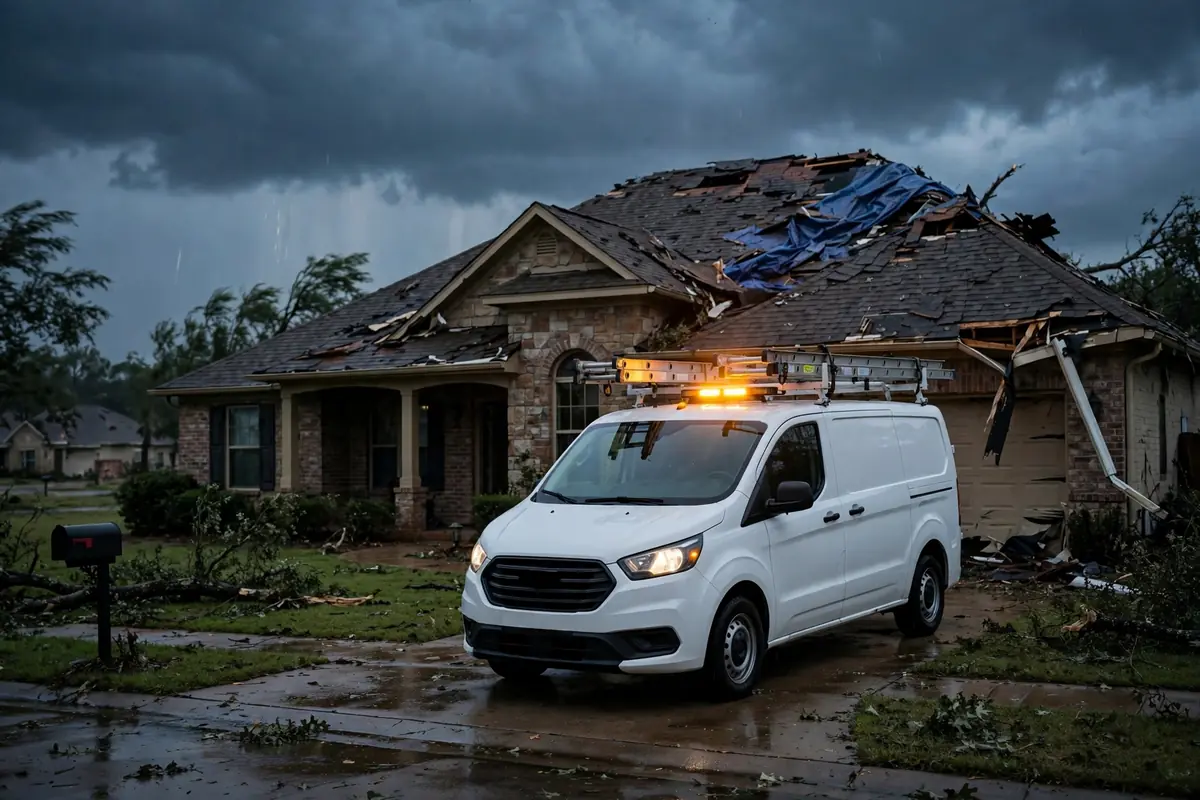
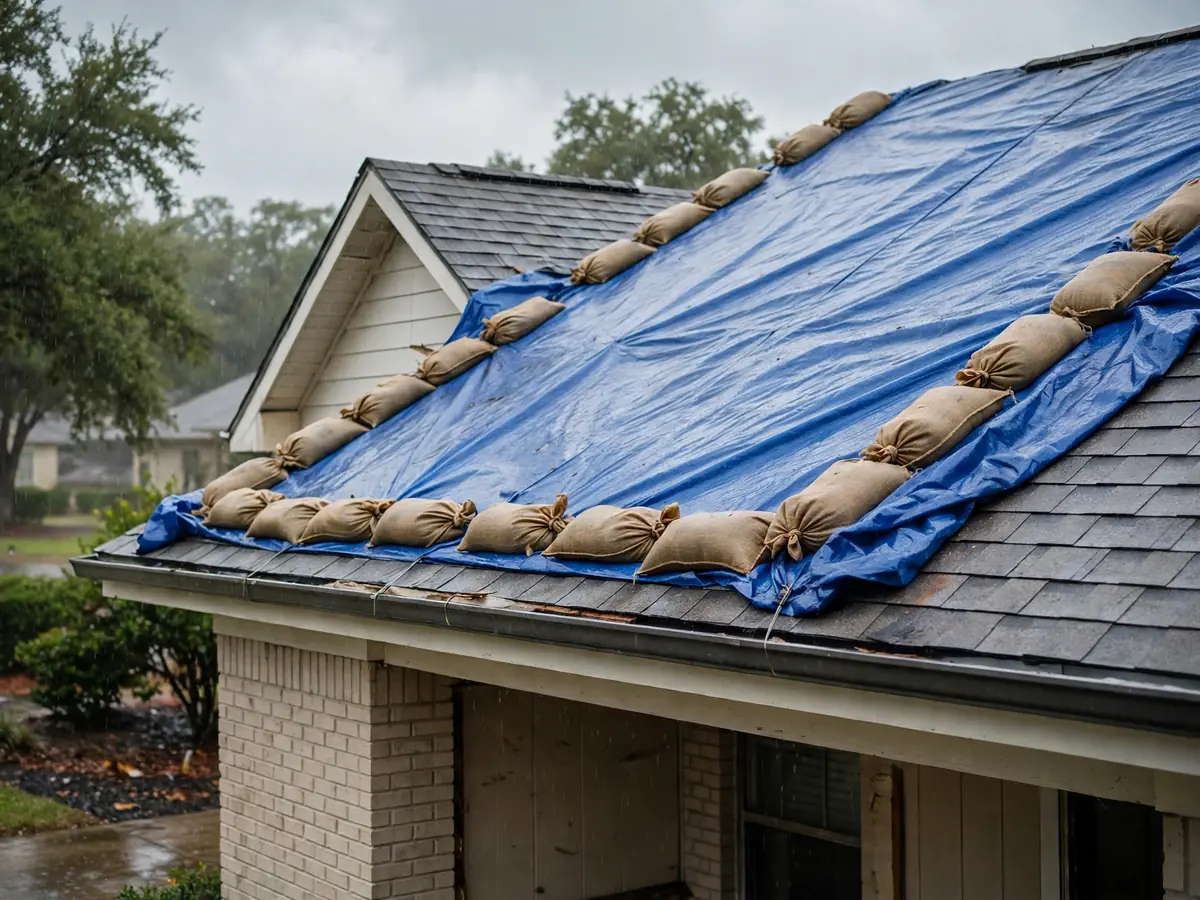
The visit, step by step
Call now and describe the water
Say where the water shows inside, when it started, and what happened — wind, a fallen limb, hail, or heavy rain. The call line runs the hours shown on this site.
Cover the opening
A local professional covers the opening with a temporary covering, secured against wind, so the next rain stays outside.

Inspection in dry weather
Once the roof is dry, the damage is inspected properly — covering, deck and attic — and the repair plan is set out.

Permanent repair
The covering, flashing, deck boards or skylight are repaired or replaced as the plan sets out.
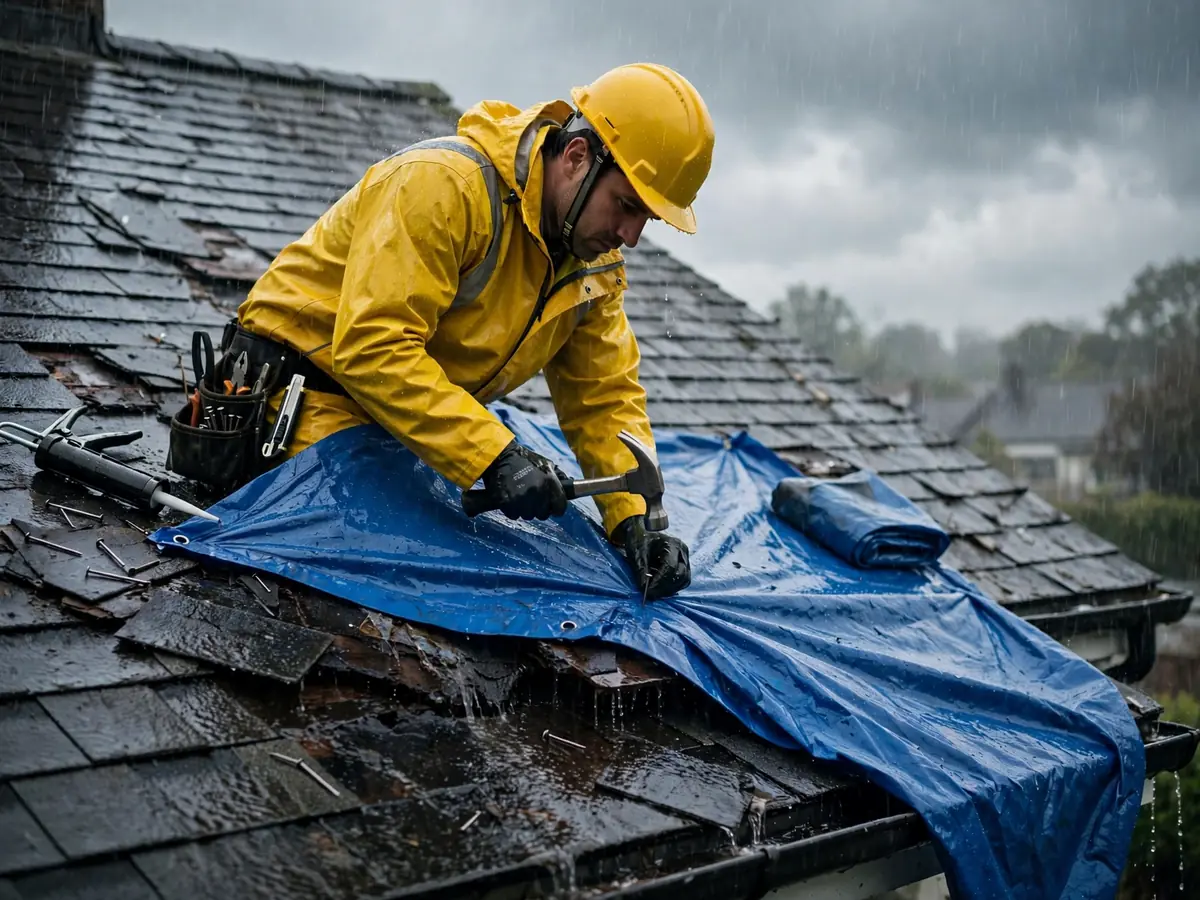
Check after the next rain
The attic and the repair are checked after the next rain, so any slow leak is caught while it is still small.
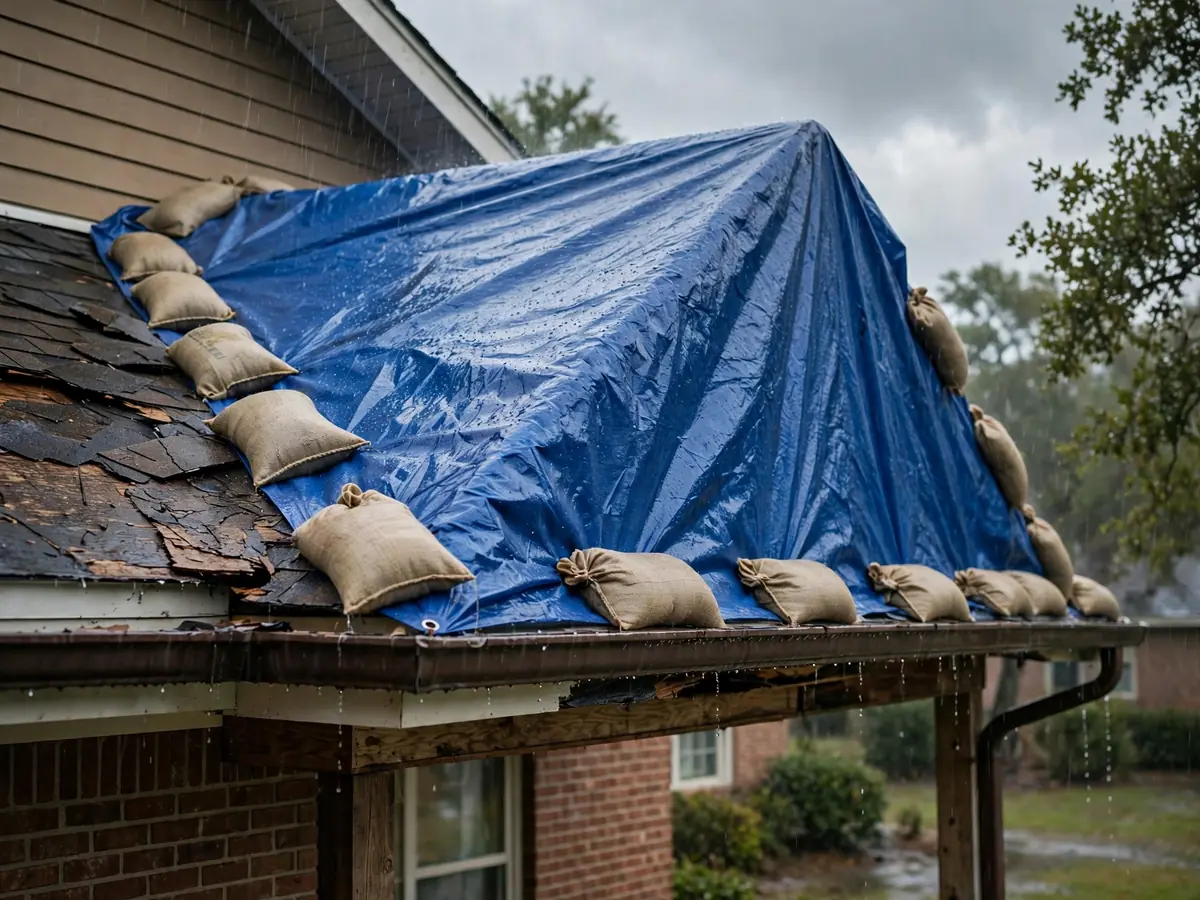
How the work is done
A temporary cover is fitted from the roof, working from sound material outward. The covering is laid over the opening with enough overlap on every side, then secured so wind cannot get under the edge. A cover that flaps in the wind is worse than no cover at all — it pulls at the shingles around the hole.
The inspection that follows is done in daylight and dry weather, when the deck can be seen properly. The inspector walks the slope around the damage, lifts the courses at the edge of the hole, and checks the deck and the attic beneath. That look decides whether the repair is a patch of covering or a section of deck as well.
Inside the house, the damp is noted and the room is left to dry. Wet insulation and drywall are pointed out so they can be dealt with as part of the recovery, because a roof repair that leaves wet insulation in the attic leaves a damp problem behind.

Before the visit
Note the roof material, its rough age, and what you are seeing — where the problem shows inside, and when it started. The inspection follows your evidence, so the notes help more than a climb ever will.
Signs you need emergency roof repair
Water dripping from a ceiling, a stain spreading across drywall, a damp patch in the attic, or daylight showing through the roof boards are the signs that call for an emergency visit. So is a skylight cracked by hail, or shingles lying in the yard after a windstorm. Each one means the roof is open somewhere, and an open roof gets worse with every rain that follows.
The sign people miss is the slow one: a stain that appears days after the storm, when water that entered through a lifted shingle has travelled along the deck and finally shown inside. A stain that appears after a storm is a storm leak, even if it shows late — and the roof should be looked at before the next storm, not after it.
A ceiling that bulges downward is water pooling above the drywall, and it is the one sign that needs action inside the house before anything else. Place a bucket below the lowest point of the bulge and poke a small hole there with a screwdriver, so the water drains in a controlled way instead of bringing the ceiling down. Move furniture and electronics clear first, and cut the power to the room if water is near a light fixture or a ceiling fan. A controlled drain is safer than a collapse, and it buys time for the roof to be covered.
Emergency Roof Repair and the Elizabeth climate
Elizabeth's storm calendar is what fills the emergency call log. Spring hail cracks skylights and bruises shingles; nor'easter season brings wind that peels courses and rain that finds every opening; a single heavy downpour can finish off a valley that was already worn. The emergency service is built for that calendar — cover first, inspect in dry weather, repair properly.
Summer heat adds its own emergency: a roof that has been patched with sealant alone softens in the heat and opens again at the next storm. Emergency work here is a proper cover and a proper repair, not a smear of sealant that the next rain washes away.
Nor'easter season runs from autumn through spring, and the weeks after a nor'easter are the busiest of the year for roof work — crews are booked, and the wait for a permanent repair is longer than in a quiet month. That is why the cover comes first and fast: a secured temporary covering holds through rain and wind for weeks while the repair is arranged, and the house stays dry in the meantime. Water-damaged areas should be dried within 24 to 48 hours, the window the Environmental Protection Agency names for keeping damp from taking hold, so fans and open windows matter as much as the tarp.
The first hour: what to do while waiting
The first hour after a leak starts is about containment, not repair. Get buckets under the drip, move electronics and valuables clear, and cover furniture with plastic sheeting. If water is pooling in a bulging ceiling, drain it in a controlled way over a bucket. If water is near a light fixture, an outlet, or a ceiling fan, cut the power to that circuit at the breaker panel before touching anything else. Photograph the stain, the bucket, and any damaged belongings — the photographs are part of the record.
Do not climb on the roof. A wet or wind-damaged roof is unsafe underfoot, and a cover laid wrong can pull at the shingles around the hole and make the opening bigger. Do not sign paperwork with someone who knocks on the door during or just after the storm — New Jersey has no statewide roofing licence, and a contract signed in a hurry is hard to undo. Do not file with the insurer before the damage has been looked at: the inspection and the photographs come first, and the claim follows the record.
Once the opening is covered, the next steps run in order. The roof is inspected in daylight and dry weather, when the deck can be seen properly. The repair plan is explained before anything is agreed — the covering, the flashing, the deck boards, or the skylight, and what each one involves. After the permanent repair, the attic is checked again for damp, and the repair is looked at after the next rain. A roof that stays dry through the next storm has passed its test.
Problem → solution
Problem
An Elizabeth home after a night windstorm: shingles peeled back at the ridge, water dripping from the hallway ceiling, and more rain forecast for the next day.
Solution
The opening was covered with a secured temporary covering the same day, stopping the water. In dry weather the inspection found the peeled course and two lifted courses beside it; the permanent repair replaced the course and re-sealed the neighbours.
Problems emergency roof repair solves in the Elizabeth area
Water coming in
An opening in the roof lets rain into the house. The cover stops the water; the repair closes the opening.
Storm openings
Wind-peel, fallen limbs and cracked skylights all leave holes. Each is covered first, repaired second.
Hidden damage
Damage around an opening is often wider than the hole. The inspection walks the slope around it.
Damp inside
Water inside soaks insulation and drywall. The damp is noted so it can dry as part of the recovery.
Other roofing services in Elizabeth
A replacement visit starts with an inspection, not a sales talk. The roof is walked, the attic is checked for daylight and damp, and the deck is looked at where…
The stain is rarely above the leak. Water travels along the deck and rafters before it shows inside, so the source can sit several feet uphill from the damp pat…
The inspection after a storm has two jobs: find the damage, and document it. Photos of each slope, notes on the bruised and lifted areas, the date of the storm,…
A metal roof is a system like any other: panels, underlayment, flashing, ridge and ventilation, each fitted to the house. The inspection looks at the slope, the…
Commercial roofs add their own details: rooftop units, vents and pipes that pierce the membrane, foot traffic from maintenance, and ponding water where the slop…
An inspection is worth doing after a storm, before buying a home, when a roof reaches the age its material is known for, or when a stain appears and the cause i…
The choice between them is a matter of the roof, the house and the weather it will meet. Architectural shingles are heavier and hold their seal better in wind; …
The inspection looks at the whole run: the gutter, the downspouts, the fascia behind it, and the ground where the water lands. Call Now and say what you are see…
Tile roofing covers clay and concrete tile — new tile roofs, broken-tile replacement, underlayment renewal under sound tile, and flashing at the hips, valleys a…
Skylight installation and repair covers new skylight fitting, leak tracing at the curb and flashing, cracked glazing after hail, and the flashing and underlayme…
Roof maintenance covers scheduled inspection visits, preventive repairs, gutter and drain clearing, and a written record of what was found on each visit. The rh…
Roof insurance claims help covers the steps in order: inspect before you file, document the damage, understand the two-stage payment, meet the adjuster with the…
Frequently asked questions
Straight answers to the questions Elizabeth area homeowners ask most.
Water coming into the house, an opening in the roof from wind or a fallen limb, a cracked skylight, or shingles peeled back across a slope. If rain can get in, it is an emergency — call now.
The opening is covered with a temporary covering, secured against wind, so the next rain stays outside. The permanent repair is planned after the inspection in dry weather.
No. A wet or wind-damaged roof is unsafe underfoot, and a cover laid wrong can pull at the shingles around the hole. Note where the water shows inside and call — the notes help the inspection.
The cover goes on as soon as the visit can be arranged. The permanent repair follows the inspection in dry weather — the plan sets the schedule for your roof.
A properly secured cover holds through rain and wind. It is a temporary measure — the permanent repair is what closes the roof for good.
Place a bucket below the lowest point of the bulge and poke a small hole there so the water drains in a controlled way. Move valuables clear, and cut the power to the room if water is near a light fixture or fan. A controlled drain is safer than a collapse.
A properly secured tarp — laid over the ridge and fastened with boards, not just weighted down — holds through rain and wind for weeks while the permanent repair is arranged. It is a cover, not a seal, and the permanent repair is what closes the roof for good.
Cover first, document, then follow the claim steps. The record — photos of the damage, the storm date, and the written note of what the inspection found — is what the claim runs on, and a claim filed before the damage is assessed is a claim built on guesswork.
Emergency Roof Repair problem in Elizabeth?
Call now — we will connect you with an independent local roofing professional for an inspection and a clear plan for emergency roof repair.
Call NowTalk to a local roofing professional
One call connects you with a local professional for Elizabeth, Newark and the metro around them. Describe your roof — what you are seeing, where the problem shows, and when it started — and the visit is arranged from there.
Mon–Fri 7:00 AM–10:00 PM ET · Sat 8:00 AM–10:00 PM ET · Sun 7:00 AM–9:00 PM ET
Service area
Elizabeth · Newark · Linden · Rahway · Union · Hillside · Roselle · Roselle Park · Bayonne · Jersey City
Elizabeth Roofing Pros is a referral service connecting customers with local roofing professionals; it is not itself the service company.