Roof Repair in Elizabeth, NJ
A roof repair is the right answer when the damage is local and the roof still has life in it. A few lifted shingles after a windstorm, flashing that has worked loose around a vent, a valley that lets water through — each of these is a single weak point, and fixing the weak point properly is what a repair does. The skill is finding the real source, not the stain on the ceiling.
Talk to a local roofing professional
One call connects you with a local professional for the Elizabeth area. Describe your roof — what you are seeing, and where — and the visit is arranged from there.
Mon–Fri 7:00 AM–10:00 PM ET · Sat 8:00 AM–10:00 PM ET · Sun 7:00 AM–9:00 PM ET
How roof repair works in Elizabeth area homes
Most Elizabeth roof repairs fall into a small set of causes. Wind lifts shingle edges and breaks the seal between courses; hail bruises the shingle mat and knocks granules off; flashing separates from chimneys and walls as the house moves with heat and seasons; valleys wear where two slopes pour water into one channel. Each cause has its own fix, and the fix for one does nothing for another — which is why the inspection comes before the repair.
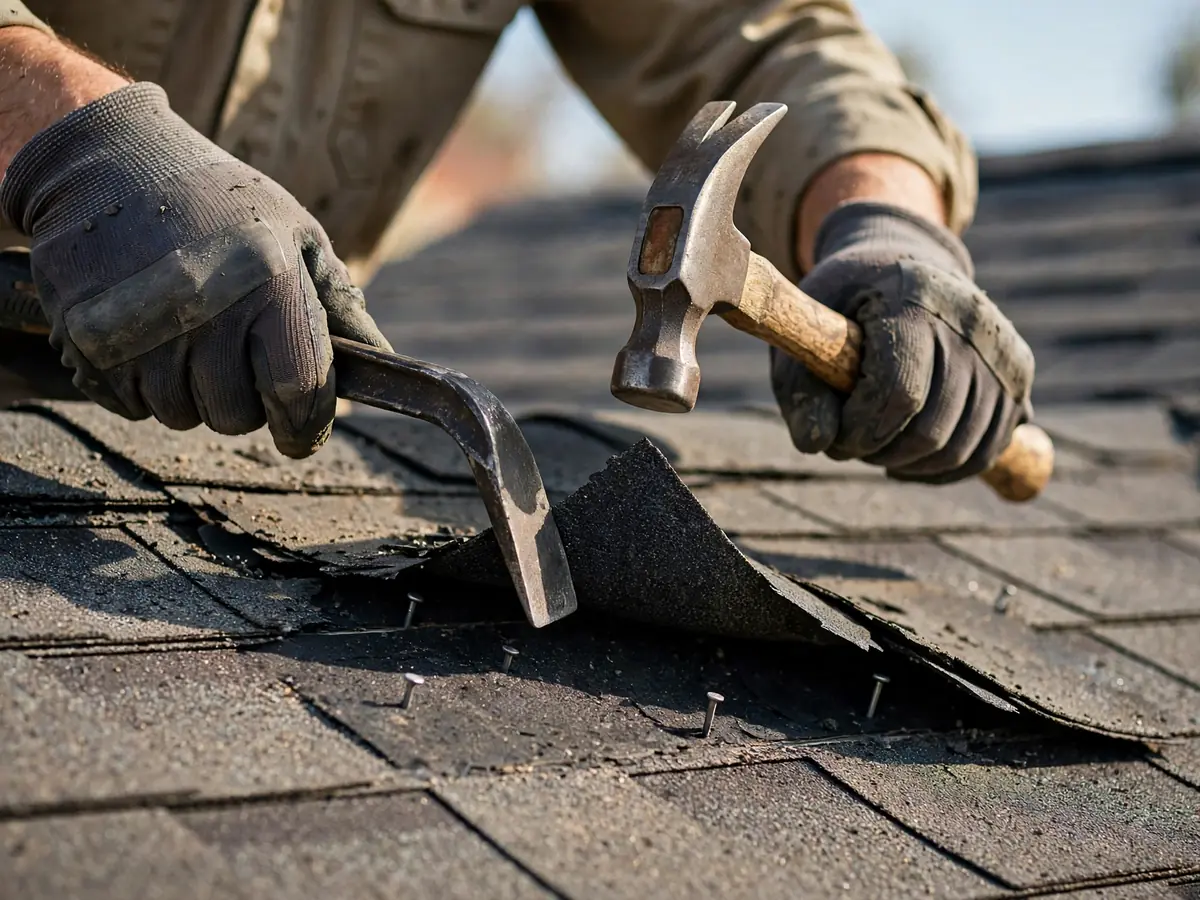
Shingle repair is not just swapping a shingle. The replacement shingle must match the course, the seal must be set so wind cannot lift it again, and the nails must sit where the next course covers them. A shingle nailed in the open, or sealed with the wrong product, becomes the next leak. The same care applies to flashing: it is shaped to the joint, not smeared over it.
Some repairs are small and some are not, and the honest line between them is the condition of the roof around the damage. A sound roof with one damaged area takes a repair well. A roof where the covering is thin across the whole slope will take a repair in one place and leak in the next — that is a replacement conversation, and the inspection will say so plainly.
- Leak source traced uphill from the stain, not guessed from the ceiling
- Damaged shingles replaced in matching courses, sealed against wind lift
- Flashing around chimneys, vents and walls re-shaped and re-sealed
- Valleys cleared and re-lined where water channels have worn through
- Attic checked after the repair for damp, daylight and ventilation
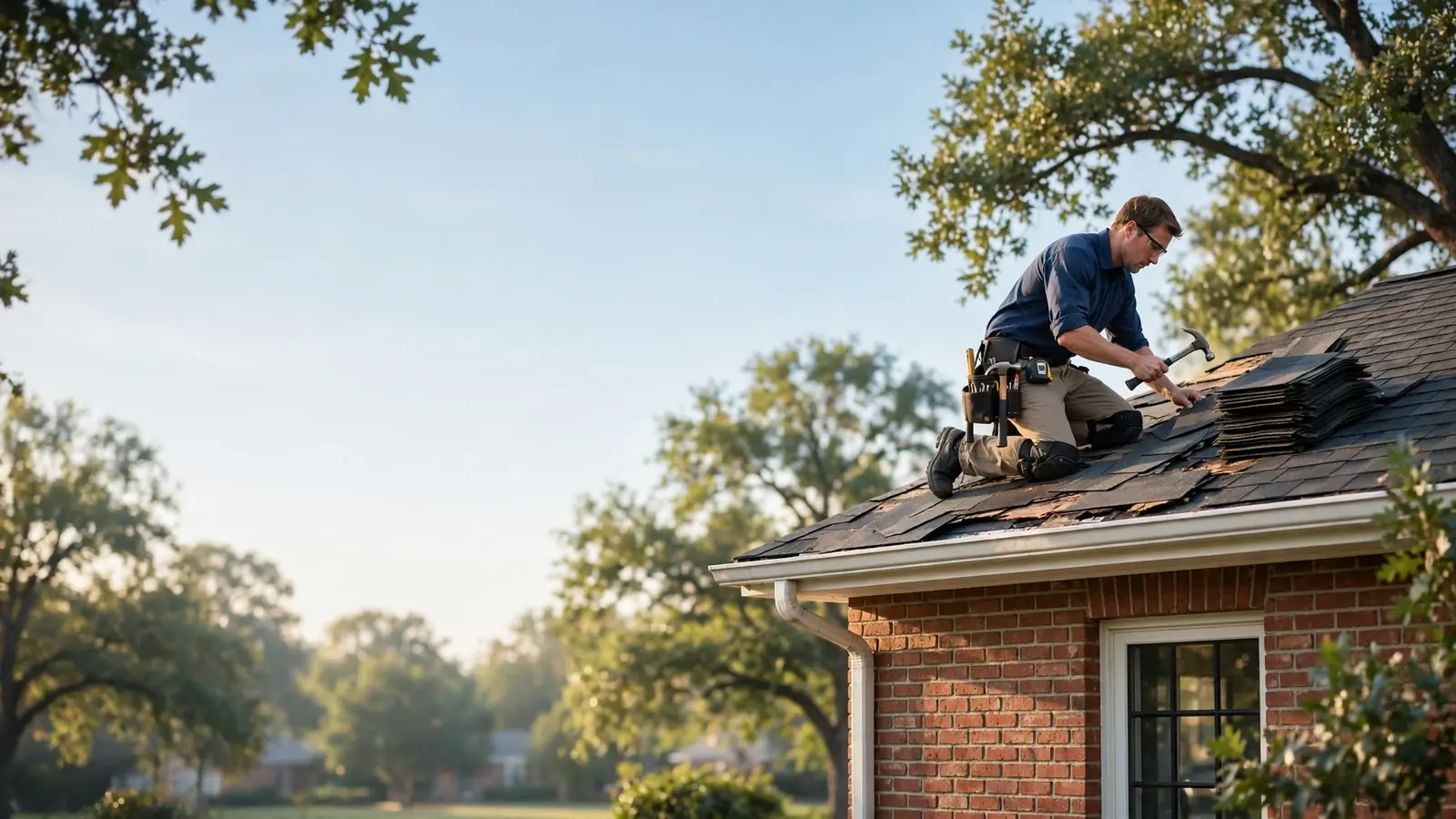
What roof repair includes
Leak tracing
The visit follows the water: from the stain inside, along the deck and rafters, up to the entry point on the roof. The entry is fixed, not the stain.
Shingle replacement
Lifted, cracked or missing shingles are replaced in the same course, with the seal set so the next windstorm cannot lift them again.
Flashing work
Step flashing at walls, pipe boots and chimney flashing are re-shaped or replaced where they have separated. Flashing is the most common leak source on Elizabeth roofs.
Valley repair
Worn valleys are cleared of debris and re-lined where the channel has worn through, so water runs off instead of pooling at the joint.
Vent and pipe boots
Cracked rubber boots around vent pipes are a quiet leak source. They are replaced and sealed so the pipe stays dry where it passes through the roof.
Gutter edge check
The eave and the first course above the gutter are checked, because water backing up from a clogged gutter enters under the shingles at the edge.
Roof Repair — on the job
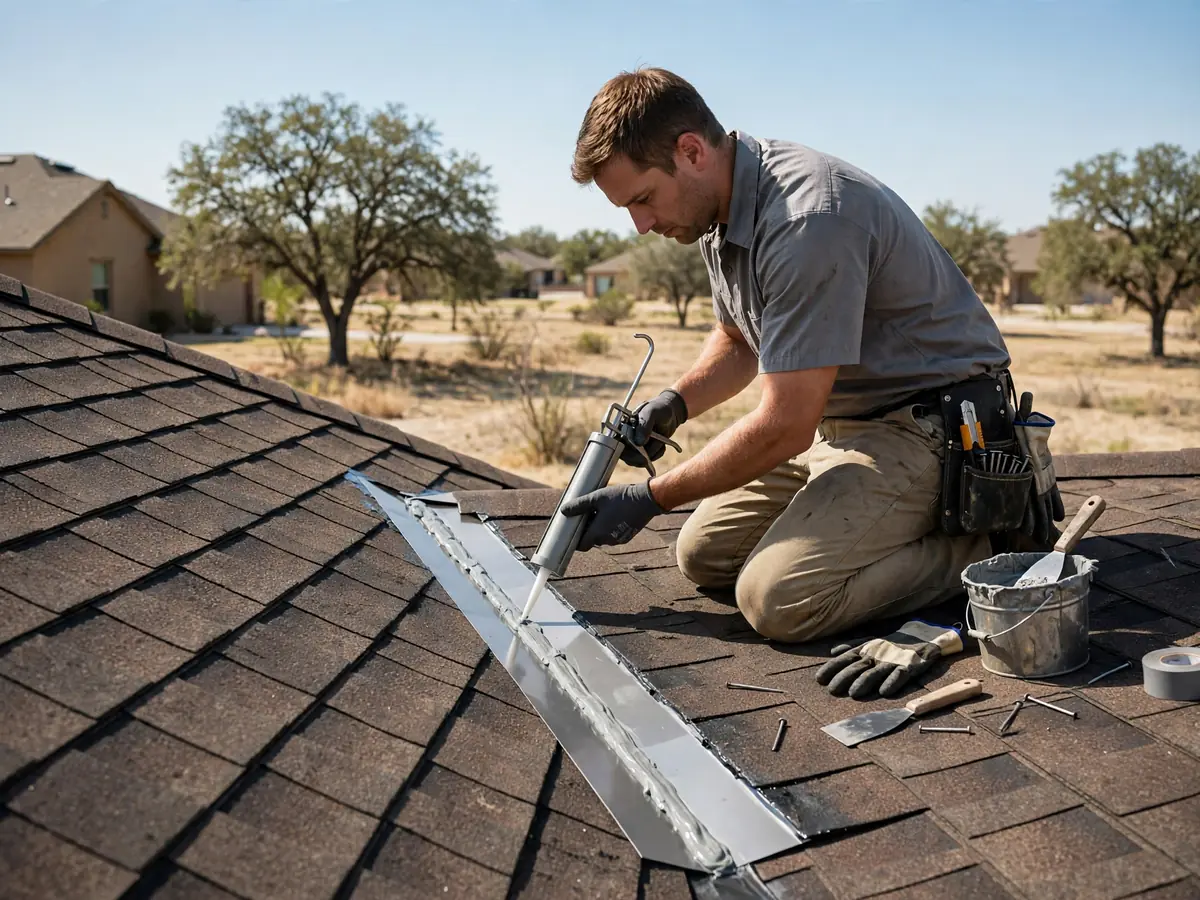
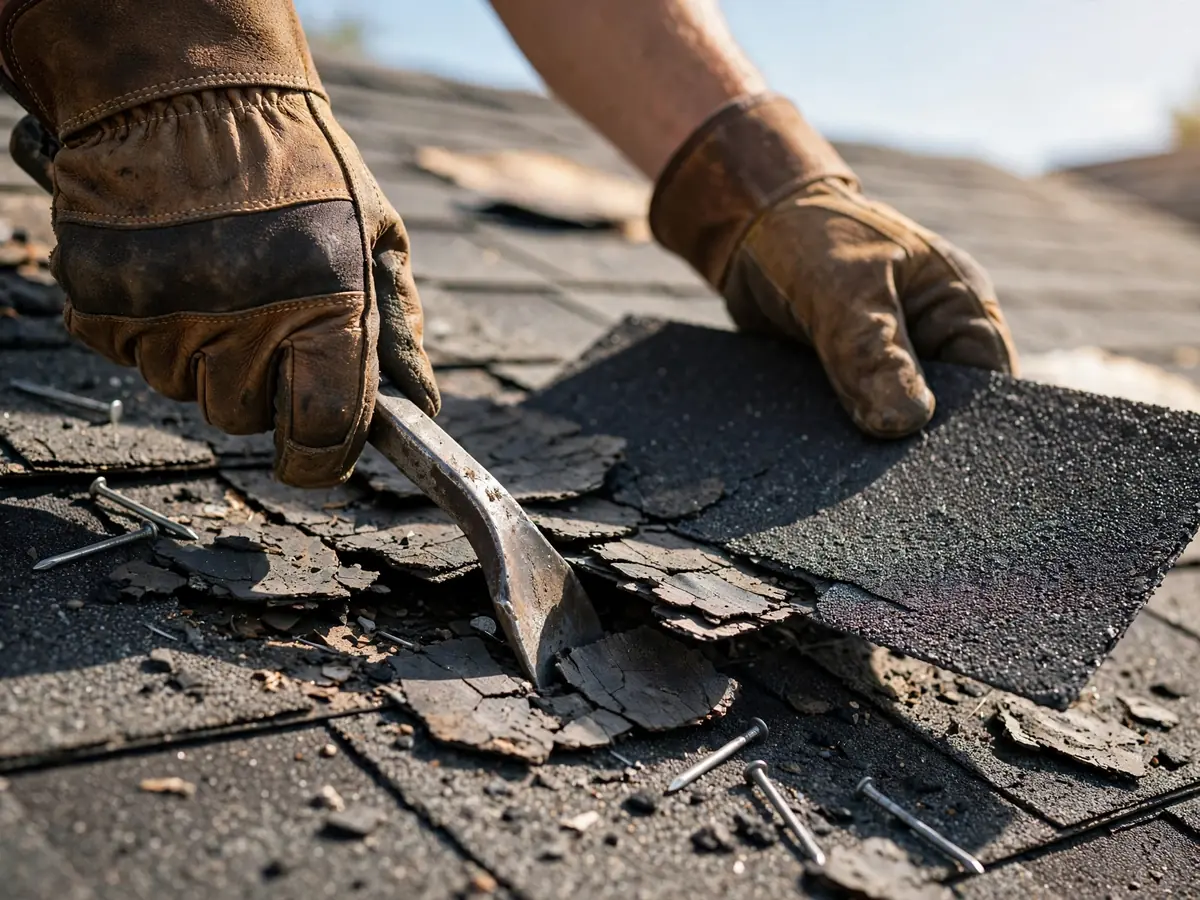
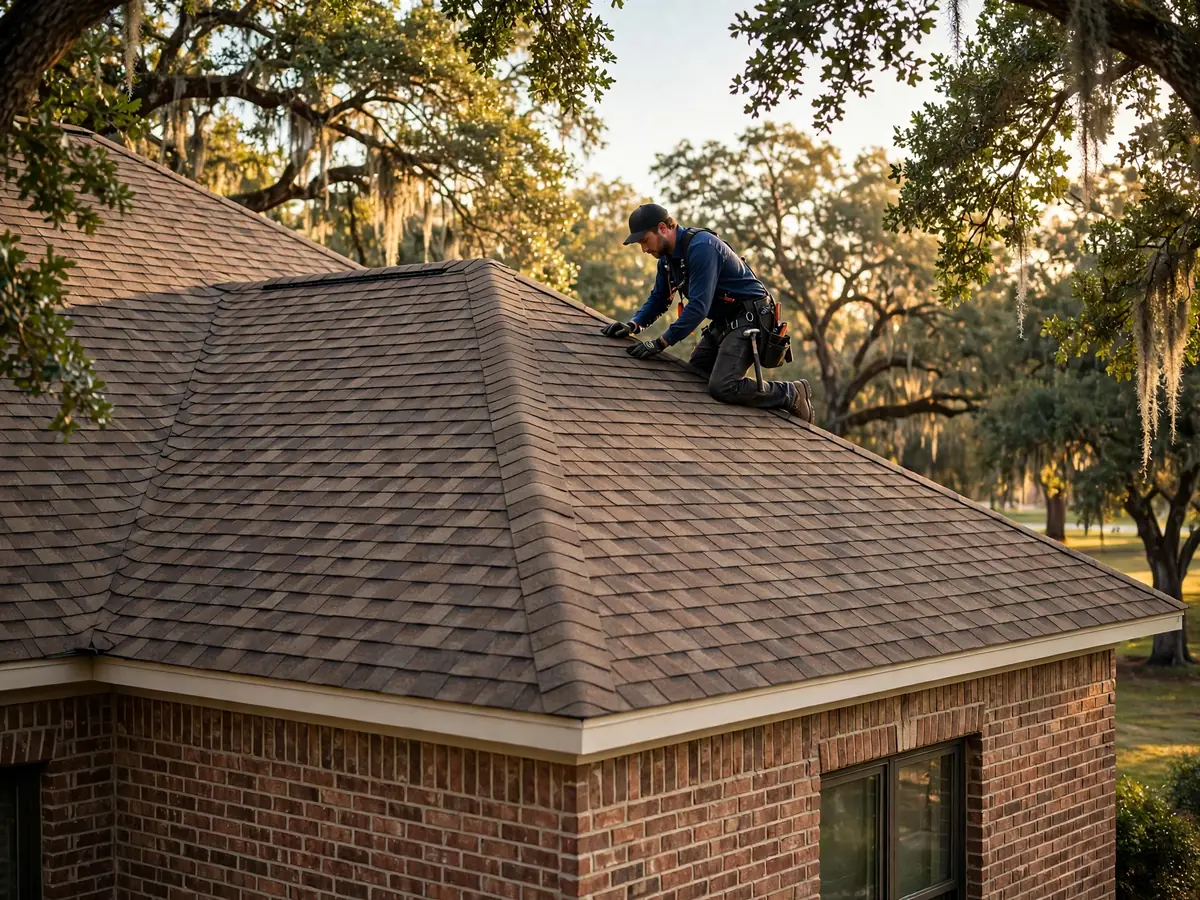
The visit, step by step
Call and describe the problem
Say where the problem shows inside — ceiling, wall or attic — and when it started. A leak after a storm and a stain that grows slowly point to different causes.
Inspection and tracing
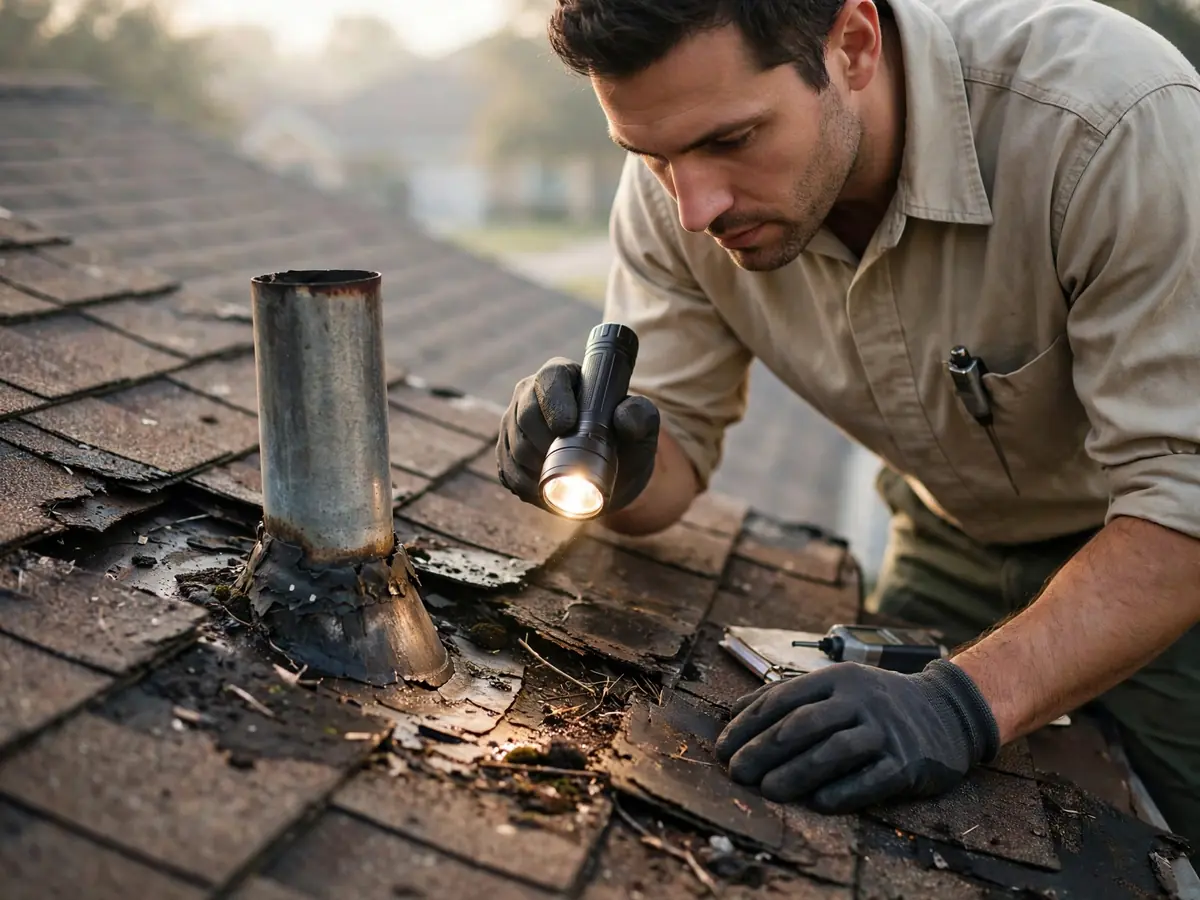
A local professional walks the roof and the attic, tracing the water from the stain back to the entry point.
Repair plan
The plan names the cause — shingle, flashing, valley or vent — and the fix for that cause, so you know what is being repaired and why.

The repair
Damaged material is replaced or re-shaped in place, sealed where the detail needs it, and the surrounding courses are checked.
Check after the work
The attic and the repair are checked once more, and the visit notes say what to watch for after the next rain.
How the work is done
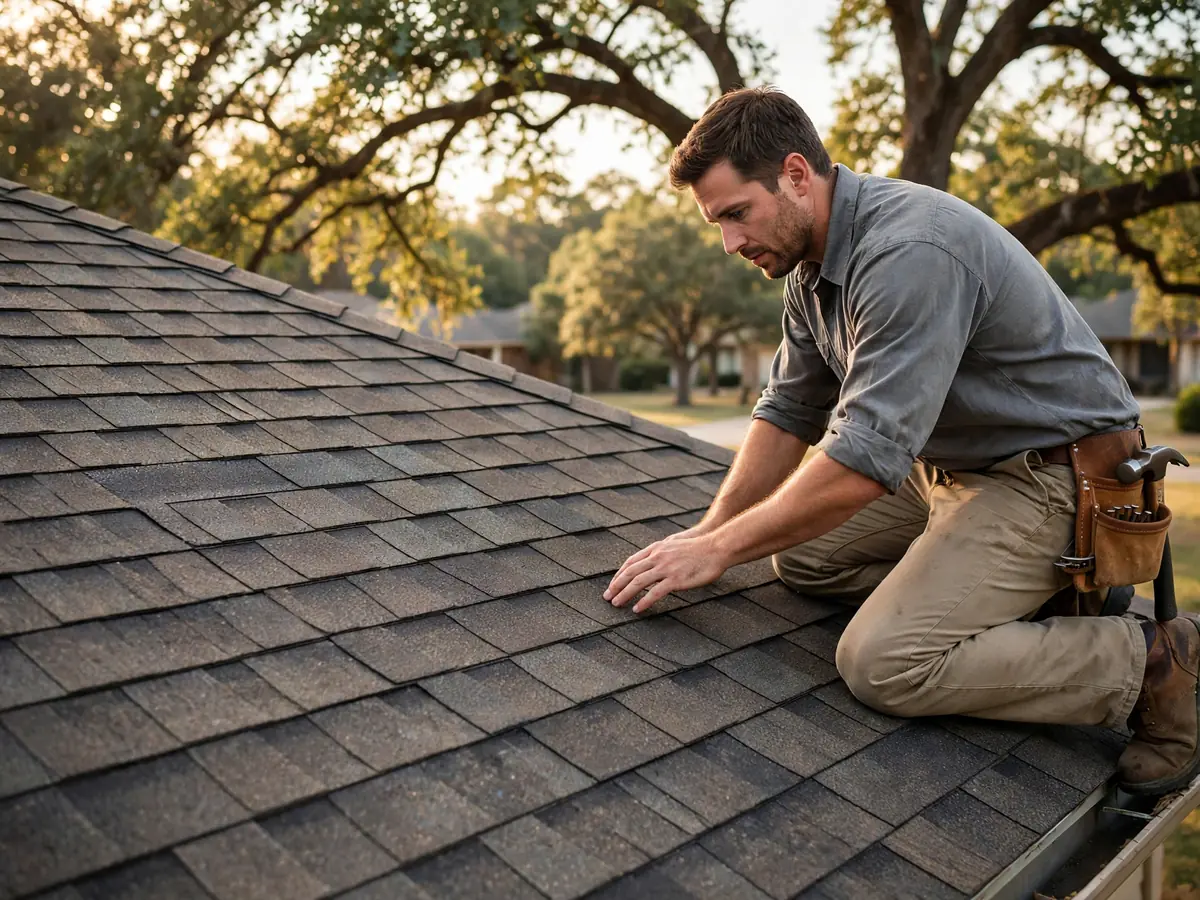
Repair work is done from the roof, not from the ground with a long tool. The roofer walks the slope, lifts the course above the damage, and sees the underlayment and deck underneath. That view decides whether the damage stops at the shingle or runs deeper into the deck.
Sealant is used sparingly and in the right places. It seals a flashing joint or a shingle tab; it is not a roof in a tube. A repair that relies on a thick smear of sealant will fail when New Jersey summer heat softens it and the next storm washes it away.
After the repair, the attic is checked again. A dry attic after the next rain is the real test, and the visit notes say what to watch for — a new stain, a damp rafter, or granules collecting where the repair was made.

Before the visit
Note the roof material, its rough age, and what you are seeing — where the problem shows inside, and when it started. The inspection follows your evidence, so the notes help more than a climb ever will.
Signs you need roof repair
A stain on the ceiling that grows after rain, granules collecting in the gutter, a shingle tab flapping in the wind, or a damp smell in the attic are the four signs Elizabeth homeowners meet most. Each one points to a different cause, and each one is worth a look before the next storm — a small leak left through a hail season becomes a deck repair.
The signs that matter most are the ones you cannot see from the ground. Lifted shingle edges, cracked pipe boots and separated flashing all sit out of sight from the driveway. That is why the inspection walks the roof: the ground view hides the very damage that lets water in.
A cracked pipe boot is the quietest sign of all. The rubber collar where a vent pipe passes through the roof dries and cracks in New Jersey sun and heat, and water slips in around the pipe while the shingles above it look sound. The stain it leaves is small and easy to blame on something else, which is why the inspection checks every boot on the roof, not just the one above the stain. A boot is replaced, not smeared over — sealant on a cracked boot is a repair that fails at the next storm.
Roof Repair and the Elizabeth climate
New Jersey weather tests repairs hard. A repair made in a dry week must hold through wind-driven rain in nor'easter season and the next spring hail. That is why a repair here is fixed properly rather than covered over — a shingle sealed against lift, flashing shaped to the joint, a valley lined so water runs off. A repair that holds through one storm season is a repair done right.
Heat is the other test. Summer temperatures soften sealants and age rubber pipe boots, so a repair that relies on sealant alone will not last. The materials used in an Elizabeth repair are chosen for heat as well as rain, and the visit notes say when the repair should be looked at again.
Humidity is the quiet half of New Jersey weather for repairs. Warm, moist air from inside the house rises into the attic, and where it meets a cool deck it condenses and drips — a damp patch that looks like a leak and is not one. A repair visit that finds a dry roof and a damp attic is looking at ventilation, not at shingles, and the fix is airflow: clear soffits, balanced intake and exhaust, and bathroom fans that vent through the roof instead of into the attic.
What a repair visit should leave behind
A repair visit should leave three things behind: a named cause, the fix for that cause, and notes on what to watch after the next rain. The cause is named in plain words — a separated flashing joint, a worn valley, a cracked boot, a lifted course — so the homeowner knows what was repaired and why. A visit that leaves only a patched spot and no explanation has not finished the job, because the next leak will show in a new place and nobody will know where to look.
Matching the repair to the roof is part of the work. A replacement shingle must match the course it joins, the seal must be set so wind cannot lift it again, and the nails must sit where the next course covers them. Sealant is used sparingly and in the right places — it seals a flashing joint or a shingle tab, and it is not a roof in a tube. A repair that relies on a thick smear of sealant will fail when New Jersey summer heat softens it and the next storm washes it away.
Some roofs are past the point where a repair helps, and the honest line is the condition of the covering around the damage. A sound roof with one damaged area takes a repair well. A roof where the covering is thin across the whole slope, the seals have failed in many places, and the patches already number three or four will take a repair in one place and leak in the next. That is a replacement conversation, and the inspection will say so plainly rather than selling another patch.
Problem → solution
Problem
An Elizabeth home with a stain on the hallway ceiling after every heavy rain. The shingles above the stain looked sound from the ground, and the leak had been painted over twice.
Solution
The inspection traced the water uphill to a separated pipe boot two courses above the stain. The boot was replaced, the surrounding shingles were re-sealed, and the attic was dry after the next storm.
Problems roof repair solves in the Elizabeth area
Ceiling stains
A stain that grows after rain is water finding a path through the roof. Tracing finds the entry; the repair closes it.
Lifted shingles
Wind lifts shingle edges and breaks the seal. Re-sealing and replacing the lifted course stops the next storm getting under it.
Flashing leaks
Flashing that has separated from a chimney or wall lets water in at the joint. Re-shaping the flashing closes the gap.
Valley wear
Two slopes pour water into one valley channel, and the channel wears first. Re-lining the valley restores the run-off.
Other roofing services in Elizabeth
A replacement visit starts with an inspection, not a sales talk. The roof is walked, the attic is checked for daylight and damp, and the deck is looked at where…
The inspection after a storm has two jobs: find the damage, and document it. Photos of each slope, notes on the bruised and lifted areas, the date of the storm,…
Call Now and say where the water shows inside — ceiling, wall or attic — and what happened. The first visit covers the opening and stops the water; the inspecti…
A metal roof is a system like any other: panels, underlayment, flashing, ridge and ventilation, each fitted to the house. The inspection looks at the slope, the…
Commercial roofs add their own details: rooftop units, vents and pipes that pierce the membrane, foot traffic from maintenance, and ponding water where the slop…
An inspection is worth doing after a storm, before buying a home, when a roof reaches the age its material is known for, or when a stain appears and the cause i…
The choice between them is a matter of the roof, the house and the weather it will meet. Architectural shingles are heavier and hold their seal better in wind; …
The inspection looks at the whole run: the gutter, the downspouts, the fascia behind it, and the ground where the water lands. Call Now and say what you are see…
Tile roofing covers clay and concrete tile — new tile roofs, broken-tile replacement, underlayment renewal under sound tile, and flashing at the hips, valleys a…
Skylight installation and repair covers new skylight fitting, leak tracing at the curb and flashing, cracked glazing after hail, and the flashing and underlayme…
Roof maintenance covers scheduled inspection visits, preventive repairs, gutter and drain clearing, and a written record of what was found on each visit. The rh…
Roof insurance claims help covers the steps in order: inspect before you file, document the damage, understand the two-stage payment, meet the adjuster with the…
Frequently asked questions
Straight answers to the questions Elizabeth area homeowners ask most.
The visit traces the water from the stain inside, along the deck and rafters, up to the entry point on the roof. The stain is rarely above the leak, so the trace matters more than the stain.
A few missing shingles on an otherwise sound roof are a repair. If shingles are missing across many slopes and the covering is worn, the inspection will say the roof is a replacement conversation.
Most repairs are finished in a single visit once the cause is found. The schedule depends on the damage and the roof — the plan agreed after the inspection sets it out.
Replacement shingles are matched to the course and the covering where a match exists. On older roofs the match may be close rather than exact, and the inspection will say so.
Keep the area under the leak clear, note where and when the water shows, and do not climb on the roof. The notes you keep help the inspection trace the leak.
The repair likely fixed the stain, not the entry. Water travels along the deck before it shows inside, so the entry can sit several feet uphill from the stain. A second leak in the same place means the trace starts again — from the stain, along the deck, up to the entry.
A pipe boot is the rubber collar where a vent pipe passes through the roof. New Jersey sun and heat dry and crack the rubber, and water slips in around the pipe while the shingles above look sound. The boot is replaced, and the surrounding shingles are re-sealed.
No. The covering must be dry for the repair to hold, and a wet roof is unsafe underfoot. If water is coming in, the opening is covered first with a temporary covering, and the permanent repair is done in dry weather once the inspection has read the damage.
Roof Repair problem in Elizabeth?
Call now — we will connect you with an independent local roofing professional for an inspection and a clear plan for roof repair.
Call NowTalk to a local roofing professional
One call connects you with a local professional for Elizabeth, Newark and the metro around them. Describe your roof — what you are seeing, where the problem shows, and when it started — and the visit is arranged from there.
Mon–Fri 7:00 AM–10:00 PM ET · Sat 8:00 AM–10:00 PM ET · Sun 7:00 AM–9:00 PM ET
Service area
Elizabeth · Newark · Linden · Rahway · Union · Hillside · Roselle · Roselle Park · Bayonne · Jersey City
Elizabeth Roofing Pros is a referral service connecting customers with local roofing professionals; it is not itself the service company.