How to Prepare Your Roof for Nor'easter Season in Elizabeth, NJ
Nor'easter season runs from autumn through spring. The prep is a roof inspection, the gutters cleared, and the loose ends tied down — before the season, not during it.
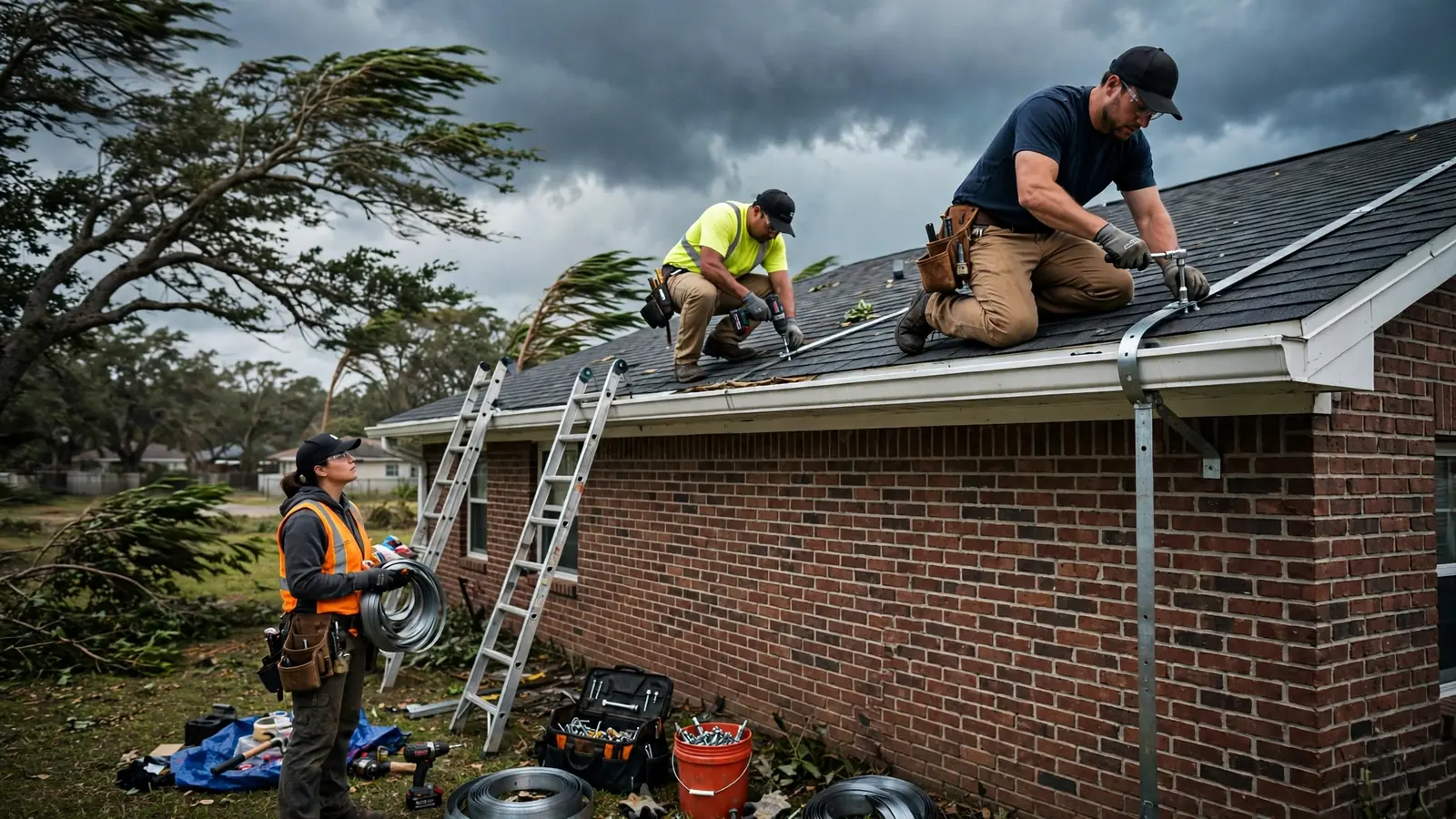
The short version
Problem: nor'easters bring wind-driven rain that finds every weak joint on a roof — and the season runs from autumn through spring.
Solution: inspect the roof before the season, clear the gutters, and fix the loose ends while the weather is still calm.
When to call: in the weeks before autumn, so the inspection and the repairs are done before the first storm.
Nor'easter season runs from autumn through spring in the Elizabeth area, and every year it brings wind-driven rain that finds every weak joint on a roof — a lifted tab, a separated flashing joint, a valley worn thin. The preparation for the season is not complicated, but it has to be done before the season, not during it. A roof inspected and repaired in the autumn meets the season as a complete system; a roof left to the first storm meets it as a patchwork.
This guide is the checklist: the roof inspection, the gutters, the loose ends, and what to do after the storm passes.
Nor'easter season starts in the autumn, and the preparation starts before it. The weeks before the season are the window when the roof can still be inspected, the loose ends fixed, and the gutters cleared — before the first storm, and before the crews are booked solid after it. A roof prepared in the autumn meets the season as a complete system; a roof prepared in January meets it as a patchwork, with the worst weather already on the way.
Inspect the roof before the season
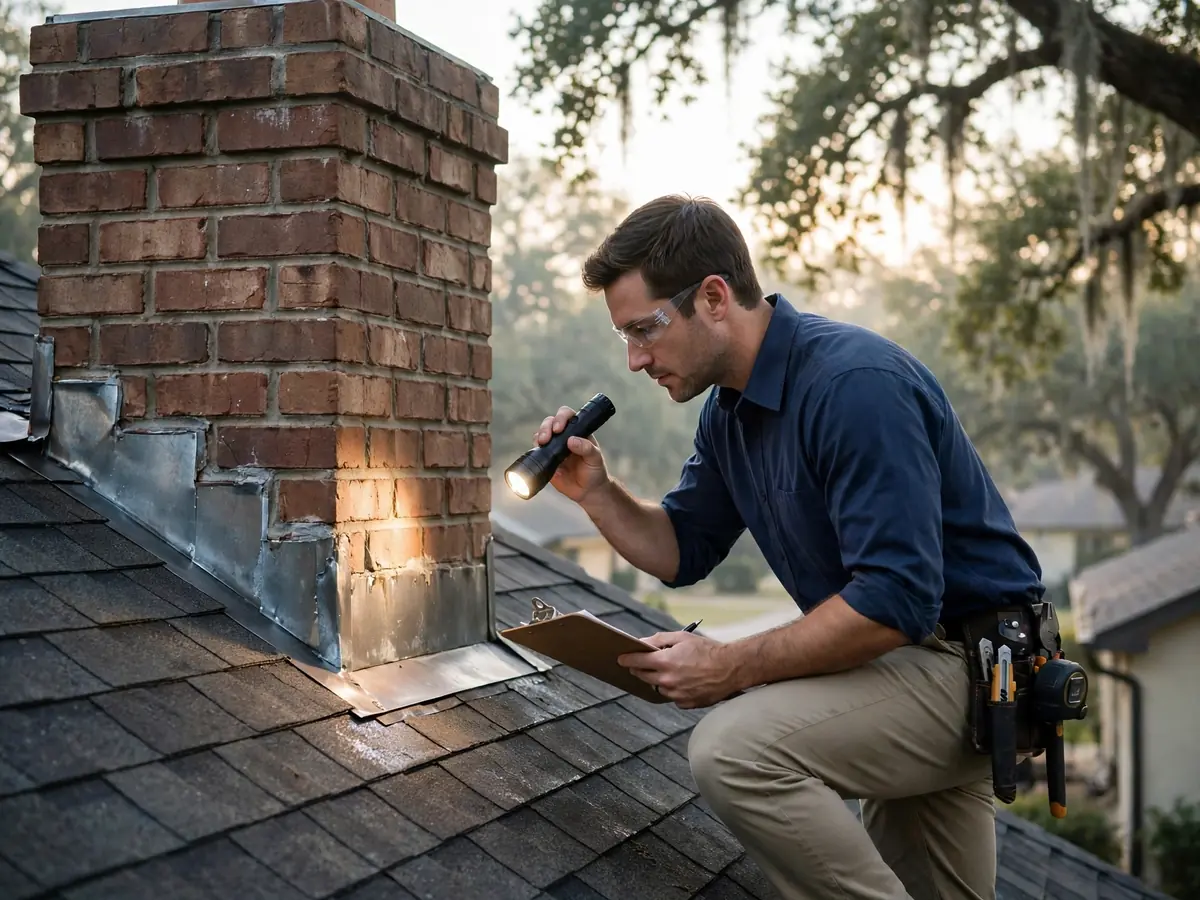
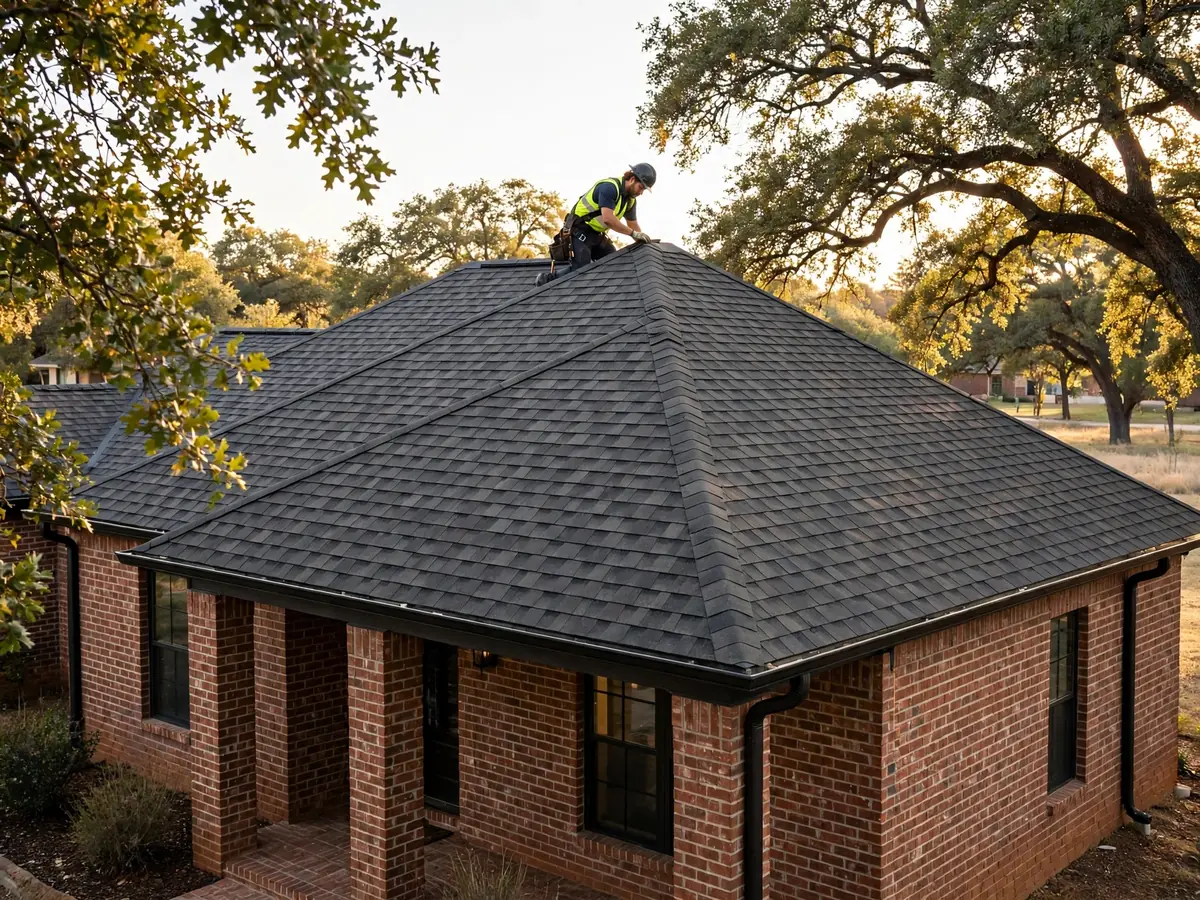
The first step is an inspection, done in the weeks before the season. The inspector walks every slope and checks the covering for lifted, cracked or missing shingles, the seal between courses, and the flashing at every chimney, wall and vent. The attic is checked for daylight, damp and ventilation, because the attic often shows roof trouble before the ceiling does.
The findings are written down slope by slope, with the next steps in plain words — what needs doing now, what can wait, and what to watch. A roof inspected before the season carries no surprises into it.
The inspection before the season walks every slope and checks the covering, the flashing, the valleys, and the ventilation. The inspector looks for the loose ends the wind catches first — a tab that has lost its seal, a ridge cap that has worked loose, a pipe boot that has cracked in the sun — and the attic is checked for daylight and damp. The findings are written down slope by slope, and the plan follows the findings.
Fix the loose ends
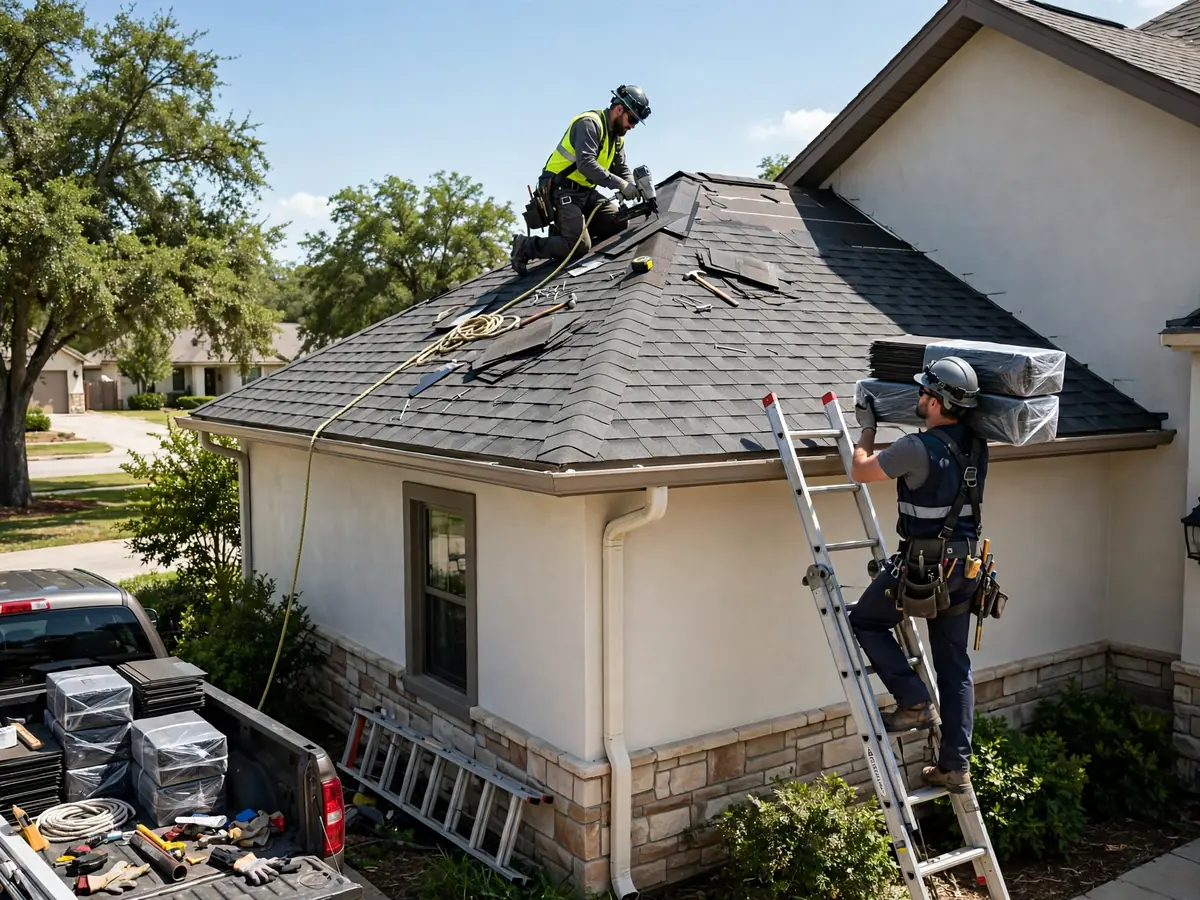
The loose ends are the details the wind catches first: a shingle tab that has lost its seal, a ridge cap that has lifted, flashing that has separated from a chimney or wall. Each one is a small repair in the autumn and a leak in January, and the inspection finds them before the season rather than after it.
The repair is done properly, not covered over. A shingle is re-sealed or replaced in its course; flashing is re-shaped to the joint; a ridge cap is replaced where the wind has lifted it. A repair that relies on a thick smear of sealant will fail when the next storm washes it away.
Clear the gutters and the drains
Gutters and drains are the roof's drainage, and a nor'easter drops more water in a day than a gutter sized for a lighter climate can carry. Clear the gutters and the downspouts of leaves and debris, check the slope of each run, and make sure the downspout outlets land away from the walls and the foundation.
On a low-slope roof, the drains matter more still. A blocked drain is ponding water, and ponding water works at the seams every hour it sits there. The drains are cleared and tested with water, not just looked at, before the season.
Tidy the yard and the roof
Loose items in the yard become projectiles in nor'easter wind, and the roof is the first thing they hit. Tie down or bring inside the furniture, the planters and the loose boards, and clear the roof itself of limbs, debris and anything that can lift in the wind.
On the roof, the check is for anything that can move: a loose vent cap, a satellite dish that has worked loose, a skylight that has cracked. Each one is a place the wind can catch, and each one is dealt with before the season.
Know what to do after the storm
After the storm passes, the first step is to look from the ground: shingles on the ground, lifted tabs at the ridge, flashing pulled away, water inside that was not there before. Note the storm date and photograph any damage you can see safely from the ground, and do not climb on the roof.
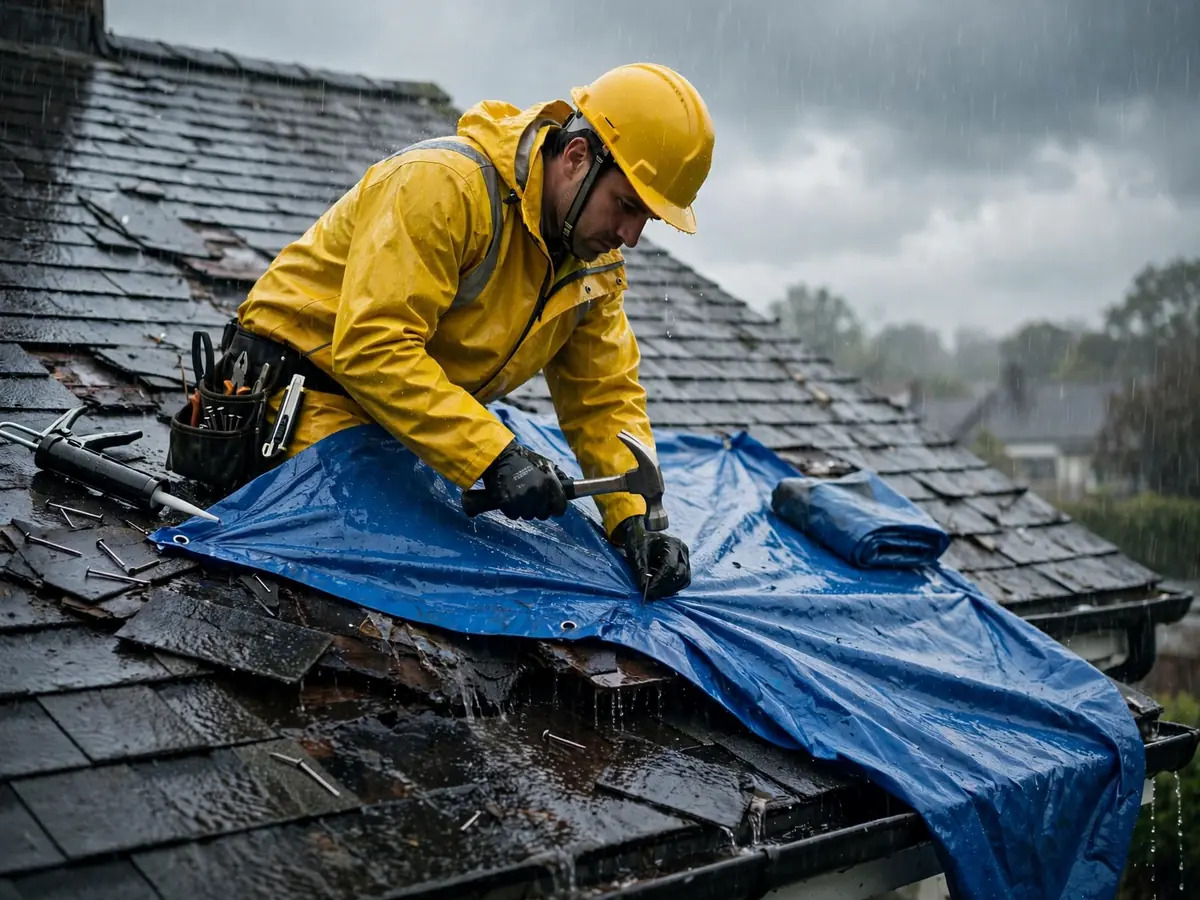
Then call. The storm inspection walks the roof, checks the damage slope by slope, and photographs it with the storm date. If the inspection finds openings, a temporary cover goes on first, so the next rain does not add water damage while the repair is arranged.
The season after the season
Nor'easter prep does not end when the season ends. The roof is inspected again after the season, because the season leaves its own marks — lifted seals, worn valleys, flashing that has moved a little further than it had. The inspection after the season is the prep for the next one.
That rhythm — inspected before the season, inspected after it — is what keeps an Elizabeth roof dry year after year. The roof is not inspected once and forgotten; it is checked on the calendar the weather sets.
The roof is inspected again after the season, because the season leaves its own marks. Nor'easter season runs from autumn through spring, and the inspection after it — in the late spring — reads what the storms did: the seals that failed, the flashing that worked loose, the granules that washed into the gutters. A roof inspected after the season is a roof whose damage is found while the record is fresh, and the repair is planned before the next hail season begins.
The autumn deadline
The autumn is the deadline because the season starts with it. The inspection is done in the weeks before the season, when the roof can still be walked in dry weather and the loose ends — a shingle tab that has lost its seal, a ridge cap that has worked loose, a flashing joint that has separated — can still be fixed before the wind arrives. An inspection done in the autumn finds the roof as it is; an inspection done after the first storm finds the roof as the storm left it.
The crews are the second reason for the deadline. After the first nor'easter, the call log fills, and the wait for a visit stretches from days to weeks. A roof inspected in the autumn is a roof with a plan already written; a roof inspected after the storm is a roof in a queue. The plan written in the autumn names what is a repair, what is a replacement conversation, and what the roof needs before the season — and the work is done while the weather is still calm.
The photographs are the third part of the autumn. Photograph the roof before the season — the slopes, the flashing, the gutters, the vents — from the ground, with the date on the record. After a storm, the photographs taken before it are the baseline the damage is measured against: the dents that were not there, the shingles that were not missing, the flashing that was not pulled away. A record without a baseline is a record that argues from memory.
What to have ready in the autumn is simple: the inspection, the loose ends fixed, the gutters and drains cleared, the trees trimmed back from the roofline, and the photographs taken. The yard is tidied too — loose items become projectiles in nor'easter wind, and the roof is the first thing they hit. A roof prepared in the autumn is a roof that meets the season ready, and the season after the season is inspected again, because the roof that survived the season still carries its marks.
The inspection after the season is also the inspection that sets up the next hail season. Summer brings the hail, and a roof whose storm damage was found in the spring is a roof whose repairs are planned before the summer hail arrives. The rhythm never stops: inspected after hail season, inspected after nor'easter season, and inspected after any major storm in between, year after year.
What to do, step by step
Book the inspection before the season
Call Now in the weeks before the season. The inspection walks the roof and the attic, and the findings are written down slope by slope.
Fix the loose ends
Lifted tabs are re-sealed or replaced, flashing is re-shaped, ridge caps are replaced where the wind has lifted them.

Clear gutters and drains
Gutters and downspouts are cleared of leaves and debris, and the slope of each run is checked so water runs off.
Tidy the yard and the roof
Loose items are tied down or brought inside, and the roof is cleared of limbs and debris that can lift in the wind.
Check again after the season
The roof is inspected after the season, because the season leaves its own marks — and the next season is already coming.
Frequently asked questions
Straight answers to the questions Elizabeth area homeowners ask most about this guide.
From autumn through spring. The prep is done in the weeks before the season, so the inspection and the repairs are finished before the first storm.
The covering for lifted, cracked or missing shingles, the seal between courses, the flashing at every joint, the gutters and the drains, and the attic for daylight and damp.
Note the storm date, photograph any damage you can see safely from the ground, keep the area under any leak clear, and call. If the inspection finds openings, a temporary cover goes on first.
Yes. The season leaves its own marks — lifted seals, worn valleys, flashing that has moved — and the inspection after the season is the prep for the next one.
In the autumn, before the season starts. The inspection, the loose ends, the gutters, and the photographs are all done while the weather is calm — and before the crews are booked solid after the first storm.
The slopes, the flashing, the gutters, and the vents — from the ground, with the date on the record. After a storm, the photographs taken before it are the baseline the damage is measured against.
Roof question in the Elizabeth area?
Call now — we will connect you with an independent local roofing professional for an inspection and a clear plan.
Call NowTalk to a local roofing professional
One call connects you with a local professional for Elizabeth, Newark and the metro around them. Describe your roof — what you are seeing, where the problem shows, and when it started — and the visit is arranged from there.
Mon–Fri 7:00 AM–10:00 PM ET · Sat 8:00 AM–10:00 PM ET · Sun 7:00 AM–9:00 PM ET
Service area
Elizabeth · Newark · Linden · Rahway · Union · Hillside · Roselle · Roselle Park · Bayonne · Jersey City
Elizabeth Roofing Pros is a referral service connecting customers with local roofing professionals; it is not itself the service company.