Should I Repair or Replace My Roof? A New Jersey Guide
Repair suits local damage on a sound roof. Replacement suits a covering worn across every slope. Here is how the inspection reads the difference.
The short version
Problem: a roof problem always raises the same question — repair it, or replace it — and the answer is not a feeling.
Solution: read the roof — covering, deck, damage across the slopes, and the storm seasons ahead — and let the findings decide.
When to call: when the roof has been patched more than once, or when the damage shows in many places at once.
Every Elizabeth homeowner with a roof problem faces the same question: repair it, or replace it. The answer is not a feeling, and it is not a number — it is a read of the roof. Its age, the damage across its slopes, the state of the deck beneath, and the storm seasons ahead of it. This guide lays out that read, step by step, the way the inspection does it.
The short version is simple. A repair suits damage in one or two places on a roof with life left. A replacement suits a covering worn across many slopes, or a roof whose deck has gone soft. The rest of this guide is how to tell which one your roof is.
The decision runs on three questions, and they are asked in order. How old is the roof, and how much life does its material have left in New Jersey weather? How much of it is damaged — one place, or many slopes? And what does the deck look like beneath the covering, read from the attic or found at tear-off? Get those three answers right and the repair-or-replace question usually answers itself.
Read the covering first
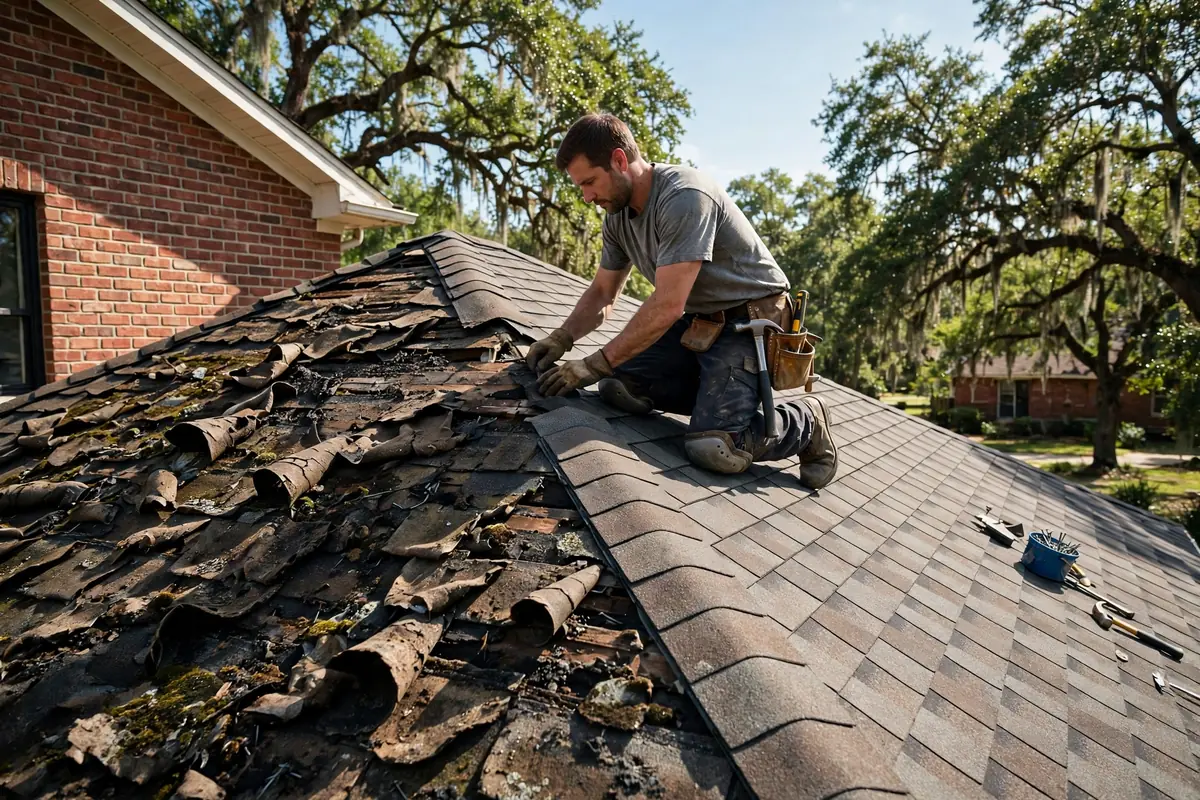
The covering is the first part of the read. Granules in the gutters, curling edges, cracked tabs and failed seals — each one is a measure of how much life the covering has left. A roof shedding granules across every slope has lost the layer that shields it from the sun, and a roof whose seals have failed on two sides will leak in the next storm even if every shingle is still in place.
The read is slope by slope, not roof by roof. The south-facing slope ages faster in the New Jersey sun, and the slope that took the hail takes the bruises. A covering worn on one slope and sound on the others is a different roof from a covering worn everywhere, and the decision follows the slopes.
The granules tell the age of the covering, and they are read in the gutters. Granules washing into the gutters after rain, more on the south-facing slope than the north, mark a covering that is wearing thin — the granule layer is the shield that keeps the sun off the asphalt, and where it is gone the asphalt dries, cracks, and lets water through. A slope that has lost granules across its whole field has lost the layer that keeps it dry.
Count the damage
Damage is the second part of the read, and it is counted, not guessed. The bruise count after a hailstorm — how many bruised shingles on each slope. The lifted tabs after a windstorm — how many, and whether the seal on the neighbours still holds. The leaks — one place, or a new place after every storm.
A repair suits damage in one or two places: a lifted course, a cracked boot, a worn valley. A replacement suits damage across many slopes: bruises counted in the dozens, seals failed on the south side and the north, leaks that move from room to room after each storm. The count is the measure, and it is recorded slope by slope.
Check the deck beneath
The deck is the third part of the read, and it is the part only an attic check or a tear-off can show. A deck with soft or rotted boards will not carry a new covering well, and a repair that leaves a weak deck in place is a repair that fails at the same place. The attic check — daylight through the boards, damp, stained wood — gives the deck read before the decision is made.
A sagging slope is the deck speaking. A dip in the roofline, a slope that looks wavy, a ceiling that bows inside — each one points to the deck or the rafters beneath, and a sag changes the decision. The structure is dealt with as part of the same job as the covering.
Look at the storm seasons ahead
The storm seasons ahead are the fourth part of the read. A roof heading into hail season and nor'easter season with worn covering and failed seals will take more damage in the next storm than a sound roof will. The seasons are not a reason to rush a decision, but they are a reason to make it before the season rather than during it.
Summer is hail season, roughly May to August, and nor'easter season runs from autumn through spring. A replacement started before the storm season is inspected and finished before the worst weather arrives, and the roof meets the season as a complete system rather than a patchwork.
Count the patches
The patch count is the simplest part of the read, and often the most honest. A roof patched once is a roof with a repair history. A roof patched in three or four places is a roof whose covering is failing in many places at once, and the next patch will be in a fifth place. Each patch is a place where the covering has already failed once.
That is not an argument against repair — a single patch on a sound roof is a good repair. It is an argument for reading the whole roof before the next patch, because the patches themselves are evidence of how the covering is ageing.
How the decision is made
The decision is made in three steps. First, the inspection walks the roof and the attic and records the covering, the deck and the ventilation. Second, the findings are laid out — what needs doing now, what can wait, and what the roof will need in the seasons ahead. Third, the plan follows the findings: a repair where the damage is local, a replacement where the covering is worn across the roof.
Either way, the plan is explained before anything is agreed, in plain words, with the findings behind it. A repair is not a delay tactic and a replacement is not a sales talk — each one follows from what the roof shows.
The decision is written down, not just spoken. The inspection note records the age of the roof, the extent of the damage slope by slope, the deck read from the attic, and the storm seasons ahead — and the plan follows the note. A homeowner who holds the note holds the decision: a repair where the note says repair, a replacement where the note says replacement, and a plan that names what happens if the tear-off shows deck damage.
The second layer changes the answer
A roof that already carries two layers of shingles has already answered part of the question. The 2021 International Residential Code allows one overlay — one new layer over one existing layer — and two layers means the next covering needs a full tear-off so the deck can be seen. There is no overlay left to lay, and the deck cannot be read through two layers of covering. A roof with two layers and damage across many slopes is a replacement conversation, because the only path forward is the tear-off.
An overlay hides the deck, and the deck is where the roof's real condition lives. Soft or rotted boards stay hidden under a second layer, and the next inspection cannot read them — the roof looks new from the street while the wood beneath it rots. An overlay also adds weight the structure must carry for the life of the roof, and it makes the next tear-off harder and longer. A roof replaced by tear-off is a roof whose deck has been seen, board by board, and whose weak boards have been replaced.
How many layers a roof carries is read at the edge. Look at the drip edge and count the covering edges: one edge is one layer, two edges are two. The attic read helps too — the deck is seen from beneath, and the nails from two layers show in the boards. The inspection reads the layers before naming a plan, because the layers decide the plan before the covering does.
What the layers mean for the plan is simple. One layer, local damage, a sound deck: a repair, or a tear-off replacement if the covering is worn. Two layers, damage across many slopes, a deck that is soft in places: a tear-off replacement, with the deck repairs found at tear-off folded into the plan. The plan is explained before anything is agreed, with the findings behind it — the layers, the bruise count, the deck read, and the storm seasons ahead.
What to do, step by step
Call and describe the roof
Say the roof material, its rough age, and what you are seeing — leaks, missing shingles, granules in the gutter, or a roof patched before.
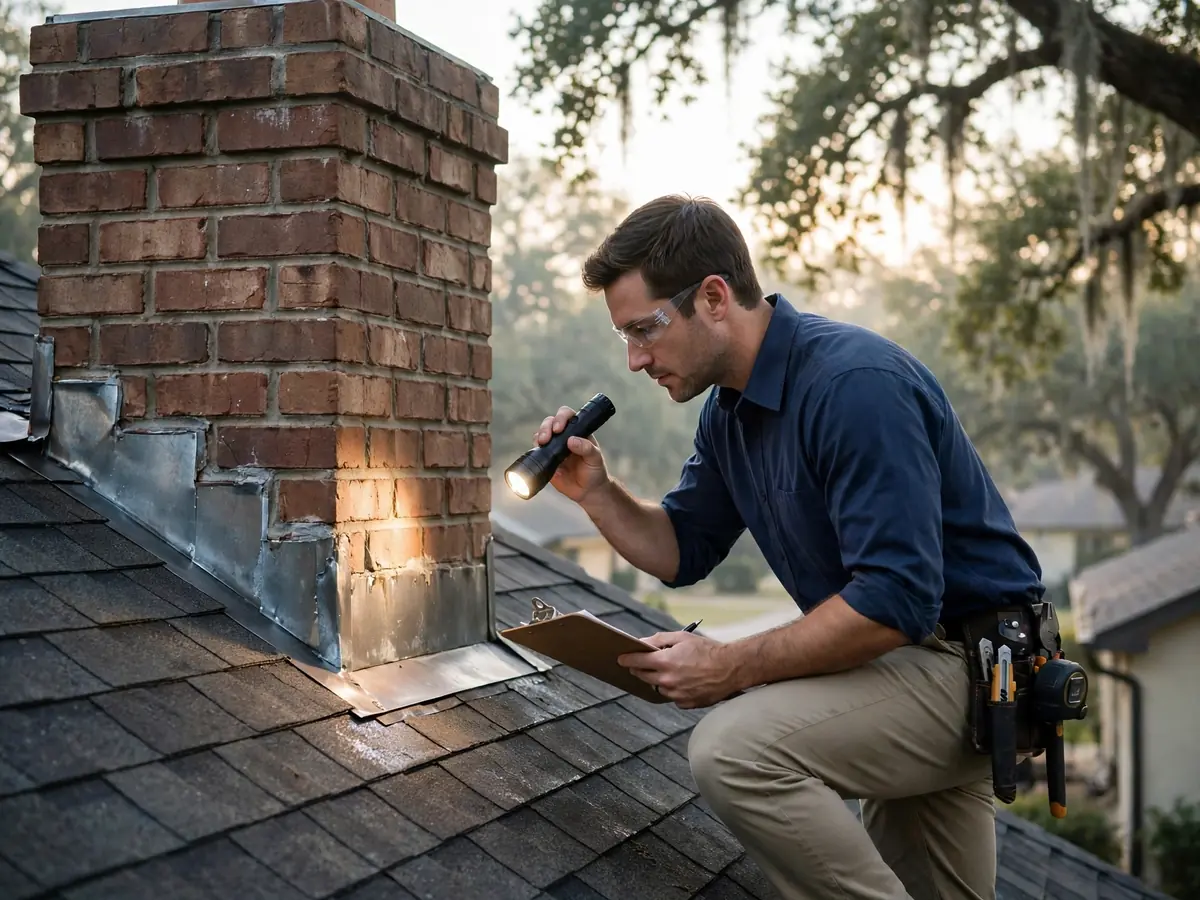
Inspection of roof and attic
A local professional walks every slope and checks the attic, recording granule loss, seal, curl, bruises and the deck.

Read the findings
The findings are laid out slope by slope — what needs doing now, what can wait, and what the roof will need in the seasons ahead.
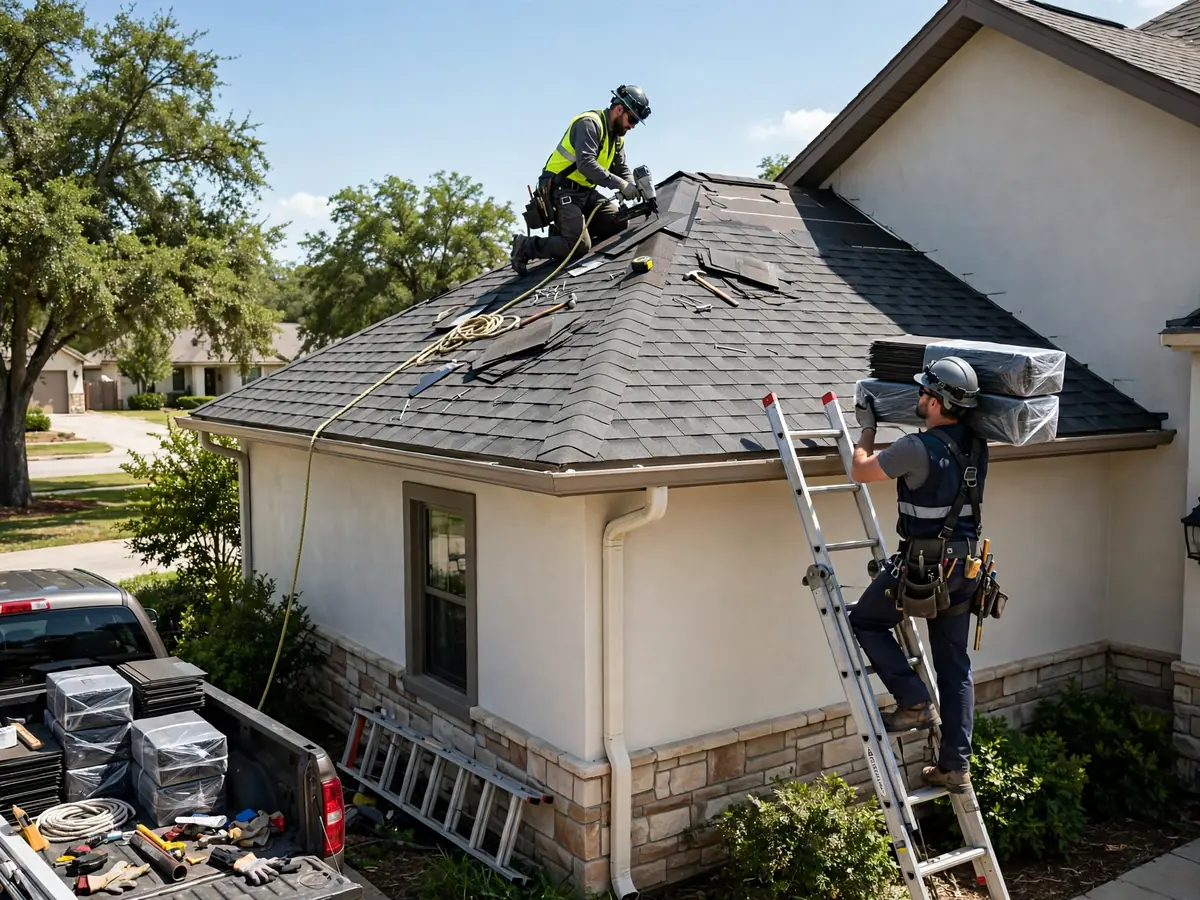
Decide repair or replacement
The decision follows the findings: local damage on a sound roof is a repair; a covering worn across the roof is a replacement.
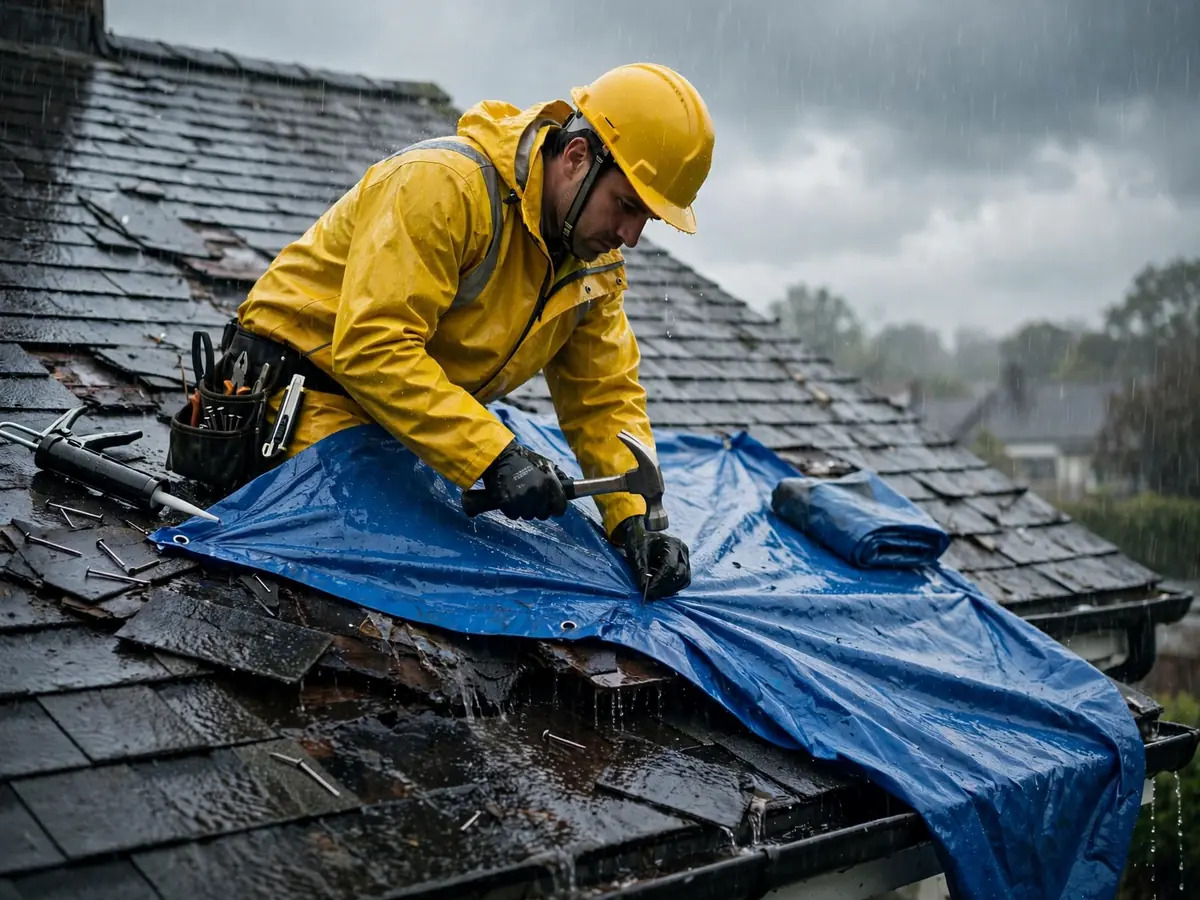
Plan and carry out the work
The plan is explained before anything is agreed, and the work follows the plan — repair or replacement, as the roof calls for.
Frequently asked questions
Straight answers to the questions Elizabeth area homeowners ask most about this guide.
The inspection reads the roof: covering condition, damage across the slopes, and the deck beneath. Local damage on a sound roof is a repair; a covering worn across the roof is a replacement.
One patch is a repair history. Four patches are a covering failing in many places at once. The inspection gives the read for your roof.
A soft or rotted deck changes the decision, because a new covering over a weak deck will sag and leak at the same places. The deck read comes before the decision.
Yes. A roof heading into hail season and nor'easter season with worn covering and failed seals will take more damage in the next storm. The seasons ahead are part of the read.
Look at the drip edge and count the covering edges — one edge is one layer, two edges are two. The inspection reads the layers from the edge and the attic, and two layers means the next covering needs a full tear-off.
A local repair is still possible — a few shingles in one course, a flashing joint, a pipe boot. But a roof with two layers and damage across many slopes is a replacement conversation, because there is no overlay left to lay and the deck cannot be read without tearing off.
Roof question in the Elizabeth area?
Call now — we will connect you with an independent local roofing professional for an inspection and a clear plan.
Call NowTalk to a local roofing professional
One call connects you with a local professional for Elizabeth, Newark and the metro around them. Describe your roof — what you are seeing, where the problem shows, and when it started — and the visit is arranged from there.
Mon–Fri 7:00 AM–10:00 PM ET · Sat 8:00 AM–10:00 PM ET · Sun 7:00 AM–9:00 PM ET
Service area
Elizabeth · Newark · Linden · Rahway · Union · Hillside · Roselle · Roselle Park · Bayonne · Jersey City
Elizabeth Roofing Pros is a referral service connecting customers with local roofing professionals; it is not itself the service company.