What to Do After a Hailstorm Hits Your Roof
After a hailstorm: note the date, look from the ground, call for an inspection — and do not climb on the roof. The record is made while the damage is fresh.

The short version
Problem: a hailstorm has passed, and the roof may be damaged in ways the ground view cannot show.
Solution: note the date, look from the ground, call for a roof walk — and document the damage while it is fresh.
When to call: right after the storm, before the next rain and before the record fades.
A hailstorm has passed over the Elizabeth area, and the question is what it did to the roof. The answer is not visible from the driveway — hail bruises shingles without breaking them, and the bruise leaks months later. What you do in the hours and days after the storm decides whether the damage is found while the record is fresh, or found later, when it has already become a leak.
This guide is the sequence: note the date, look from the ground, call for an inspection, and keep the record together.
The sequence is the same after every hailstorm, and it runs in order: note the date, look from the ground, call for an inspection, and keep the record together. The date anchors the record. The ground look finds the granules, the dents, and the cracked skylights. The inspection walks the roof and counts the bruises. The record holds the photographs, the storm date, and the inspection notes in one place, so the repair plan and the claim both run from the same evidence.
Note the storm date
The first step is the simplest and the most important: write down when the hailstorm hit. The date, the time, and what the storm was — hail, wind, heavy rain — and what you saw: the size of the hail, the direction it came from, and anything that fell or broke. The date anchors the whole record, and every step that follows refers back to it.
Keep the note somewhere you will find it again. The photos, the inspection findings and the claim all refer back to the storm date, and a date remembered wrong is a record that drifts. Write it down now, while the storm is fresh.
Write down when the hailstorm hit — the date, and the time if you know it. The date anchors the whole record: the inspection, the photographs, and the claim all refer back to it, and damage documented weeks after the storm is harder to tie to that storm. A date written down the day the storm hits is a date nobody has to remember later, when the bruises have opened into leaks and the storm is months behind.
Look from the ground
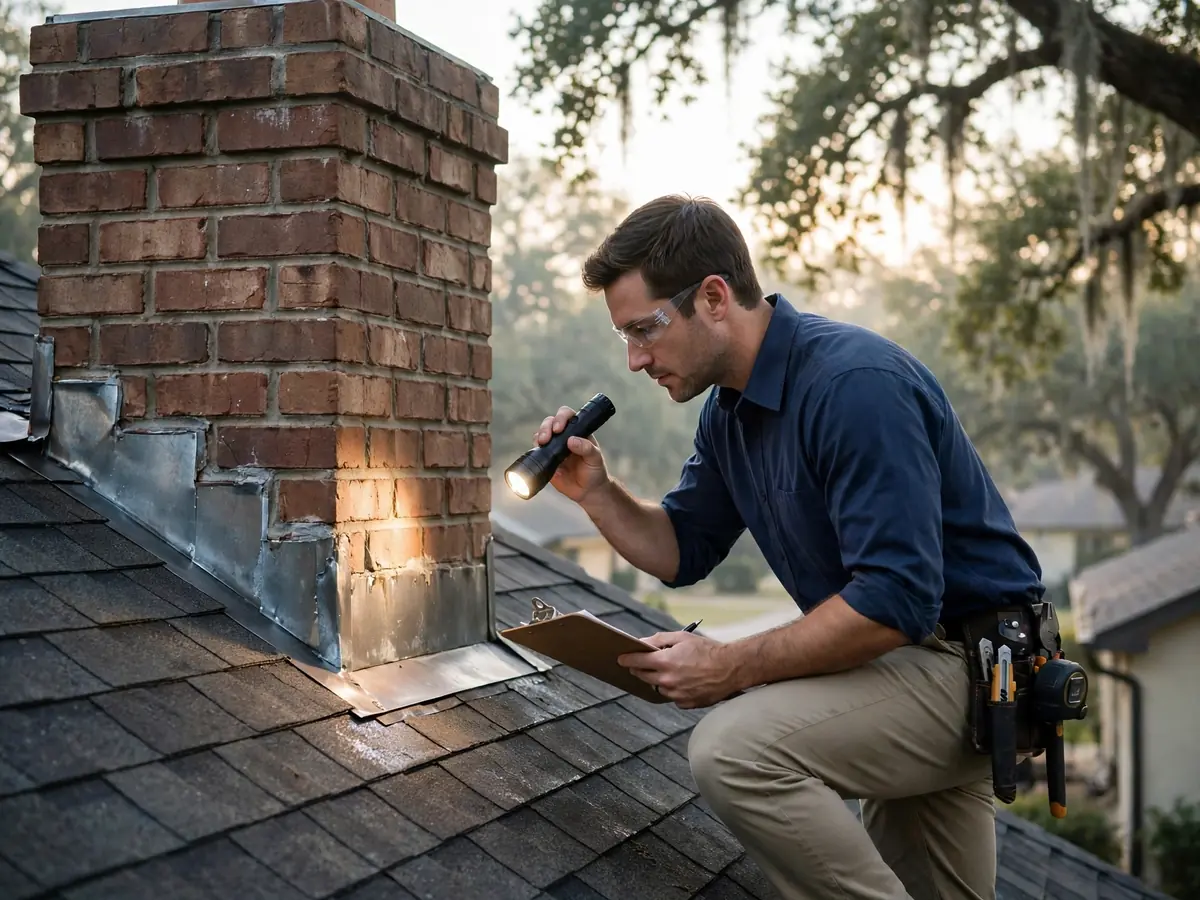
Walk around the house and look from the ground: granules collecting in the gutters and at the downspouts, dents on the vents and the gutters, cracked skylights, and shingles on the ground. Photograph anything you see, from the ground, with the date on the photos.
Do not climb on the roof. A roof after a hailstorm is wet, and the damage you are looking for is the damage you cannot see from the ground anyway — the bruises are felt by hand, not seen from the driveway. The ground check is for the signs you can see safely; the roof walk is for the rest.
Call for a storm inspection
Call Now after the storm and say when it hit and what you have seen. The storm inspection walks every slope, checks the shingles by touch for bruises, and counts them slope by slope. Vents, gutters, skylights and flashing are checked for dents and cracks, and the damage is photographed with the storm date.
The inspection is worth doing even when the roof looks sound from the driveway. The damage that leaks later is the damage you cannot see now, and the inspection finds it while the record is fresh.
Cover any openings first
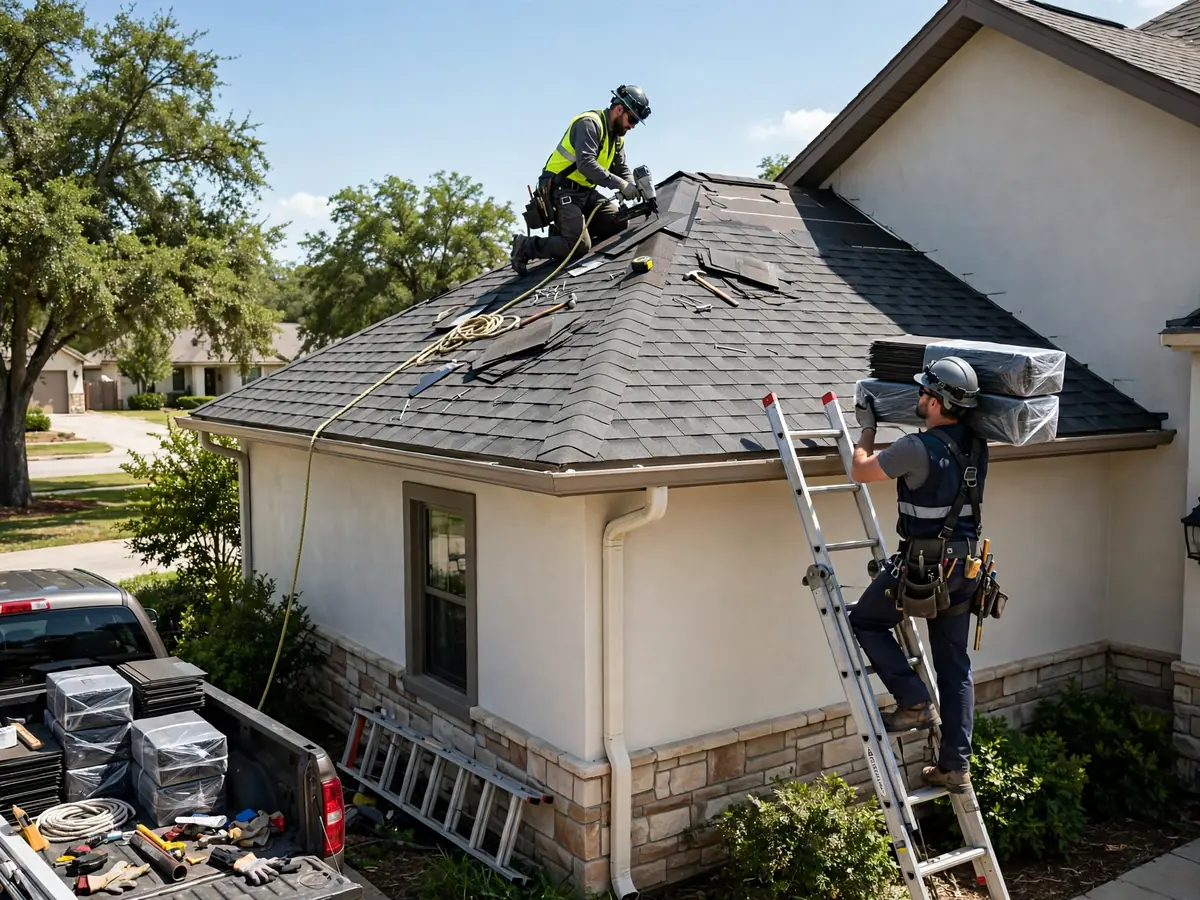
If the inspection finds openings — a cracked skylight, a course peeled back, a hole where a limb fell — a temporary cover goes on first, so the next rain does not add water damage to the storm damage. The cover comes before the plan, not after it.
The cover is fitted over the opening and secured to sound material around it, so wind cannot lift it and rain cannot get under it. A cover that flaps in the wind is worse than no cover at all, because it pulls at the shingles around the hole.
Keep the record together
Keep the record in one place: the storm date, the ground photos, the inspection photos with their slopes noted, the bruise count slope by slope, and the written note of the findings. The record is what the repair plan runs on, and it is what the insurance-claims process runs on.
A claim argued from memory is a claim that drifts; a claim argued from the record stays put. Keep a copy of everything, so that when a question comes up later in the process, the answer is in the record rather than in memory.
What happens next
After the inspection, the plan follows the count. A few bruised shingles on a sound roof are replaced in their course. Bruises across many slopes, or a roof already near the end of its covering life, is a replacement conversation. Either way, the plan is explained from the findings before anything is agreed, and the work follows the plan.
The roof is also checked again after the next rain, so a slow leak is caught while it is still small. The storm is over, but the roof's answer to it takes weeks to show — and the check after the next rain is what catches it.
Keep the record in one place: the storm date, the ground photographs, the inspection photographs with their slopes noted, and the written note of what the inspection found. The record is the evidence the repair plan runs on and the claim runs on, and a record kept together is a record that holds up. A claim built on a record that says little is a claim that leans on the adjuster's visit alone.
What not to do after a hailstorm
Do not climb on the roof. A hail-damaged roof is a roof whose covering is bruised and whose deck may be soft in places, and a roof walked without knowing where the deck is soft is a roof walked blind. The ground look — granules in the gutters, dents on the vents, cracks in the skylights — finds the signs that matter, and the inspection walks the roof because the inspection knows where to step.
Do not sign paperwork with someone who knocks on the door after the storm. A door-knocker who offers to pay the deductible, or who asks for the whole job to be paid up front, is the warning sign the state's guidance names first. A written contract tied to the adjuster's scope, a payment that leaves a record, and a lien waiver when the work is paid for — those are the protections, and they are agreed before the work starts, not after it.
Do not file with the insurer before the damage has been looked at. A claim that pays nothing still stays on the record for years, and a string of small claims reads as a homeowner who files often. The inspection comes first: the roof is walked, the bruises are counted, the damage is photographed with the storm date, and the record says plainly whether there is enough damage for a claim to be paid.
Do not clean up the evidence before it is photographed. Granules swept out of the gutters are granules the record no longer has, and shingles picked up from the yard are shingles the photographs no longer show. Photograph the granules, the dents, and the shingles on the ground first, from the ground, with the storm date on the record — and then clean up. The record is built once, and it is built on the day of the storm.
After the inspection, the plan is written down and the repair is scheduled around the weather, not around the claim. Openings are covered first, so the next rain does not add water damage while the repair is arranged, and the record — the storm date, the photographs, the bruise count — travels with the plan. A homeowner who keeps the record in one place, and who calls before filing, is a homeowner whose claim runs on evidence rather than argument. The inspection is the step that makes the record real, and the record is what the repair and the claim both run on.
What to do, step by step
Note the storm date
Write down when the hailstorm hit, what it was, and what you saw — the size of the hail and anything that fell or broke.
Look from the ground
Check the gutters for granules, the vents and gutters for dents, and the skylights for cracks. Photograph what you see. Do not climb on the roof.

Call for an inspection
Call Now and say when the storm hit and what you have seen. The inspection walks the roof and checks by touch.
Cover openings first
If the inspection finds openings, a temporary cover goes on so the next rain does not add damage.

Keep the record together
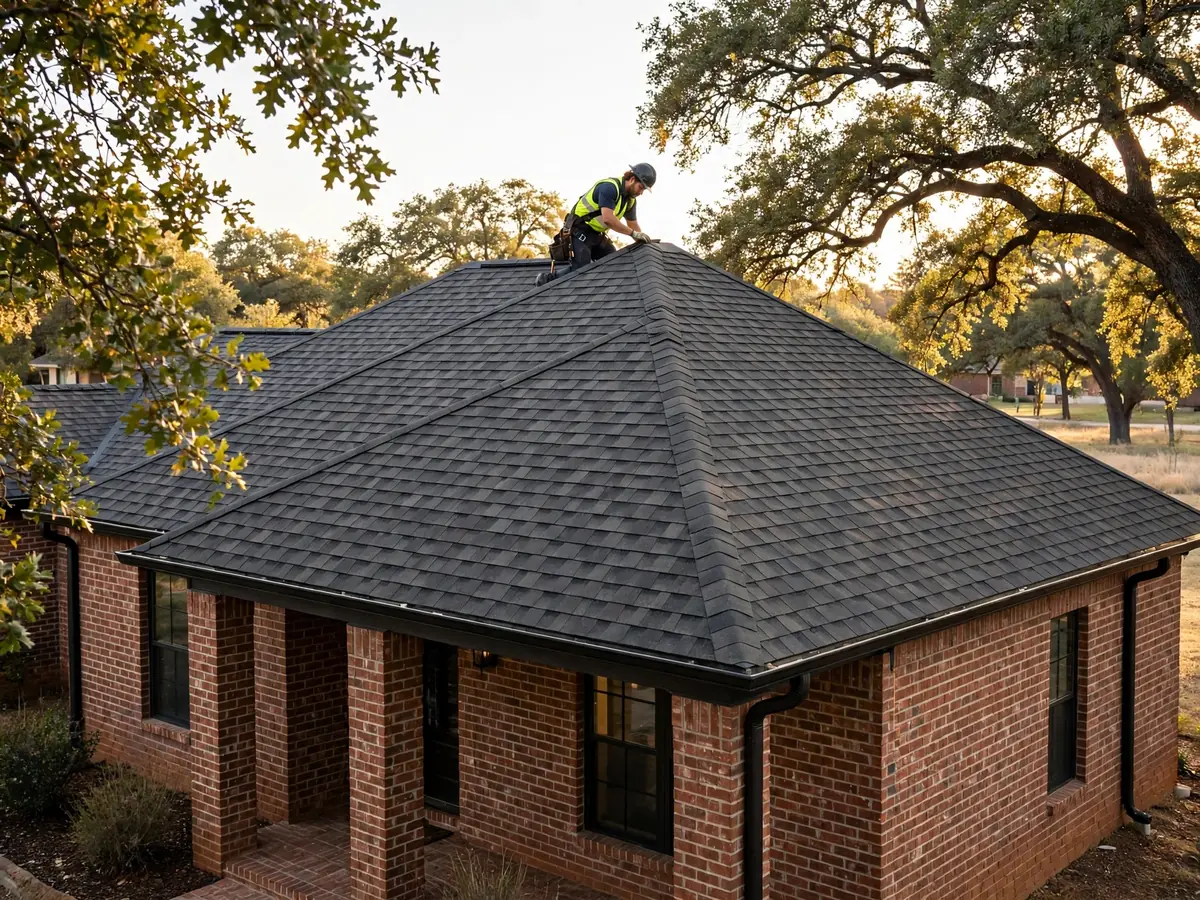
Storm date, photos, bruise count and the written note — kept in one place, so the repair and the claim run on evidence.
Frequently asked questions
Straight answers to the questions Elizabeth area homeowners ask most about this guide.
Note the storm date, look from the ground for granules, dents and cracks, photograph what you see, and call for a storm inspection. Do not climb on the roof.
Yes. Hail bruises are felt by hand on the roof, not seen from the ground, and a bruised shingle leaks months after the storm that bruised it.
A temporary cover goes on the opening so the next rain does not add water damage. The cover comes before the plan, not after it.
The storm date, ground photos, inspection photos with slopes noted, the bruise count slope by slope, and the written note of the findings.
Not before photographing them. Granules in the gutters are the first sign the storm marked the roof, and the photographs are part of the record. Photograph the granules and the dents first, then clean up.
Do not sign paperwork on the spot. A door-knocker who offers to pay the deductible or asks for the whole job up front is the warning sign the state's guidance names first. The inspection comes first, and any contract is agreed before the work starts, not after it.
Roof question in the Elizabeth area?
Call now — we will connect you with an independent local roofing professional for an inspection and a clear plan.
Call NowTalk to a local roofing professional
One call connects you with a local professional for Elizabeth, Newark and the metro around them. Describe your roof — what you are seeing, where the problem shows, and when it started — and the visit is arranged from there.
Mon–Fri 7:00 AM–10:00 PM ET · Sat 8:00 AM–10:00 PM ET · Sun 7:00 AM–9:00 PM ET
Service area
Elizabeth · Newark · Linden · Rahway · Union · Hillside · Roselle · Roselle Park · Bayonne · Jersey City
Elizabeth Roofing Pros is a referral service connecting customers with local roofing professionals; it is not itself the service company.