Sagging Roof in Elizabeth, NJ
A sagging roof shows as a dip in the roofline, a wavy slope, or a ceiling that bows inside. It is a structural question, not a covering question: the dip comes from the deck or the rafters beneath the covering, not from the shingles on top. A sag that is left alone gets worse, because the structure carrying the roof is the part that is failing.
Talk to a local roofing professional
One call connects you with a local professional for the Elizabeth area. Describe your roof — what you are seeing, and where — and the visit is arranged from there.
Mon–Fri 7:00 AM–10:00 PM ET · Sat 8:00 AM–10:00 PM ET · Sun 7:00 AM–9:00 PM ET
What causes sagging roof on Elizabeth roofs
Three causes account for most sagging roofs in the Elizabeth area. Long-term water damage rots the deck boards and weakens the rafters beneath, so the roof settles where the wood has gone soft. A failed rafter — cracked, split or cut during past work — lets the slope drop at that point. And a deck laid over rafters spaced too far apart, or a roof carrying a covering heavier than the structure was built for, sags across a wide area rather than at one point.
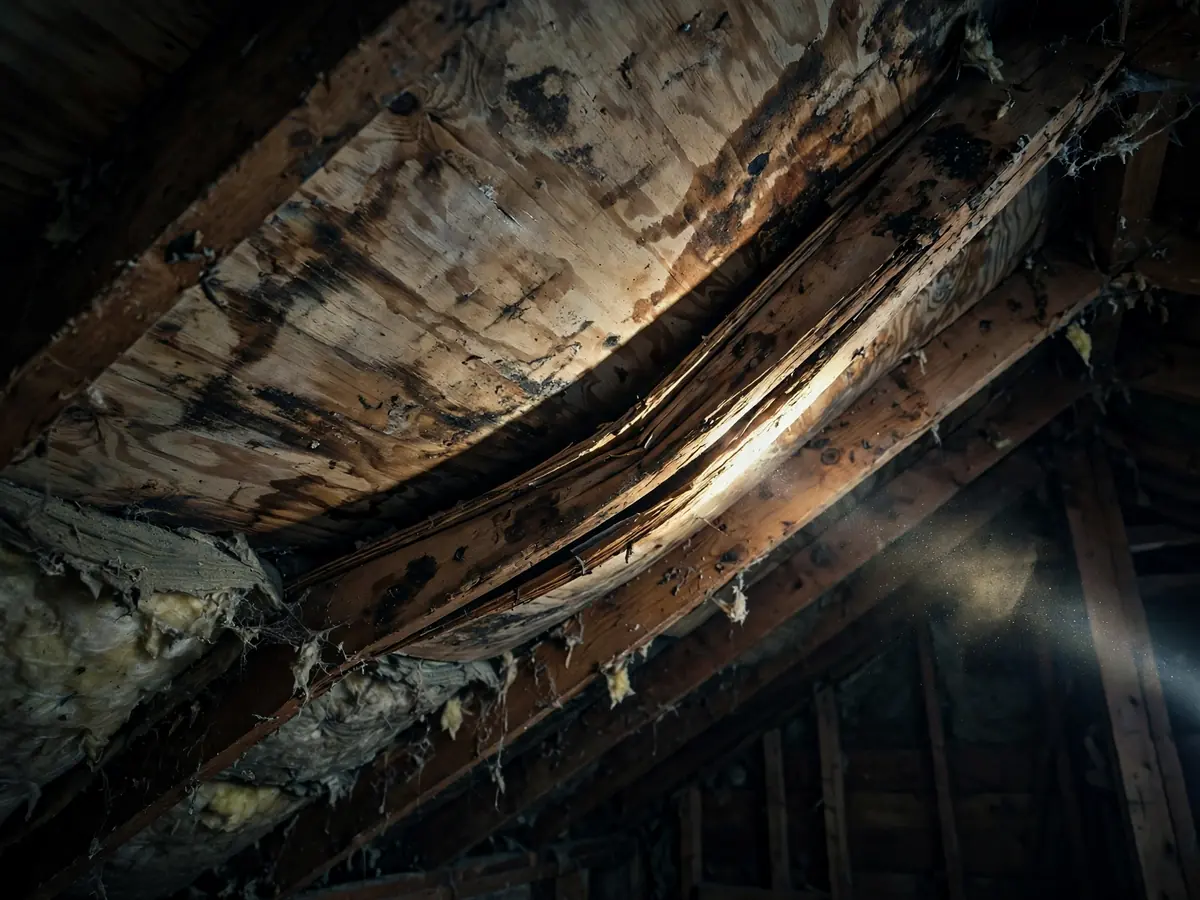
The attic is where the cause is read. The inspector looks along the rafters for cracks, splits and rot, checks the deck boards for soft spots and water stains, and notes whether the sag follows a single rafter or runs across the slope. A sag that follows one rafter points to that rafter; a sag that runs across the slope points to the deck or the load it carries.
A sagging roof is not a cosmetic problem. The dip holds water where the slope should shed it, and standing water works at the covering and the deck every time it rains. The longer the sag sits, the more water it holds, and the more the structure weakens. That is why a sag is looked at promptly, not at the next storm season.
The shape of the sag says what is causing it, and the inspection reads the shape before touching anything. A dip along the ridge itself points to the ridge beam or to rafters spreading at the walls. A bowl in the middle of one slope is usually decking that got wet and gave up, often downhill from a chimney, a valley, or a pipe penetration. A wave or ripple across a whole plane points to rafter deflection or to decking failure over a broad area, often from chronic attic moisture rather than one leak. Each shape leads to a different fix.
Signs of sagging roof
A dip visible in the roofline from the street, a slope that looks wavy rather than straight, a ceiling that bows inside, or a door that sticks where the frame has moved are the signs of a sagging roof. Inside the attic, daylight through a gap, damp on the rafters, and a deck board that feels soft underfoot all point the same way.
The sign that matters most is the one the attic shows: a rafter that has cracked or a deck board that has gone soft. The roofline shows the sag; the attic shows the cause, and the cause decides the plan.
How sagging roof is fixed
The fix follows the cause. A rotted deck board is replaced once the covering above it is lifted. A cracked rafter is sistered — a new board fixed alongside it to carry the load. A wide sag from spacing or load is a bigger structural plan, and the inspection will say so plainly, with the next steps laid out before anything is agreed.
The covering above the sag is dealt with as part of the same job. Shingles over a dip do not sit flat, and a repair that fixes the structure but leaves the covering wavy will leak at the dip. The plan covers the structure and the covering together.
Sistering is the standard fix for a bowed or cracked rafter: a new, full-length member is fastened alongside the deflected one so it carries the load the old member no longer can. Decking that has failed is replaced once the covering above it is lifted, and a ridge that has dropped needs a properly sized beam with a load path down to bearing. None of it lasts if the cause is still there — the leak, the ventilation problem, or the drainage issue that soaked the wood must be fixed in the same job, or the sag returns.
The visit, step by step
Call and describe the sag
Say where the dip shows — roofline, slope or ceiling — and when you first noticed it. A sag that appeared after a storm and one that grew slowly point to different causes.
Read the attic
A local professional checks the rafters for cracks and rot, the deck for soft spots and water stains, and whether the sag follows one rafter or runs across the slope.
Name the cause
The cause is named — rotted deck, failed rafter, or a structural load question — so the plan follows the cause.
Fix the structure
The deck board is replaced or the rafter is sistered, as the cause calls for, and the covering above is dealt with as part of the same job.
Check the slope
The finished slope is checked for a straight line and for drainage, so water runs off instead of standing in the dip.
Problem → solution
Problem
An Elizabeth home with a dip in the back slope and a ceiling that bowed in the room below. The shingles over the dip did not sit flat, and water stood in the hollow after rain.
Solution
The attic showed two deck boards rotted through where a long-term leak had run. The boards were replaced, the covering above was renewed, and the slope ran straight and drained again.
Related to sagging roof
Rotted deck
Long-term water rots the deck boards. The sag follows the soft wood, and the board is replaced.
Failed rafter
A cracked or split rafter lets the slope drop at that point. Sistering a new board alongside carries the load.
Standing water
A dip holds water where the slope should shed it. The standing water weakens the structure further.
Long-term leaks
A leak left for seasons rots the wood beneath. The sag is often the first sign the leak has been there a while.
Frequently asked questions
Straight answers to the questions Elizabeth area homeowners ask most.
Usually long-term water rotting the deck or rafters, a cracked or split rafter, or a structure carrying more load than it was built for. The attic read names the cause for your roof.
It is a structural problem, and it gets worse while it waits — the dip holds water, and the water weakens the structure further. Call and have it looked at promptly.
It depends on the cause. A rotted deck board or a single failed rafter is repaired; a wide structural sag is a bigger plan. The inspection gives the read for your roof.
From the roof and from the attic — the roofline shows the sag, and the attic shows the cause: rafters, deck boards and water stains.
Read the shape. A dip along the ridge points to the ridge beam or spreading rafters; a bowl in one slope to wet decking; a wave across a plane to rafter deflection or broad decking failure. The attic read confirms which one it is.
No. A sagging roof is not carrying weight correctly, and that is the reason it is sagging. The inspection is done from the attic and the ground — sighting the ridge line from the street, and reading the rafters and the deck from inside.
Sagging Roof on your roof?
Call now — we will connect you with an independent local roofing professional for an inspection and a clear plan.
Call NowTalk to a local roofing professional
One call connects you with a local professional for Elizabeth, Newark and the metro around them. Describe your roof — what you are seeing, where the problem shows, and when it started — and the visit is arranged from there.
Mon–Fri 7:00 AM–10:00 PM ET · Sat 8:00 AM–10:00 PM ET · Sun 7:00 AM–9:00 PM ET
Service area
Elizabeth · Newark · Linden · Rahway · Union · Hillside · Roselle · Roselle Park · Bayonne · Jersey City
Elizabeth Roofing Pros is a referral service connecting customers with local roofing professionals; it is not itself the service company.