Why Is My Roof Leaking? The Common Causes in Elizabeth Homes
Most Elizabeth roof leaks come from four causes: flashing, valleys, pipe boots and lifted shingles. The stain is rarely above the leak — the trace finds the entry.
The short version
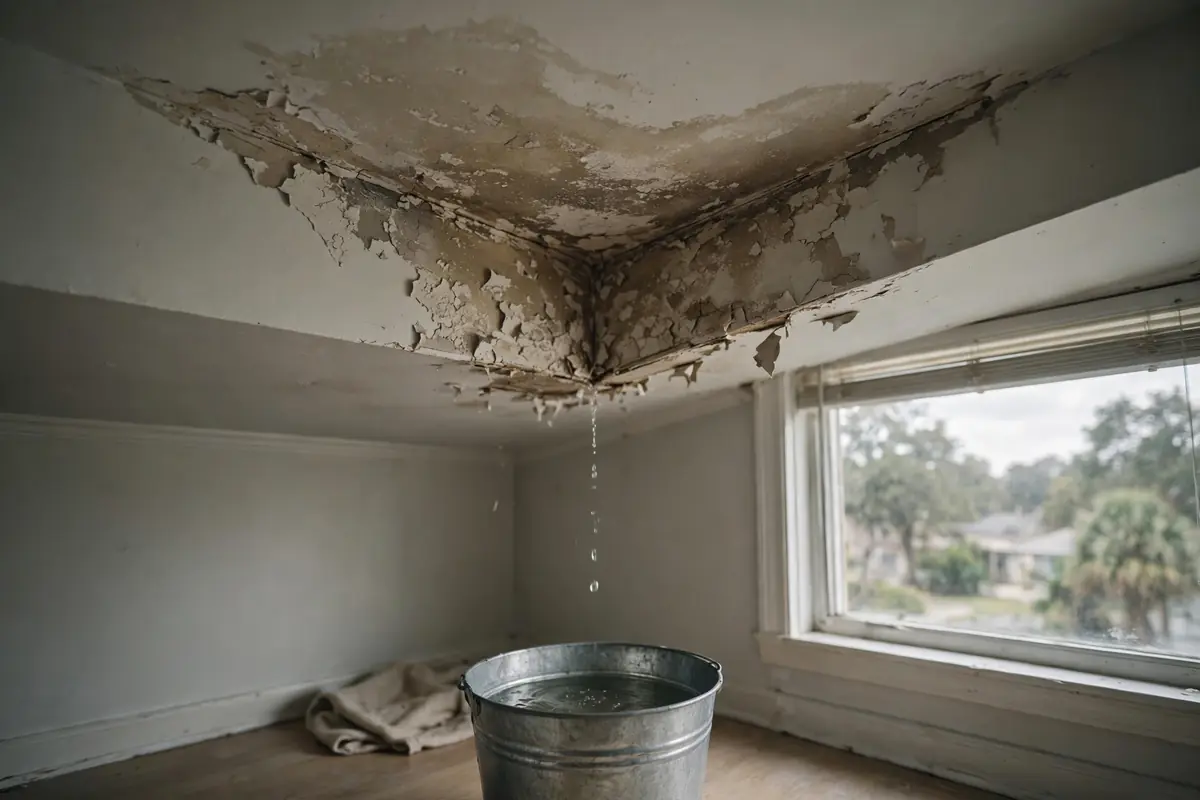
Problem: a stain on the ceiling, and no clear cause — the water entered somewhere above, and travelled before it showed.
Solution: trace the water from the stain, along the deck and rafters, up to the entry — and fix the entry, not the stain.
When to call: as soon as the stain appears, before the next storm turns a small leak into a deck repair.
Why is my roof leaking? In Elizabeth homes, the answer is usually one of four causes: flashing that has separated, a valley worn through, a cracked pipe boot, or a lifted shingle. Each one lets water in at a different place, and each one is found the same way — by tracing the water from the stain back to the entry, along the deck and the rafters.
This guide covers the four causes, how each one shows, and how the trace works — so that when the stain appears, the homeowner knows what the inspection will look for.
The four causes account for most Elizabeth roof leaks, and they are checked in the same order on every visit. Flashing that has separated from a chimney, a wall, or a vent. A valley worn through where two slopes meet. A cracked pipe boot where a vent pipe passes through the roof. And a lifted or missing shingle that lets water under the covering at the edge of the course. Each cause is found by the same trace — from the stain, along the deck, up to the entry — and each cause has its own fix.
Flashing that has separated
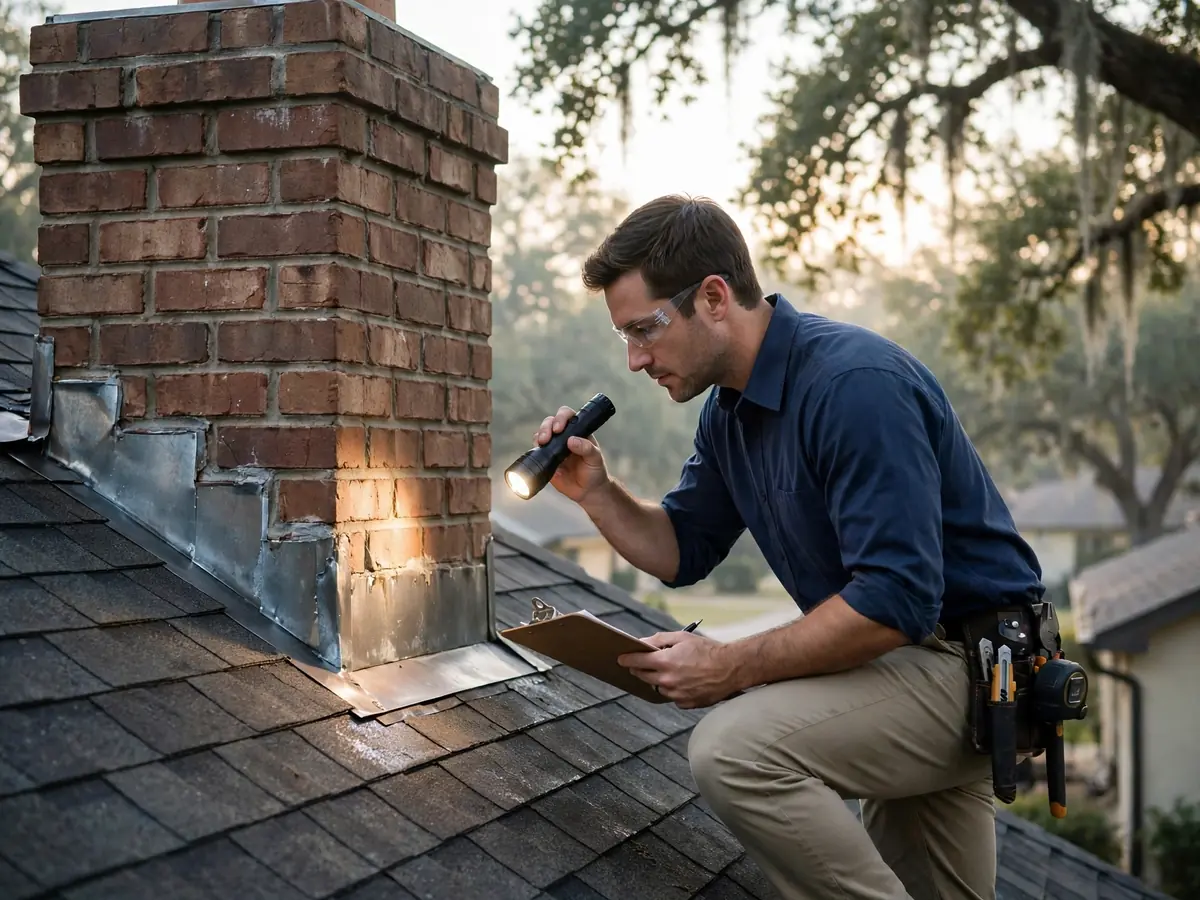
Flashing is the metal that seals the joints where the roof meets something else — a chimney, a wall, a skylight, a vent. It is the most common leak source on Elizabeth roofs, because the joint moves: the house shifts with heat and seasons, the flashing works loose, and water gets in at the gap.
The sign is a stain near a chimney or a wall, or a damp patch in the attic below the joint. The fix is to re-shape the flashing to the joint and re-seal it — not to smear sealant over the gap, which the New Jersey summer heat will soften and the next storm will wash away.
Flashing is the metal that seals the joints where the roof meets something else — a chimney, a wall, a skylight, a vent — and it is the most common leak source on an Elizabeth roof. The house moves with heat and seasons, and the flashing separates from the joint a little at a time, until water slips in at the gap. The fix is to re-shape the flashing to the joint, not to smear sealant over it: sealant on a separated joint is a repair that fails when the heat softens it.
A valley worn through
A valley is the channel where two slopes meet and pour their water into one run. It wears first, because it carries the water of two slopes, and the wear shows as a thin channel, a rusted line, or a stain on the ceiling below the valley.
The sign is a stain below the valley, or granules collecting where the valley runs. The fix is to clear the valley of debris and re-line the channel, so water runs off instead of pooling at the joint.
A cracked pipe boot
A pipe boot is the rubber collar where a vent pipe passes through the roof, and it is a quiet leak source. The rubber cracks in the New Jersey summer heat, and the crack lets water in around the pipe — a small opening that leaks a little with every rain and a lot in a storm.
The sign is a stain below a vent pipe, or a damp patch in the attic near the pipe. The fix is to replace the boot and seal it, so the pipe stays dry where it passes through the roof.
A lifted or missing shingle
Wind lifts shingle edges and breaks the seal between courses, and a lifted shingle lets water under the covering at the edge of the course. A missing shingle leaves the underlayment open to the rain. Either way, the water enters at the course and travels along the deck before it shows inside.
The sign is a stain on the ceiling after a storm, or shingles on the ground after a windstorm. The fix is to replace the shingle in its course and set the seal, so the next wind cannot lift it again.
Why the stain is rarely above the leak
Water travels. It enters at a shingle, a flashing joint or a valley, runs along the deck and the rafters, and shows up inside feet away from the entry — on a ceiling, down a wall, or in the attic. Painting over the stain does nothing; the water keeps coming in at the same place.
That is why the visit traces the water rather than guessing from the stain. The attic is where the trace is done: daylight through the boards, damp on the rafters, and stained wood all mark the water's path, and the path leads uphill to the entry.
What to do while waiting for the visit
Keep the area under the leak clear, note where and when the water shows, and do not climb on the roof. The notes you keep help the inspection trace the leak — where the water shows, when it started, and whether it follows a storm or grows slowly.
A leak that follows a storm and a stain that grows slowly point to different causes, and the notes are the evidence the inspection works from. The visit fixes the entry, not the stain — and the notes are what find the entry.
Keep the area under the leak clear, note where and when the water shows, and do not climb on the roof. The notes you keep — where the water shows, when it started, whether it follows rain or appears without it — help the inspection trace the leak, and the trace is what finds the entry. A leak noted well is a leak found fast, and a leak found fast is a leak fixed before it soaks the deck. Photograph the stain and the bucket as well — the photographs join the notes in the record, and the record is what the repair and the claim both run on.
Condensation: the leak that is not a leak
A damp patch in the attic is not always a roof leak. Warm, moist air from inside the house rises into the attic, and where it meets a cool deck it condenses and drips — a damp patch that looks like a leak, leaves a stain like a leak, and is not one. The attic check tells them apart: a rain entry leaves a path from a shingle, a flashing joint, or a valley, while condensation leaves damp across the deck with no entry above it, and no stain that follows a storm.
Bathroom fans that vent into the attic instead of through the roof are the usual cause. Every shower pushes warm, moist air into the attic, and the attic traps it against the deck. The fix is not shingles — it is a fan that vents through the roof, and ventilation that moves the air out: intake at the soffits, exhaust at the ridge, and the two balanced so the attic breathes. A roof repaired for a condensation drip is a roof repaired for the wrong cause, and the drip will return at the next shower.
The signs of condensation are different from the signs of a leak, and they are worth knowing. A damp patch that appears without rain, an attic that smells musty in the cooler months, insulation that is damp at the top and dry at the bottom — those are condensation signs. A stain that grows after rain, and only after rain, is a leak sign. The inspection reads the attic for both, because a house can have a leak and condensation at once, and the two need different fixes.
What the fix looks like depends on the cause. A rain entry is fixed at the entry — flashing re-shaped, valley re-lined, boot replaced, shingle replaced and sealed. Condensation is fixed by airflow — the fan vented through the roof, the soffits cleared of insulation, the intake and exhaust balanced. The visit notes say which one it was, and what to watch after the next rain and the next shower, so the homeowner knows whether the fix held.
What to do, step by step
Note where and when
Write down where the water shows — ceiling, wall or attic — and when it started. A leak after a storm and a stain that grows slowly point to different causes.
Call for a trace
Call Now and describe the stain. The visit follows the water from the stain back to the entry.

Name the cause
The cause is named — flashing, valley, vent or shingle — so you know what is being repaired and why.
Fix the entry
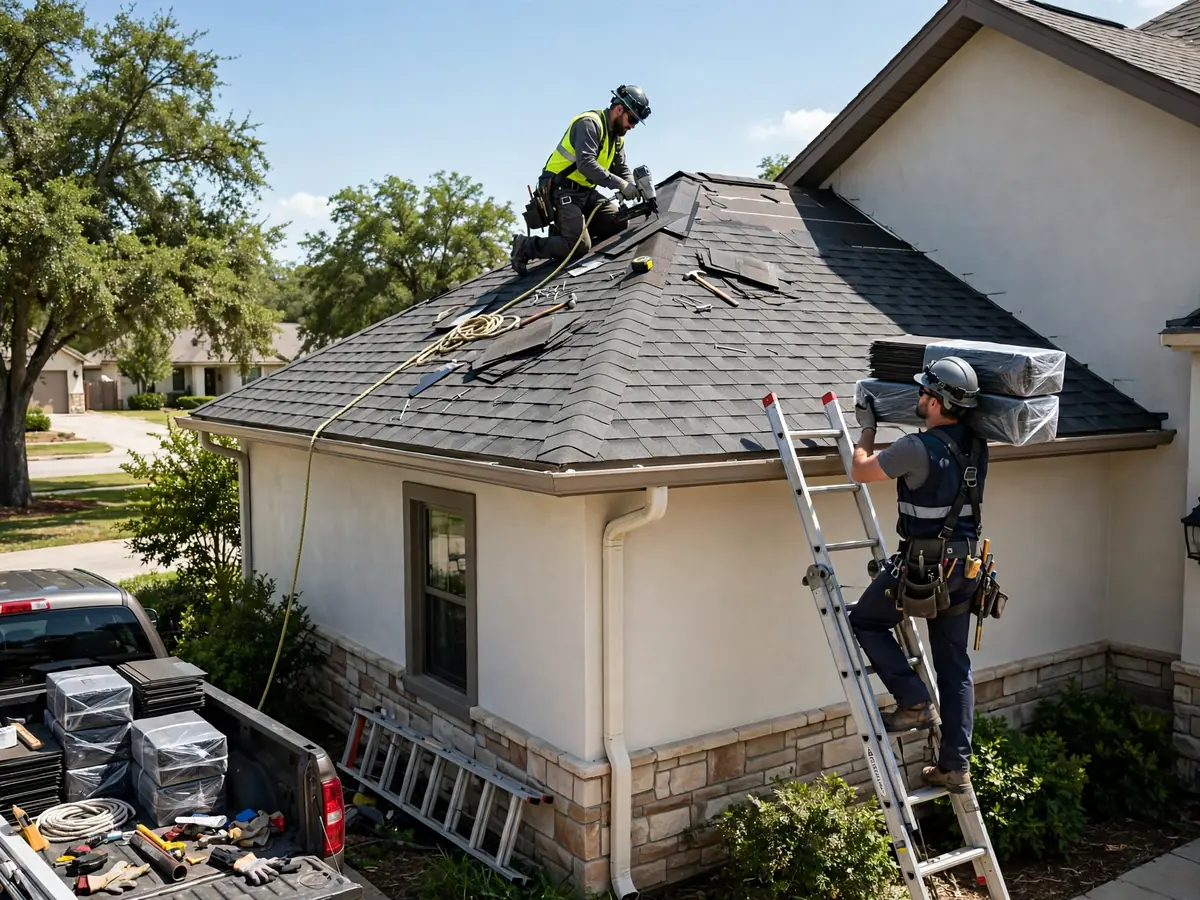
The entry is repaired in place: flashing re-shaped, valley re-lined, boot replaced, or shingle replaced and sealed.
Check after the next rain
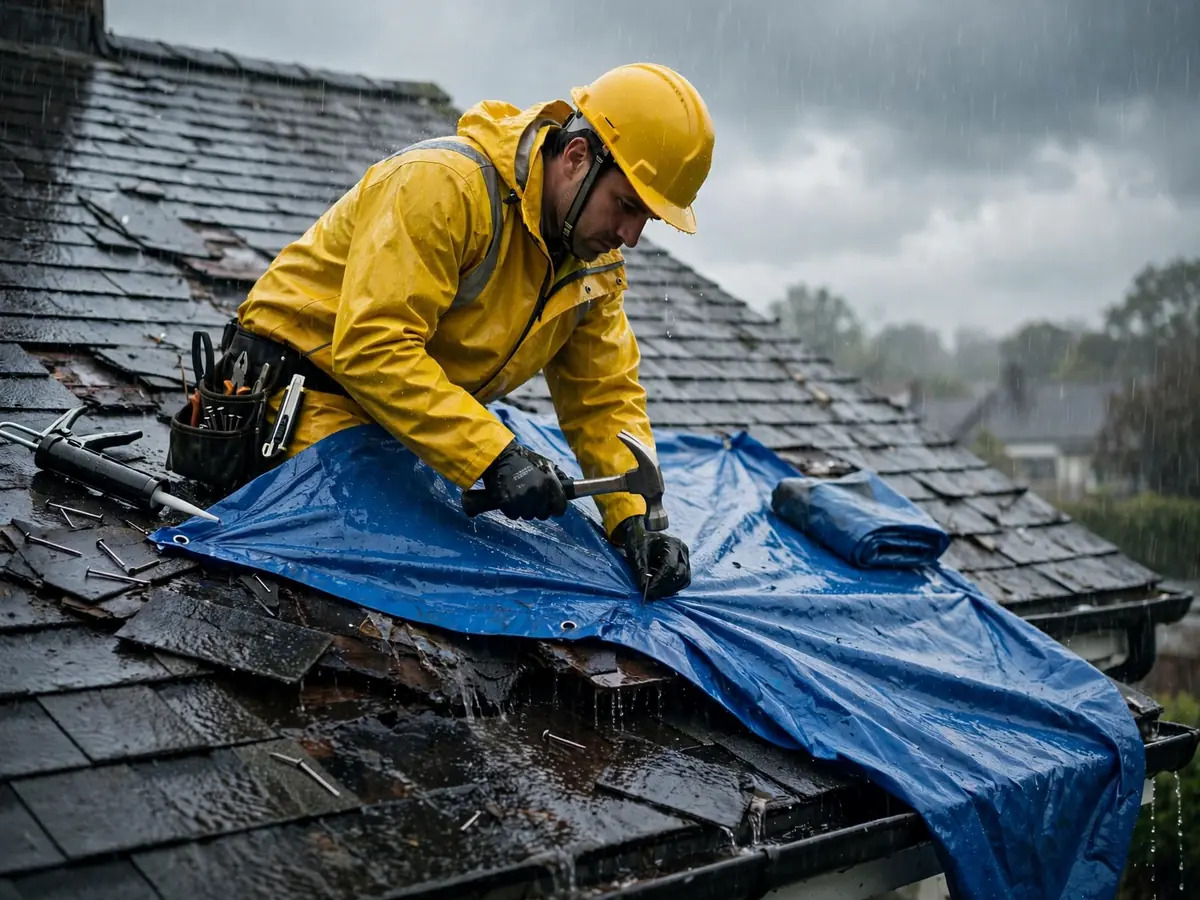
The attic and the repair are checked after the next rain, so a slow leak is caught while it is still small.
Frequently asked questions
Straight answers to the questions Elizabeth area homeowners ask most about this guide.
Water travels along the deck and rafters before it shows inside, so the entry can sit several feet uphill from the stain. The trace follows the water's path to find the entry.
Flashing that has separated, a worn valley, a cracked pipe boot, or a lifted shingle. The inspection names the cause for your roof.
A small leak can wait days, not seasons. Water inside soaks insulation and rots the deck, so a leak left through a storm season becomes a bigger repair.
Keep the area under the leak clear, note where and when the water shows, and do not climb on the roof. The notes help the inspection trace the leak.
Yes. Warm, moist air in the attic can condense on the deck and drip like a leak. The attic check tells them apart: a rain entry leaves a path from a shingle or flashing joint, while condensation leaves damp across the deck with no entry above it.
Condensation — warm, moist air from inside the house rising into the attic and condensing on the cool deck. Bathroom fans that vent into the attic are the usual cause, and the fix is airflow, not shingles.
Roof question in the Elizabeth area?
Call now — we will connect you with an independent local roofing professional for an inspection and a clear plan.
Call NowTalk to a local roofing professional
One call connects you with a local professional for Elizabeth, Newark and the metro around them. Describe your roof — what you are seeing, where the problem shows, and when it started — and the visit is arranged from there.
Mon–Fri 7:00 AM–10:00 PM ET · Sat 8:00 AM–10:00 PM ET · Sun 7:00 AM–9:00 PM ET
Service area
Elizabeth · Newark · Linden · Rahway · Union · Hillside · Roselle · Roselle Park · Bayonne · Jersey City
Elizabeth Roofing Pros is a referral service connecting customers with local roofing professionals; it is not itself the service company.